
Last updated October 16, 2026
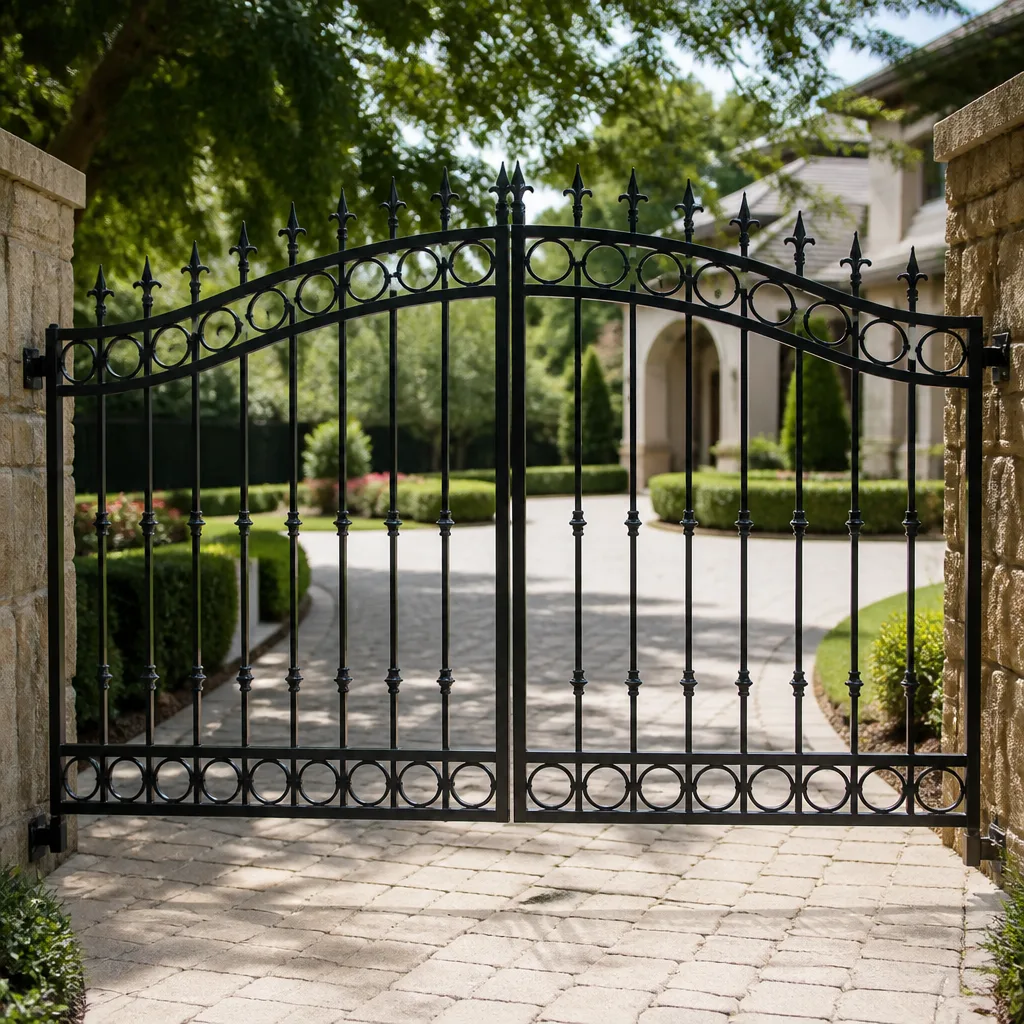 Wrought iron
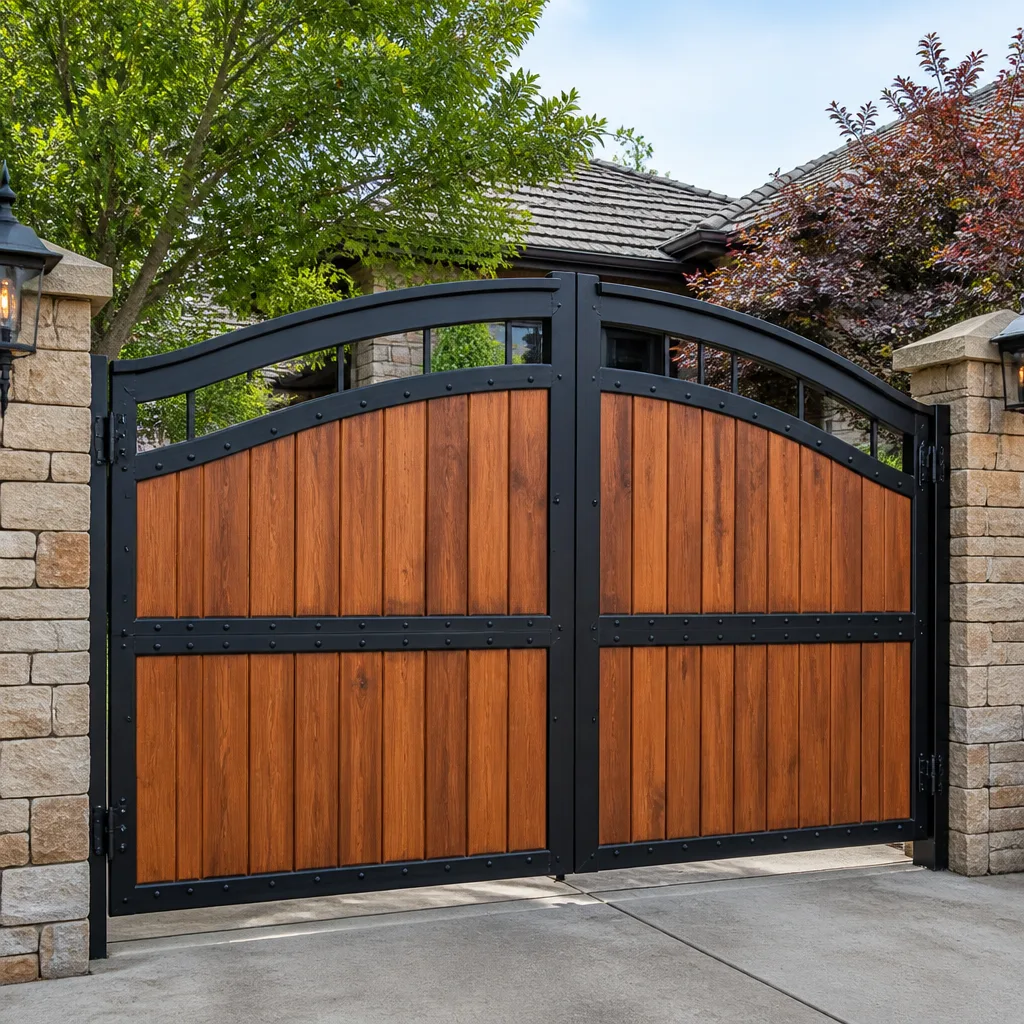 Wood & steel frame
 Farm & ranch
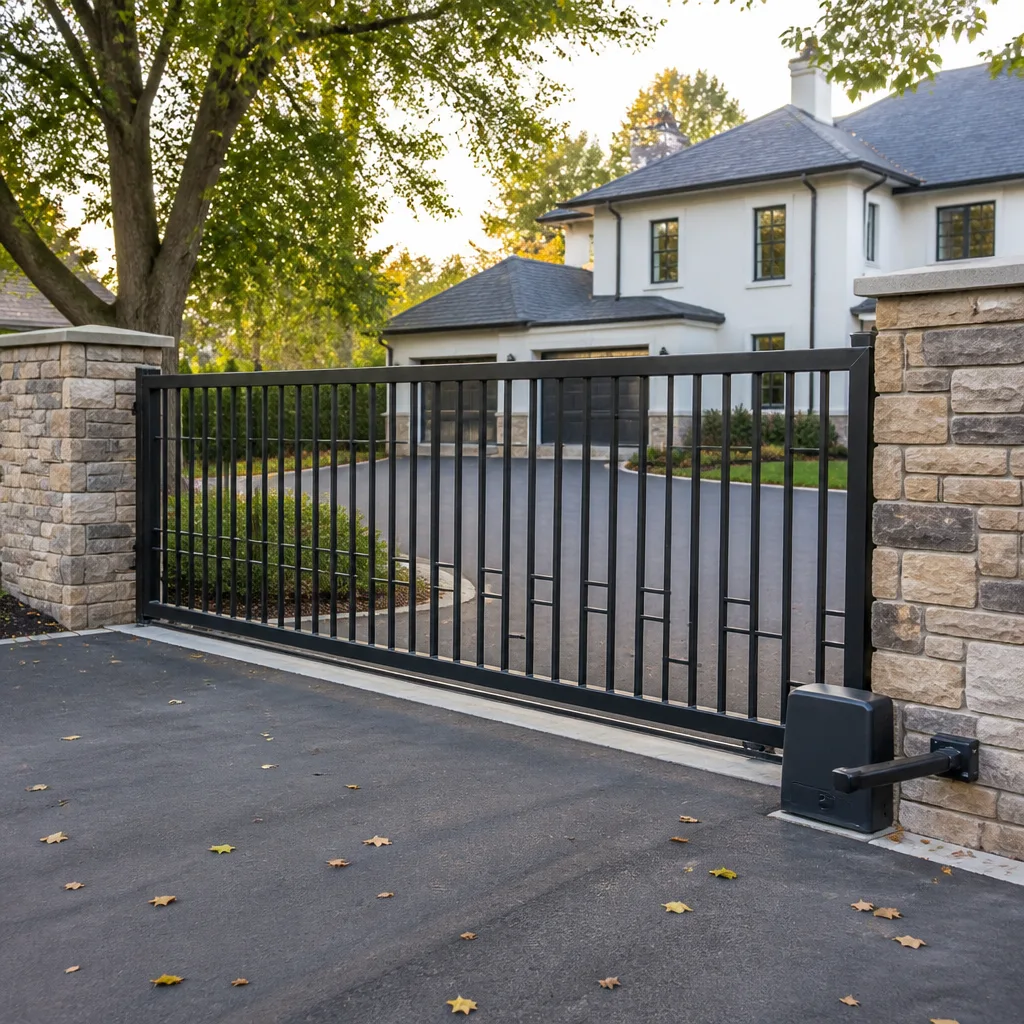 Sliding driveway gates
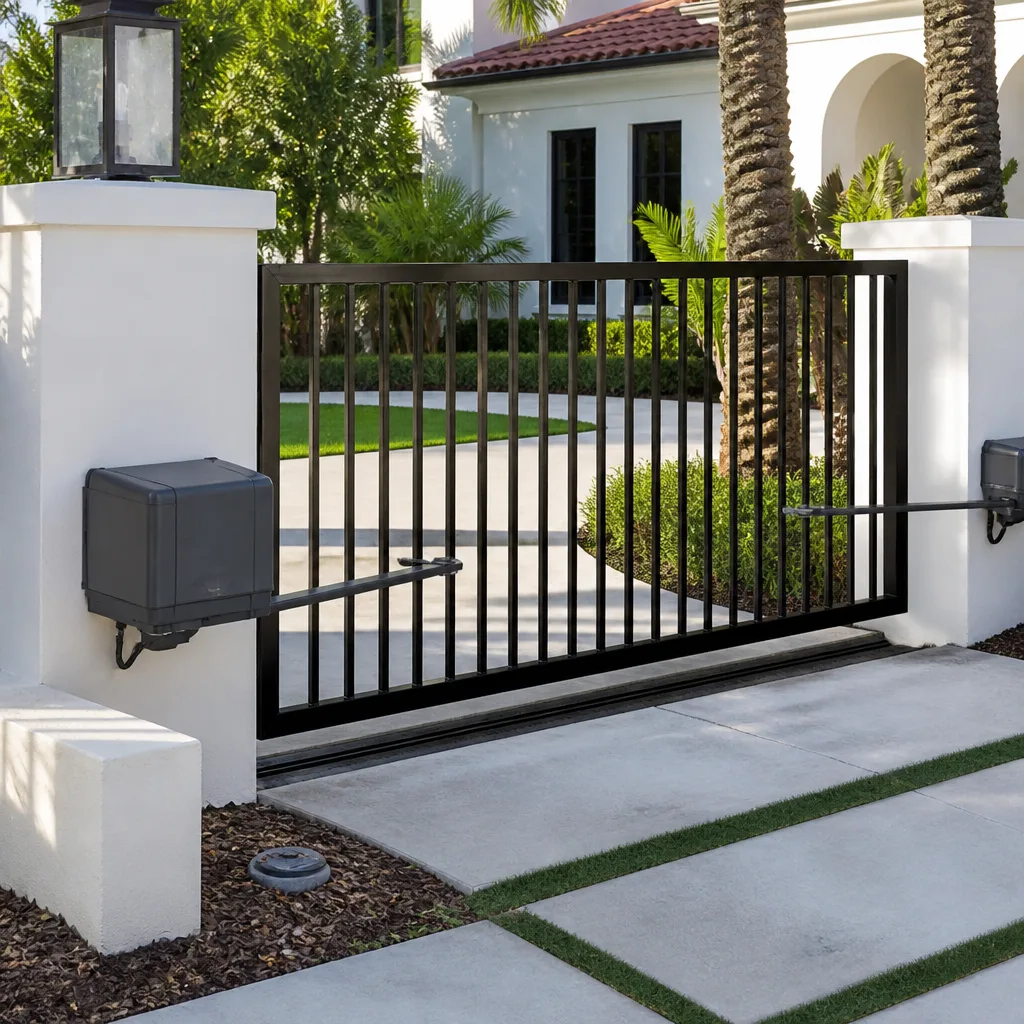 LiftMaster operators
Free on-site gate assessment - hinges, posts, and your LiftMaster or Nice gate operator checked before anything is quoted
The assessment is free and the quote is the invoice.
Get your free estimateGate Repair Warning Signs: A San Diego Homeowner’s Reference Guide
A gate that hesitates for two seconds before moving is not “warming up” – it is displaying a force-limit fault that, left unaddressed, will destroy the drive gear within 60 to 90 days of normal use. That is the reality we deal with every week in San Diego, and it’s the kind of thing most homeowners never notice until the gate simply stops opening one morning. This guide will teach you how to read the signals your gate is already sending, what each one means mechanically, and when to act so a $200 gate repair doesn’t become a $1,400 emergency.
Styles & brands we work with
Quick Answer
The most common gate repair warning signs in San Diego are hesitation or stuttering during travel, grinding or clicking sounds from the operator, intermittent reversal mid-cycle, rust staining at weld points, and remotes that work only at close range. For seasonal gate repair care for San Diego, catching these early makes all the difference. Of these, intermittent reversal mid-cycle is the one homeowners almost always dismiss – and it predicts complete failure within 90 days more reliably than any other single symptom.
Table of Contents
- Tier 1 Warning Signs: Watch and Monitor
- Tier 2 Warning Signs: Schedule Within 30 Days
- Tier 3 Warning Signs: Stop Using the Gate Today
- What Your Gate Is Telling You: Sound-Based Diagnostics
- Visual Warning Signs Specific to San Diego Conditions
- Remote and Keypad Behavior: What It Actually Means
- The Warning Sign Everyone Ignores: Intermittent Reversal
- Common Mistakes to Avoid
- When to Call a Professional
- Frequently Asked Questions
- The Bottom Line
Tier 1 Warning Signs: Watch and Monitor
Tier 1 signs are early indicators that something is drifting out of spec. The gate still works, you can still get in and out, but the system is telling you that a component is wearing faster than it should. None of these require an emergency call. All of them deserve a note in your phone and a check-in every couple of weeks.
Slight hesitation when the gate starts moving
We’re not talking about the two-second delay that means trouble. A half-second hitch, or the gate starting slower than it did six months ago, often indicates the start capacitor in the operator is losing its ability to deliver the initial surge of power. On a LiftMaster or DoorKing operator, this is a $40 part. The labor to replace it is straightforward. The problem is that when that capacitor fails completely, the motor will hum but not turn – and if the motor runs long enough in that stalled state, it burns out. A $40 capacitor becomes a $600 operator. Watch this one. If the hesitation gets longer over a span of weeks, move it to Tier 2.
Remote works fine sometimes, not others
Intermittent remote performance, especially at a consistent distance, often points to receiver interference before it points to a bad remote. San Diego has dense wireless traffic: cell towers, solar inverters, smart home hubs, and neighbors with their own gate remotes. If your remote works reliably from 50 feet on Tuesday and then barely works from 20 feet on Wednesday, interference is the likely culprit. The receiver in your operator is tuned to a specific frequency, and it can get swamped. This is a Tier 1 issue because it’s more nuisance than danger. But if the pattern gets consistently worse over 30 to 60 days, you may have a failing receiver board, and that moves the problem to Tier 2.
A gate that needs two or three button presses to close
This is not “just the way it is.” A gate that ignores the first press and responds to the second or third is showing early signs of a failing limit switch or a receiver on its way out. On a Viking opener, the limit switch is a small mechanical or magnetic sensor that tells the board where the gate is in its travel. When that sensor starts getting flaky, the board does not get a clear “gate is open” or “gate is closed” signal, so it waits for another command. This is the canary in the coal mine. Watch it. If it becomes predictable – every close requires two presses – schedule a service call.
Tier 2 Warning Signs: Schedule Within 30 Days
Tier 2 signs mean a component is measurably failing. The gate still operates, but you are now operating on borrowed time. Schedule service within the month, before the failure cascades into something bigger.
Consistent hesitation of one to two seconds before movement
Back to our opening hook: this is the force-limit fault. When you press the remote, the control board tells the motor to start, but the board is also reading resistance from the gate. If that resistance is too high at start-up, the board hesitates, trying to compensate or waiting for the obstruction sensor to clear. The most common cause in San Diego is a gate that has settled out of plumb, so the wheels bind against the track. The board senses the bind and pauses. Left unaddressed, the motor works harder on every cycle, the drive gear strips, and you are looking at a full operator replacement. In our experience, this takes 60 to 90 days of normal residential use. That is a very specific, very predictable countdown.
Gate stops halfway and reverses, but only occasionally
You already know from the Quick Answer that this is the big one. But it deserves its own repeat here because it sits at the top of Tier 2: schedule soon. If your gate reverses mid-cycle even once a week, you have an obstruction sensor that is dirty, misaligned, or failing – or a force setting that has drifted. Each of those is a straightforward repair. But each also becomes a safety hazard if the gate begins reversing unpredictably with a car in the opening. Read the dedicated section on intermittent reversal below. Schedule within 30 days.
Grinding sound that has gotten louder over several months
Gates make noise. They all make some noise. What they should not do is get louder over time. A grinding sound that has intensified gradually points to the rack and pinion or chain drive losing lubrication – or to the drive gear itself wearing down. On a Ghost Controls opener, the plastic drive gear is designed to be the sacrificial part, the thing that fails before the more expensive motor does. Like brake pads. And like brake pads, when the grinding starts, the countdown has already begun. Replacing that gear before it strips is a fraction of the cost of replacing the operator after the metal-on-metal damage done by a stripped gear. Schedule within the month.
Tier 3 Warning Signs: Stop Using the Gate Today
Tier 3 signs mean the gate is no longer safe to operate. It will continue to move, but every cycle is causing damage – and, in some cases, every cycle is actively dangerous. Put the operator in manual mode if you know how, leave the gate in one position, and call a professional. Today.
The gate slams shut instead of slowing down
A properly functioning gate decelerates in the last few feet of travel. It does not slam. If your gate has started closing at full speed all the way to the post, you have lost the deceleration function. That means the limit switch or the internal programming has failed, and the gate is now hitting the closed position with enough force to shear bolts, crack welds, and eventually throw the gate off its track. This is one of the most dangerous failure modes we see in San Diego, especially on heavier ornamental steel gates. If the gate slams, stop using it. The repair is usually a limit switch replacement or a reprogramming – but the damage from running it even a few more weeks can exceed $1,000. Compare that to the repair itself, which is typically under $300.
Humming sound with no movement at all
This is the stalled-motor scenario we mentioned earlier, and it is a Tier 3 emergency for a very specific reason: the motor is drawing power, the capacitor or the board is delivering it, but the gate cannot move. Every second that hum continues, the motor is overheating. Some operators have thermal protection that will trip. Some don’t. If yours doesn’t, the motor will burn out – and on an Elite or Viking operator, a replacement motor assembly is far more expensive than fixing whatever caused the stall in the first place. A stalled gate is sometimes a dead capacitor, sometimes a jammed drive train, sometimes a foreign object in the track. All of those are cheaper to fix than a motor. Stop pressing the button. Call today.
Visible lean, sag, or a gate that scrapes the ground on every cycle
A sagging gate is a structural failure in progress. Somewhere in the system – the hinge post, the weld points, the hinge hardware itself – something is bending or cracking. The gate still moves, but the forces are no longer distributed where they were designed to be. In San Diego’s coastal areas, this is often accelerated by salt air corrosion at the hinge welds. East of the 15, it’s more often a post that has shifted due to expansive clay soil. Either way, the longer that gate scrapes and leans, the more those forces concentrate on the remaining healthy components, and the faster the total failure arrives. A gate that is sagging is not a repair to delay. Stop using the automatic function until a tech has assessed the structure.
What Your Gate Is Telling You: Sound-Based Diagnostics
Sound is the most underused diagnostic tool you have. You hear your gate every day, so the sounds become background noise. But each of the four main “problem sounds” points to a different component. Here’s the plain-language decode.
Grinding
Grinding means metal-on-metal contact where lubrication should exist, or teeth meshing badly where they used to mesh cleanly. The most common location is the rack and pinion – the gear bar on the gate and the gear attached to the motor. When the pinion wears unevenly, it scrapes against the rack instead of rolling along it. The fix is usually a new gear set, and it is a repair Calder does regularly on all the major brands. Grinding from inside the operator is different: that is the drive gear itself, and it is further along.
Clicking
A distinct, repetitive click – often you’ll hear it right when you press the remote, or as the gate starts – usually points to the relay on the control board. The relay is the electrical switch that tells the motor to start. A weak relay will click but fail to deliver full power. This is a board-level issue and a very common diagnosis on older Linear operators. The good news: a relay or board replacement is straightforward and far cheaper than a full operator. The bad news: it will not fix itself, and the clicking will eventually become a no-start.
Humming
We covered this in Tier 3, but it bears repeating with a diagnostic angle: a hum with no movement means the motor is getting power and cannot turn. In about half the cases we see in San Diego, the cause is a dead start capacitor. In the other half, it’s something physically jamming the drive train – a rock in the track, a bent guide roller, or a gate that has sagged onto the ground. Capacitor replacement is a low-cost, high-speed fix. A jammed drive train is often also quick. But you cannot know which one it is from the driveway, and guessing wrong – by continuing to press the remote – turns a quick fix into a motor replacement.
Stuttering or juddering
Stuttering is not one consistent sound. It’s the sound of the gate starting, stopping, starting, stopping in rapid succession. That is the control board receiving conflicting signals – usually from a dirty or misaligned photocell or an edge sensor that is registering a false obstruction. The photocells are the small sensors on either side of the gate opening, down low. When they fall out of alignment, they tell the board “something is in the way” on every cycle. The board stops the gate. When the reading flickers, the gate stutters. Cleaning and realigning the photocells is a quick fix. Replacing the board because a shorted sensor overloaded it is not. Address stutter early.
Visual Warning Signs Specific to San Diego Conditions
San Diego is not one climate. It’s at least three: the marine layer and salt air of Point Loma and Ocean Beach, the dry heat of El Cajon and Santee, and the moderate inland belt in between. Each creates its own signature wear patterns on gates, and knowing what to look for means catching a problem before it catches you.
Rust staining at weld points
This is the coastal signature. The salt in the marine air attacks the places where two pieces of steel were joined, because the welding process changed the metal’s surface chemistry. You will see rust staining running down from the weld points on the gate frame, often before you see rust anywhere else. In neighborhoods like OB, Point Loma, and Coronado, we see this on gates that are only four or five years old. The rust is not cosmetic. It is structural. Once a weld point rusts through, the gate loses its load-bearing integrity at that joint, and the remaining welds have to carry double the load. If you see rust staining at a weld, especially on a driveway gate, schedule an inspection. The repair – cleaning, treating, and re-welding the joint – is dramatically cheaper than replacing a gate that has torn itself apart.
UV-bleached weld points and paint failure on powder coat
East of the 15, the enemy is the sun. Powder-coated gates in Santee, Lakeside, and Alpine endure hundreds of cloudless days a year, and UV radiation breaks down the coating over time. The first place you’ll see it is at the weld points, because those are where the coating went on thinnest and where heat from the welding changed the surface texture. A chalky, faded patch at a weld is not just ugly – it is the leading edge of corrosion protection failure. Once the metal is exposed, surface rust begins, and surface rust on a gate in a dry climate can hide deeper section loss because you don’t get the dramatic staining that coastal rust produces. If the coating is failing, have it addressed. A re-coat is a service we do alongside repair work, and it buys years of gate life.
Concrete heave around post footings
This is the inland soil signature. The clay-heavy soils in East County expand and contract with moisture. Over years, that movement pushes concrete post footings upward, or shifts them laterally. The visible evidence is a gap opening between the post base plate and the concrete, or a concrete pad that no longer sits flat around the post. When a post shifts even a quarter inch, the gate geometry changes. The gate may stop latching properly, the wheels may bind, or the gate may begin sagging. And here’s the part most homeowners don’t realize: by the time you can see the heave, the footing has already failed. The post is no longer properly anchored. The repair is not just re-setting the gate – it’s digging out and re-pouring the footing, which is a different job. Catch the heave early, before the post moves far enough to stress the welds.
Remote and Keypad Behavior: What It Actually Means
Remote and keypad behavior is where homeowners most often misdiagnose. Here’s the breakdown: remote issues are usually not remote issues. Keypad issues are usually the keypad. And the symptoms you’re seeing point to specific failure modes.
Remotes that work reliably but only at very close range
This almost never means the remote itself is worn out. If all your remotes behave the same way, the problem is the receiver in the operator, or the receiver’s antenna. On a FAAC or BFT opener, the receiver is a separate module inside the operator. On some newer units, it’s built into the control board. Either way, a receiver that has degraded will lose sensitivity, and the symptom is exactly what you’re seeing: the remote works from five feet but not from fifty. The remotes are fine. The receiver is failing. That is a board-level repair, and it’s a clean one. If you replace the remotes first – which is what our customers often try before calling – you’ll spend money and still have the same problem.
One remote works, the others stopped at the same time
This is almost always a programming or receiver issue, not three dead remotes. Remotes do not fail simultaneously. What happens is that the receiver gets reset or the board loses its memory, and the remote that still works is the one that was never programmed into the receiver at all – it’s working because it’s the “learned” remote, or because it’s a newer universal remote that paired independently. When multiple remotes go dark at once, the receiver is the common point of failure. This is a quick diagnostic and an even quicker repair.
Keypad works in the morning but not in the afternoon
San Diego’s temperature swings are usually mild, but they’re enough to expose a failing keypad. A rubber membrane keypad that has begun to separate from its circuit board will often work in the cool morning and fail in the heat of the afternoon as the materials expand. This is a classic age-related failure on all brands, including Viking and DoorKing. The fix is a new keypad, and it’s a simple swap. But the diagnostic matters, because the same symptom – intermittent keypad failure – can also be a wiring issue between the keypad and the operator. A tech can tell the difference in one visit. If you’re replacing batteries and still seeing intermittent response, it’s the keypad or the wiring, not the batteries.
The Warning Sign Everyone Ignores: Intermittent Reversal
Here is the paragraph to send to every San Diego homeowner who has a gate. Intermittent reversal – the gate starts closing, stops partway, and reverses back to the open position, but only sometimes – is the single most reliable predictor of complete gate failure within 90 days that we know of. And almost no one takes it seriously.
The reason is understandable. The gate opens back up, so you drive through anyway. The inconvenience lasts three seconds. You tell yourself the wind must have tripped a sensor, or a leaf blew through the photocell beam. And some of the time, you’re right. But here’s what is actually happening in the majority of cases: the gate’s force setting has drifted. The control board monitors how hard the motor works during travel. It knows what normal looks like. When someone changes the force setting, or when wear increases the physical resistance of the gate, the board’s safety logic begins triggering false obstruction readings. It reverses because it thinks it has hit something. It hasn’t. But the board believes it has. And it will keep believing it, more and more often, until the gate reverses on every cycle and can’t be closed at all.
The fix, when caught early, is a calibration: resetting the force limits to match the gate’s actual mechanical condition, cleaning the photo eyes, and confirming the limit switches are reading correctly. That’s a service call. It’s usually under two hours of labor. The fix, when ignored for three months, is often a full control board replacement or an operator swap – because by then, the board’s repeated false reversals have been paired with real mechanical wear, and the whole system has fallen out of spec. The intermittently reversing gate is not intermittent in its failure. It is failing on a schedule. We’ve watched it happen with our own eyes on residential gates in Rancho Bernardo, Carlsbad, and Chula Vista. Same pattern every time. The gate was trying to tell them something. No one was listening.
If your gate has reversed mid-cycle even once in the last month, call for a diagnostic. It is the best money you will spend on that gate this year, precisely because it’s the money that prevents the much larger money next year.
For a deeper dive on the mechanical side of these failures, start with our Gate Repair in San Diego main service guide, or read the Electric Gate Repair in San Diego breakdown for what happens once the operator is involved.
Common Mistakes to Avoid
- Replacing the remote before checking the receiver. A dead receiver will make every remote look dead. Unless the remote case is physically broken or you submerged it in water, the receiver is the prime suspect. Test the remote right next to the operator before you buy replacements.
- Lubricating the gate track with WD-40. WD-40 is not a lubricant for gate tracks. It’s a water displacer, and once it dries, it leaves a residue that collects dust and sand. In San Diego’s dry East County, that residue turns into a grinding paste. Use a proper lithium or silicone lubricant on the drive gear, and only what the manufacturer recommends.
- Assuming a sagging gate is “just settling.” Gates don’t settle. Posts shift, hinges wear, and weld joints fail. None of those are normal aging processes. A sagging gate is a structural failure, and every cycle makes it worse.
- Waiting until the gate fully stops to call. This is the most expensive mistake in this guide. Everything on this page is a warning sign because it happens before the failure. The $200 repair comes when you act on the warning. The $1,400 replacement comes when you don’t.
- Reprogramming the keypad yourself after a lockout. A keypad that locks you out is often reporting a board fault, not asking for a new code. Reprogramming without diagnosing the cause can mask the real issue until it strands you outside your own driveway. Or worse, inside it.
- Continuing to use a gate that slams shut. Every slam is a sledgehammer on the post, the welds, and the track. Two more weeks of slamming can do a year’s worth of wear. This is the one warning sign where the gate is actively destroying itself in real time.
- Ignoring a gate that reverses mid-cycle because it “only happens occasionally.” Re-read the intermittent reversal section. That’s the one. Stop rolling the dice.
When to Call a Professional
Call a gate professional when any Tier 3 sign appears – slamming, humming without movement, visible sag, or persistent mid-cycle reversal. Also call when any Tier 2 sign has been present for more than two weeks, or whenever you cannot identify the source of a new sound. Gate systems involve high-tension springs and heavy moving panels, and a gate that weighs 300 or 400 pounds carries real force. The diagnosis itself is often quick and straightforward in the hands of someone who works on these systems daily. Calder Gate Repair San Diego offers free estimates throughout San Diego – call (619) 541-7844 and a live person will answer, 24/7. No voicemail, no call-back list. You’ll get a written price before any work starts.
If your gate opener is the specific problem, our Gate Opener Repair in San Diego guide covers the brands and failure modes in depth.
Frequently Asked Questions
The most common warning signs we see in San Diego are hesitation before the gate moves, grinding or clicking sounds, intermittent mid-cycle reversal, rust staining at weld points (especially near the coast), and remotes that only work at close range. Of these, mid-cycle reversal is the most serious and the most commonly ignored. Call (619) 541-7844 if you’re seeing any of these – estimates are free, and you’ll get a written price before any work begins. See also our guide on how to hire a gate repair contractor in San Diego for what to ask before you book.
Most gate repairs in San Diego run between $180 and $450 for common jobs like limit switch replacement, capacitor swaps, photo eye realignment, or drive gear replacement, before parts. More involved repairs – control board replacement, post re-setting, or weld repair – typically fall between $500 and $1,200. A full operator replacement can exceed $1,400. The single biggest cost factor is how long the gate ran after the warning sign appeared. Call (619) 541-7844 for an exact quote on your specific gate – the estimate is free and the price is in writing before we touch a single bolt.
Many gate repairs are same-day or next-day, yes. Calder Gate Repair San Diego keeps common parts – capacitors, limit switches, photo eyes, drive gears – on our trucks for Viking, Ghost Controls, DoorKing, and Elite openers, so a technician can often complete the repair in one visit. If your gate has failed completely and you need it working today, call (619) 541-7844 and we’ll tell you honestly whether same-day is possible for your situation. Browse more guides & resources on gate maintenance and troubleshooting.
Stand next to the operator and press the remote. If the gate still doesn’t respond from three feet away, the problem is almost certainly the receiver, the control board, or the motor – not the remote. If the gate responds consistently from close range but not from your usual distance, the receiver’s sensitivity has likely degraded. A technician can test this in minutes. If you are troubleshooting this right now, call (619) 541-7844 – the diagnosis is simple, and the estimate is free.
A gate that stops halfway and reverses is receiving a false obstruction signal – the control board believes something is in the way. The cause is usually a dirty or misaligned photo eye, a failing edge sensor, or a force setting that has drifted as the gate’s mechanical condition changed. This is the warning sign that most reliably predicts fuller failure within 90 days if ignored. Schedule service sooner rather than later – and call (619) 541-7844 for a free estimate.
Calder Gate Repair San Diego is factory-familiar with nine major gate opener brands, including Viking, Ghost Controls, DoorKing, and Elite, covering virtually every opener a San Diego homeowner is likely to have. Our technicians are trained on the specific boards, limits, and drive systems of each brand. Every repair carries the 365-Day Done Right Promise: if the repair fails within 365 days, Calder returns at no charge. Call (619) 541-7844 to schedule – a live person answers, 24/7.
The Bottom Line
Gate failure almost never happens without warning. The signals are there – the hesitation, the click, the stutter, the rust at the weld, the reversal mid-cycle. The difference between a $200 repair and a $1,400 operator replacement is whether someone reads those signals in time. You now know how to read them. Tier it: watch the minor stuff, schedule the measurable stuff, and stop using the gate today when the signs turn serious. If you’re seeing any of these warning signs, Calder Gate Repair San Diego home is the place to start – call (619) 541-7844 and a live person will answer, give you a straight answer, and put the price in writing before any work begins.
Written by Nico Alvarez, Owner at Calder Gate Repair San Diego, serving San Diego since 2009.
See the difference
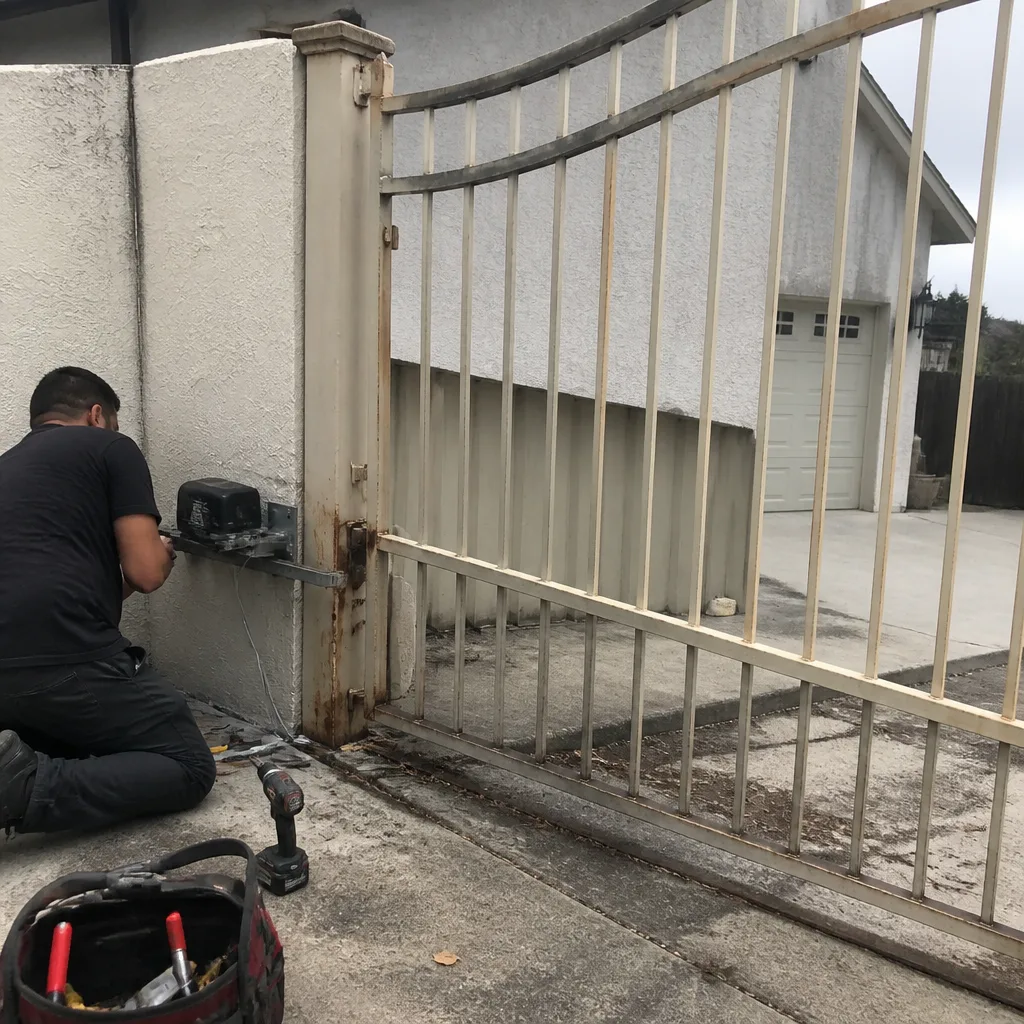 Before
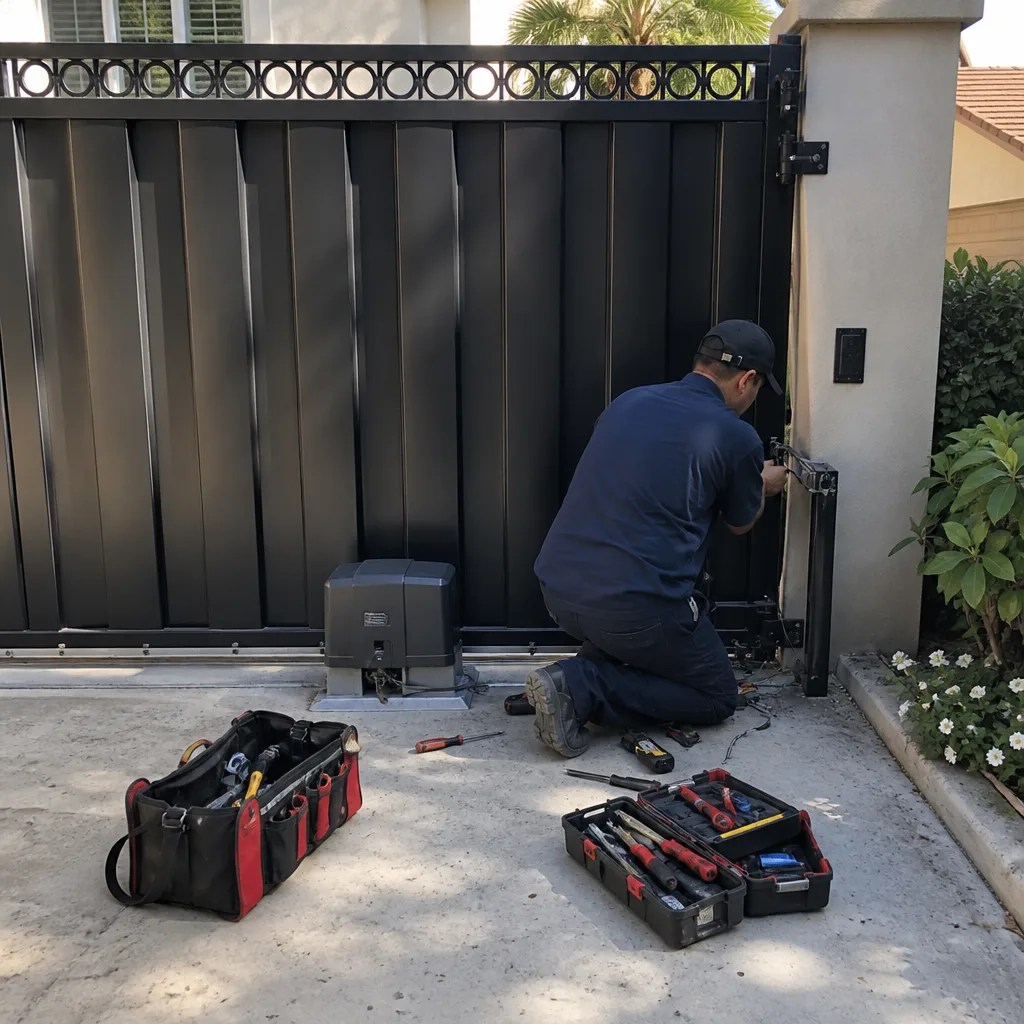 After
After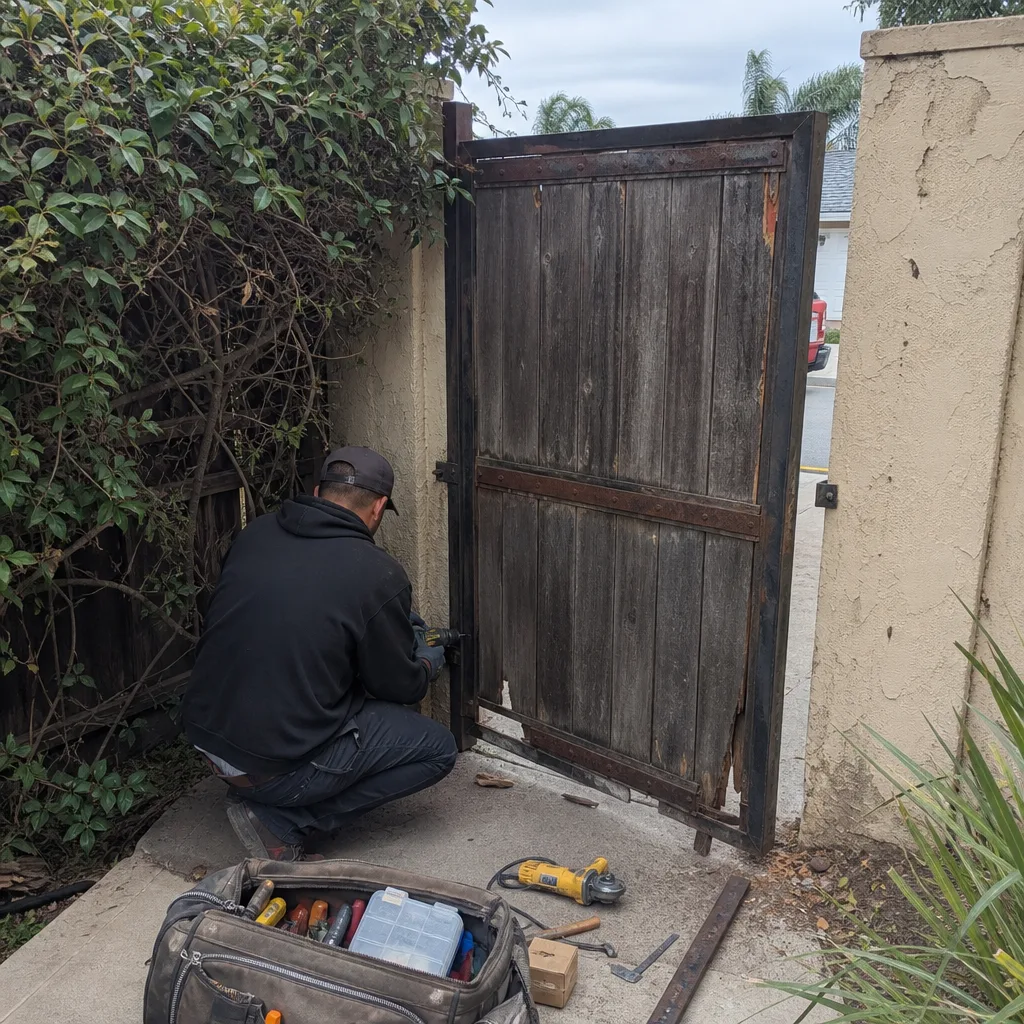 Before
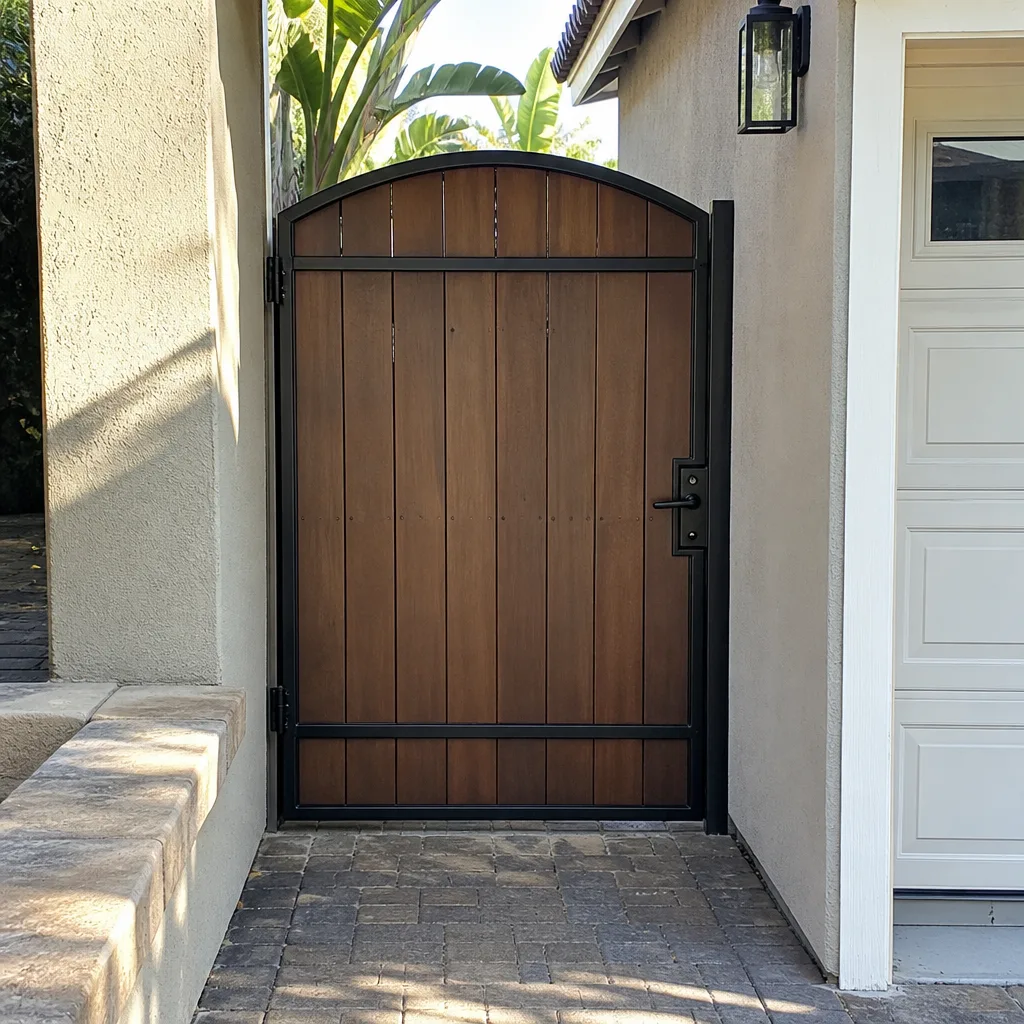 After
After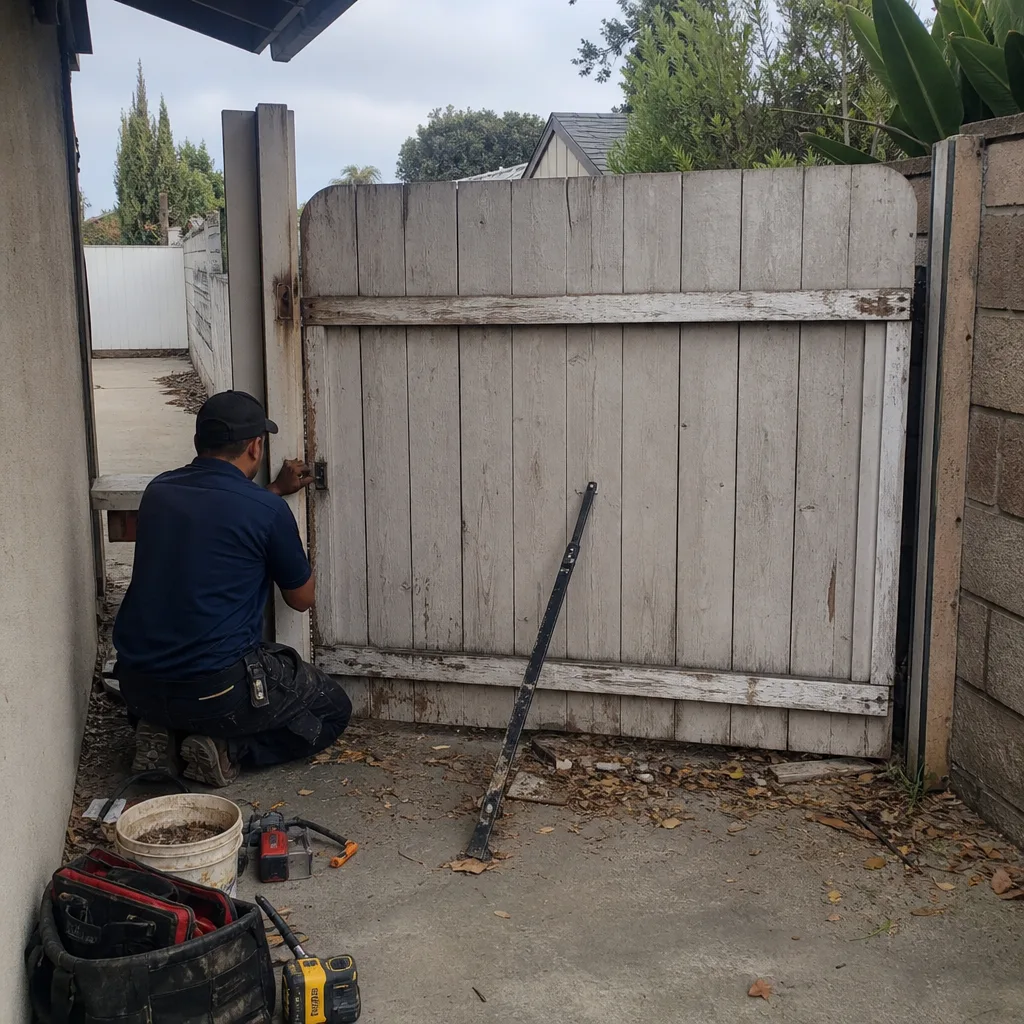 Before
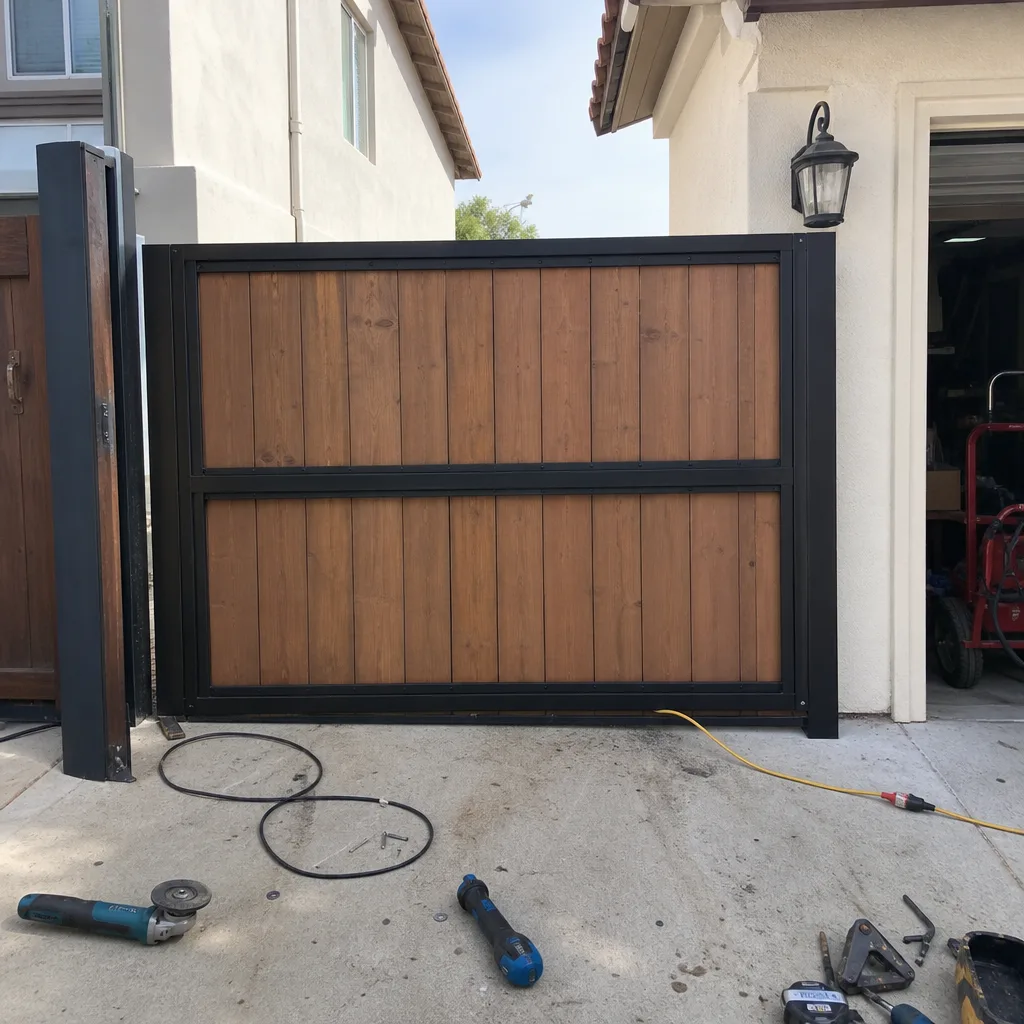 After
After