
Last updated October 16, 2026
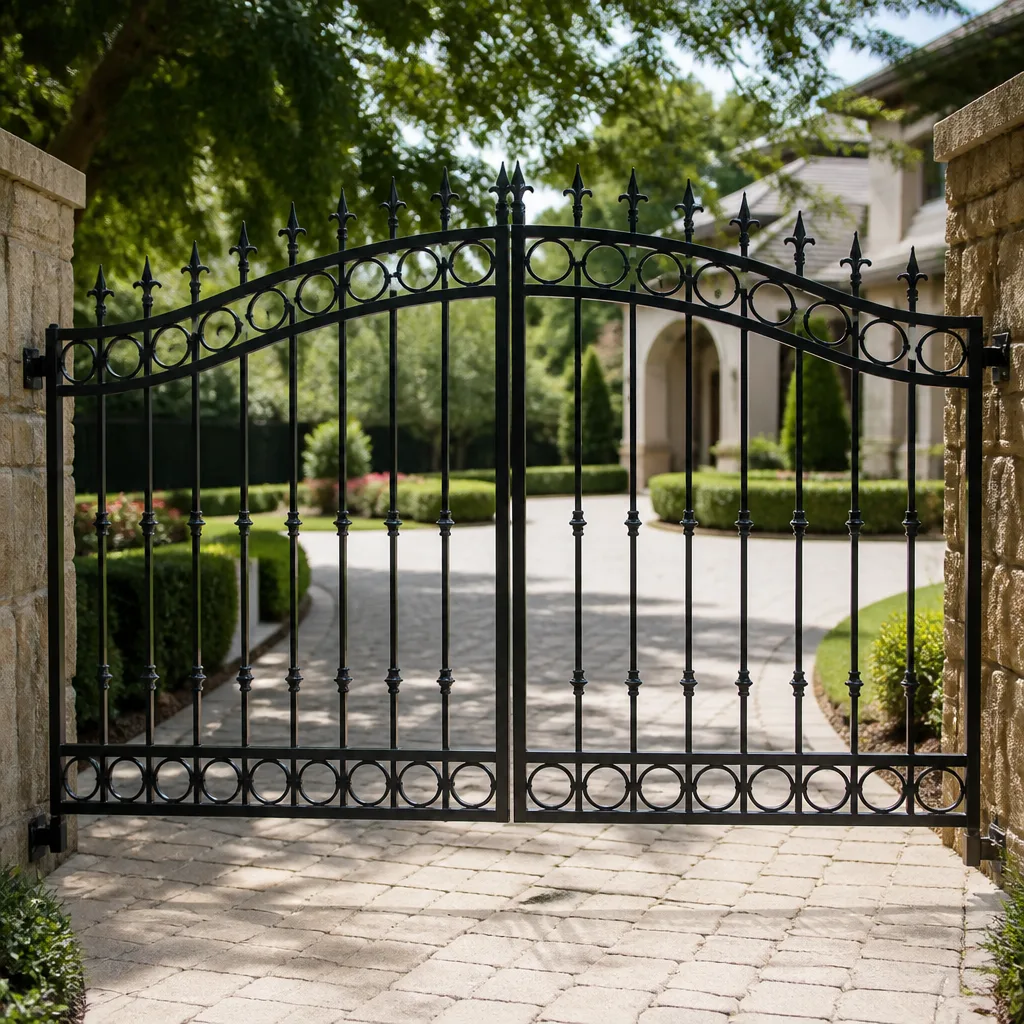 Wrought iron
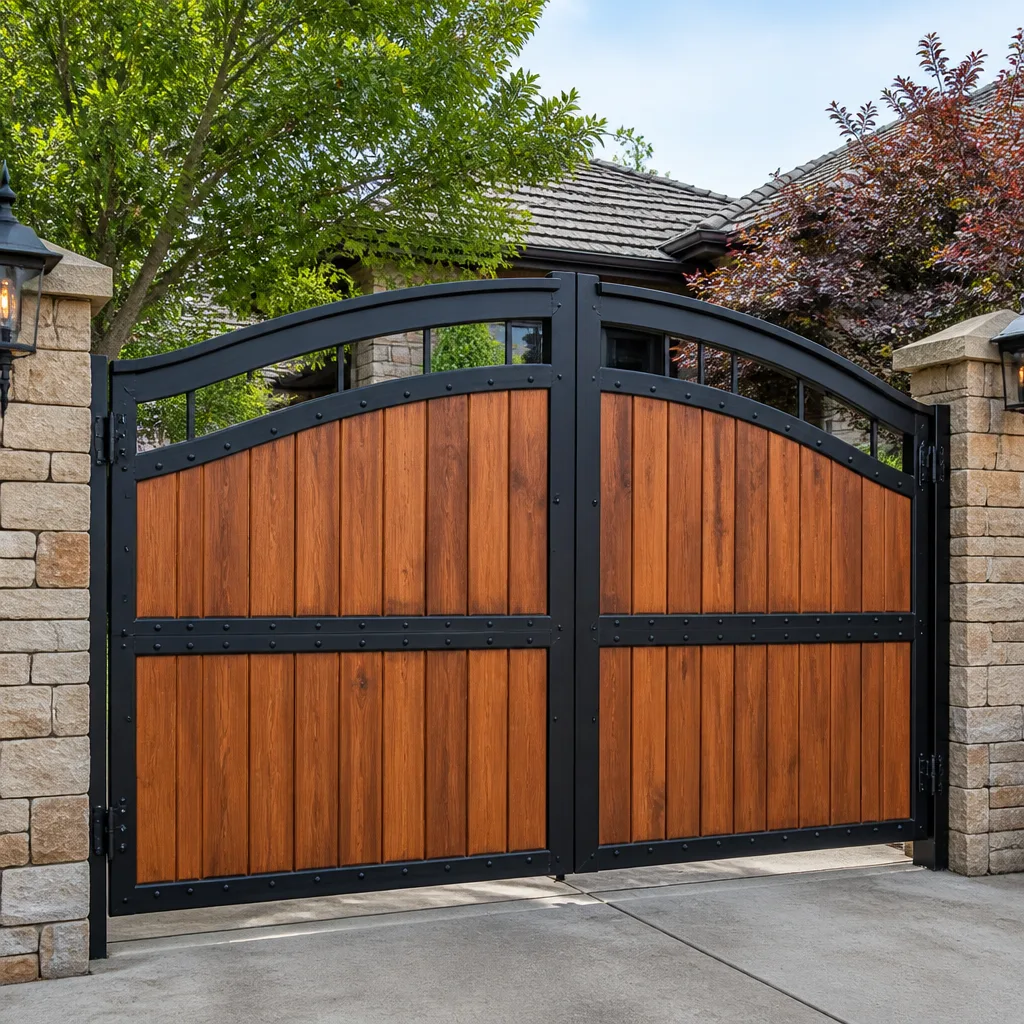 Wood & steel frame
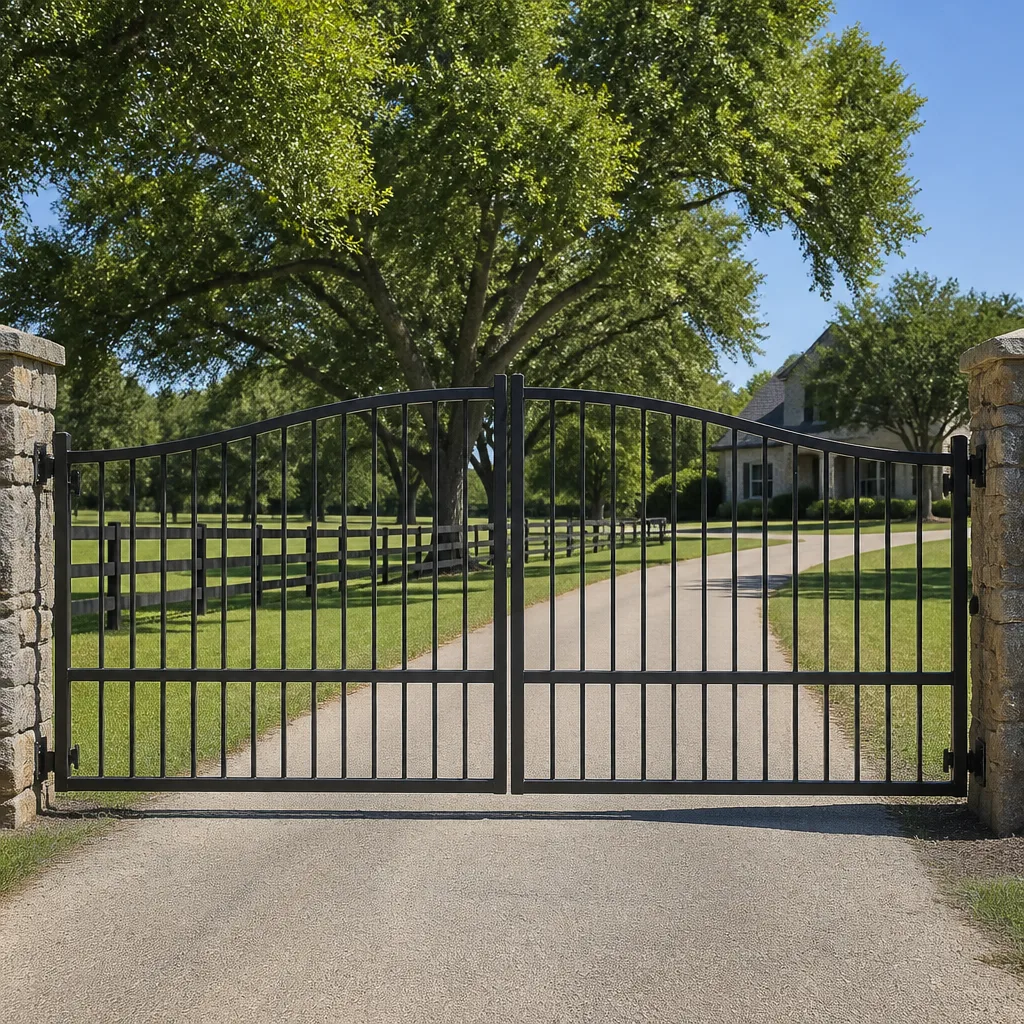 Farm & ranch
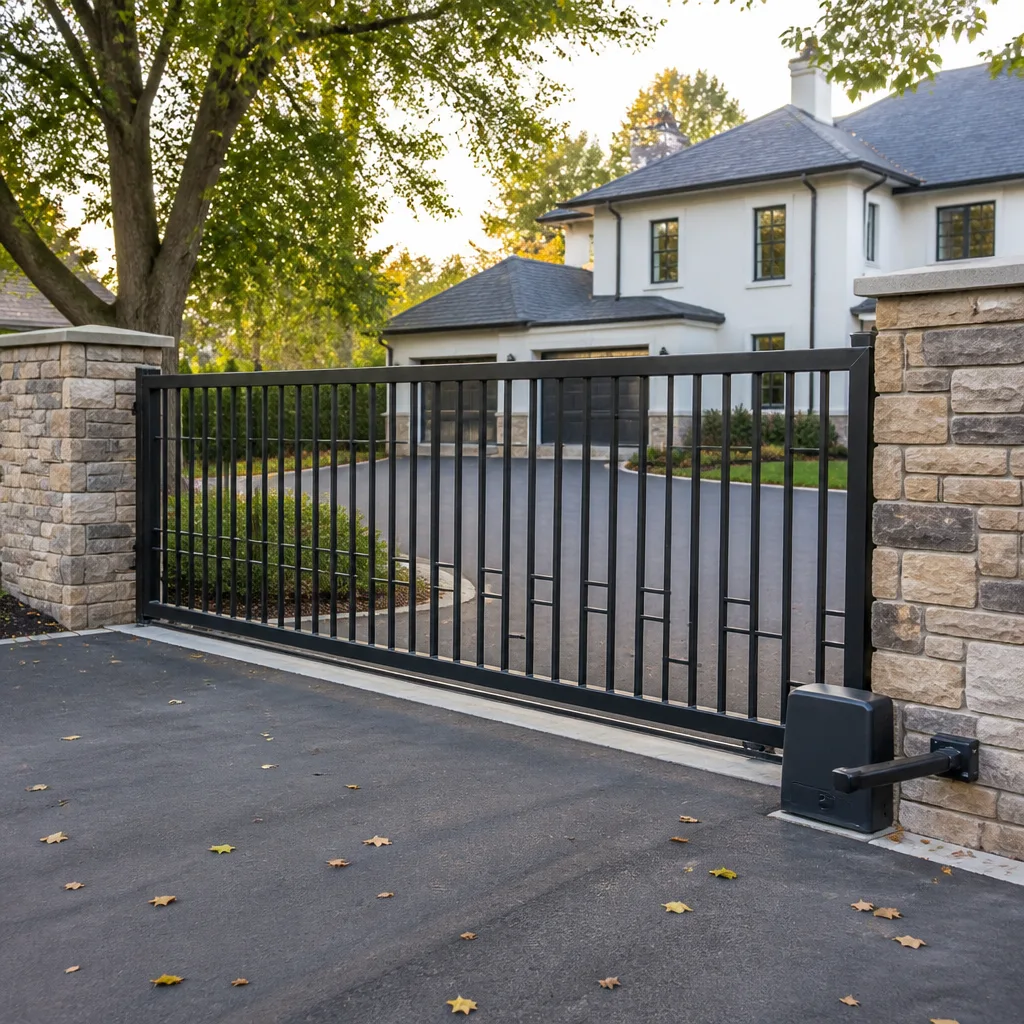 Sliding driveway gates
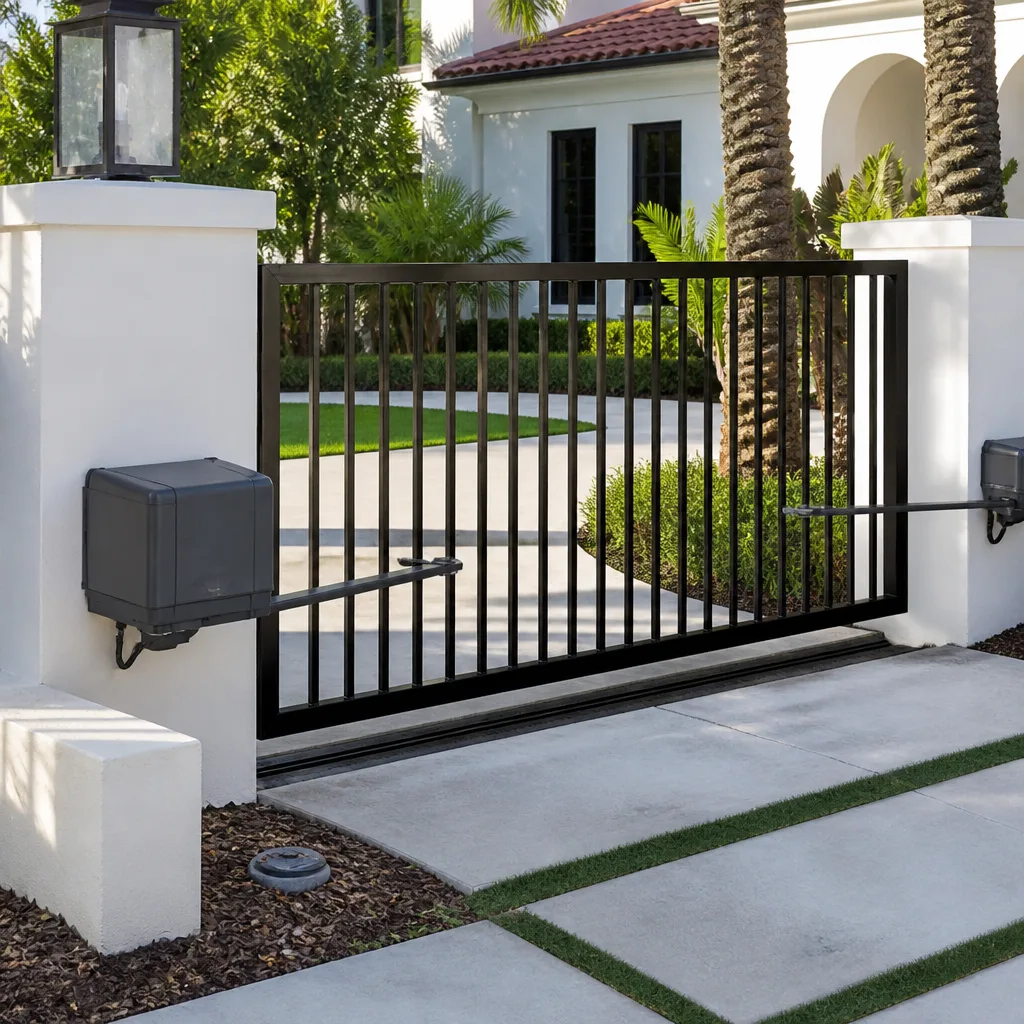 LiftMaster operators
Free on-site gate assessment - hinges, posts, and your LiftMaster or Nice gate operator checked before anything is quoted
The assessment is free and the quote is the invoice.
Get your free estimateHow to Hire a Gate Repair Contractor in San Diego: A Step-by-Step Guide
Here’s a counterintuitive fact that surprises most San Diego homeowners: there is no “gate repair license” in California. The state’s Contractors State License Board has a C-61/D-28 category for garage doors, gates, and activating devices, but nobody hangs a shingle that says “gate specialist.” A contractor’s legal right to touch your LiftMaster or FAAC opener is determined by manufacturer training, hands-on experience, and the specificity of their work history, not by the number painted on their truck door. That single gap in the licensing system is why hiring a gate repair contractor in San Diego feels like a gamble. This guide removes the guesswork. You’ll learn the exact questions that separate genuine specialists from opportunists, the red flags specific to our market, and how to read a guarantee so you know what you’re actually getting before you hand over a deposit.
Styles & brands we work with
Quick Answer
To hire a gate repair contractor in San Diego, start by confirming the contractor works on your specific opener brand (LiftMaster, FAAC, Mighty Mule, BFT, and others), then ask these three questions before scheduling: “What brands do you repair most often?”, “Can you put the price in writing before you start?”, and “What happens if the repair fails?” A trustworthy contractor answers with brand names and specifics, provides a written quote without pressure, and offers a named guarantee with defined terms, not vague promises. Skip anyone who can’t answer all three.
Table of Contents
- Why There’s No “Gate Repair License” in California (And What Actually Matters)
- The Three Questions to Ask Before You Schedule Anything
- How to Verify Brand-Specific Training Without Taking Their Word for It
- Why a Written Scope of Work and Price-Before-Work-Starts Is the Single Best Predictor of a Trustworthy Contractor
- San Diego-Specific Red Flags: Unlicensed Operators, Bait-and-Switch Fees, and Parts-on-the-Truck Pressure
- How to Read a Guarantee: What “Satisfaction Guaranteed” Actually Means Versus a Real Warranty
- Common Mistakes to Avoid
- When to Call a Professional
- Frequently Asked Questions
- The Bottom Line
Why There’s No “Gate Repair License” in California (And What Actually Matters)
In California, the C-61/D-28 classification covers doors, gates, and activating devices as one broad category. A contractor can earn that license working exclusively on commercial roll-up doors, then legally accept a residential gate repair job the next morning. Nothing in the licensing exam tests specific knowledge of a FAAC hydraulic operator or a Mighty Mule control board or a LiftMaster limit switch, the small sensor that tells the gate when to stop moving. That’s not a flaw in the system so much as a reality of how broad the trade is. It means the license alone tells you almost nothing about whether the person at your driveway can diagnose your specific opener.
So what actually matters? Three things, in this order:
- Brand-specific training and repetition. A technician who has rebuilt fifty LiftMaster operators in Hillcrest has a diagnostic mind trained on that brand’s failure patterns. A general handyman who has seen one LiftMaster unit in his career is guessing, not diagnosing.
- Local San Diego conditions knowledge. Salt air in Point Loma and Ocean Beach corrodes control boards and hinge hardware faster than inland neighborhoods. Coastal rust is a distinct failure mode, and a specialist who works west of I-5 daily knows to check for it immediately. A contractor who works mostly in Murrieta or Temecula may not.
- The contractor’s written policies, not their verbal promises. A real gate specialist puts things in writing: scope, price, warranty terms. The absence of paperwork is a signal, and not a good one.
When you’re hiring, treat the state license as a minimum floor, not a qualification signal. The real test is whether the contractor can name the brands they work on, describe failure patterns you recognize, and put their promises in writing. Calder Gate Repair‘s team is trained across nine major brands including LiftMaster, FAAC, BFT, Linear, Viking, Ghost Controls, DoorKing, Elite, and Mighty Mule. That breadth matters because most San Diego homes have whatever opener came with the property, and it’s rarely the brand a given contractor prefers.
Related: Calder Gate Repair San Diego home explains our approach to gate work across the city.
The Three Questions to Ask Before You Schedule Anything
You don’t need to become a gate technician to hire one. You need three questions that expose the difference between a specialist and someone who’s moonlighting. Here they are, phrased exactly as you should ask them over the phone or by text.
Question 1: “What brands do you repair most often?”
The right answer sounds like a list. “Mostly LiftMaster and FAAC, but we see a fair amount of Mighty Mule and BFT, and a few Viking and DoorKing units.” A specialist can rattle off brands without pausing because they’ve had their hands inside them. The wrong answer sounds like a shrug: “All brands, really,” or “Whatever you’ve got, we can handle it,” or “Brands don’t matter, they’re all the same.” They are not all the same. A FAAC hydraulic operator uses oil pressure to move the gate. A Mighty Mule swing arm uses a 12-volt linear actuator. The diagnostic approach is entirely different. If a contractor tells you brands don’t matter, you’re talking to someone who plans to figure it out in your driveway at your hourly rate.
Question 2: “Can you put the price in writing before you start?”
The right answer is an unqualified yes. “We write the scope and price and you approve it before any work begins.” No hesitation, no conditions. The wrong answer includes phrases like “it depends on what we find,” “we’ll know more once we’re in there,” or “trust me, I’ll take care of you.” Every honest gate repair contractor knows that some diagnostic work happens after the opener is opened up. But an honest contractor also knows how to price that diagnostic time separately and clearly. The work that follows diagnosis should be quoted in writing before parts come off the wall. If a contractor won’t commit to that structure before they arrive, don’t let them arrive.
Every Calder Gate Repair customer receives a written price before any work starts. The number on the invoice is the number agreed to at the door, never a surprise. That’s not a courtesy, it’s the foundation of how we work. And it’s the single most important hiring criterion in this guide: written price first, work second.
Question 3: “What happens if the repair fails?”
The right answer names a term and a remedy. “If the repair fails within 365 days, we come back at no charge.” Or “Our work carries a two-year parts-and-labor warranty, and here’s what it covers.” The wrong answer is vague: “We stand behind our work,” or “You won’t have any problems with us.” Everyone stands behind their work until something goes wrong. Then the standing stops. A guarantee is only as good as its trigger and its remedy. Without a defined duration and a defined response, “satisfaction guaranteed” is a marketing slogan with no enforceability.
Our policy is the 365-Day Done Right Promise: if the repair isn’t right, Calder makes it right. The promise includes a free second visit if the repair fails within the 365-day window. It’s stated in writing on every job, not implied.
How to Verify Brand-Specific Training Without Taking Their Word for It
Contractors know you can’t easily verify their training claims. The good ones make verification easy anyway. Here’s how to check without being a detective.
- Ask which opener brands they stock parts for. A contractor who keeps LiftMaster limit switches and FAAC hydraulic fluid and Mighty Mule control boards in their van isn’t guessing. They’re repairing. A contractor who always needs to “order that part” for every brand is telling you they don’t work on it regularly.
- Ask to see the manufacturer certification. LiftMaster, FAAC, BFT, and other major brands issue dealer certifications and training credentials. A certified dealer can typically show you a credential or direct you to the manufacturer’s dealer locator. If a contractor is listed on a manufacturer’s website as an authorized dealer, that’s verification you didn’t get from the contractor’s own mouth.
- Ask about a recent job with your specific brand. “Can you tell me about a recent FAAC repair in San Diego?” A specialist can describe the failure, the diagnosis, and the fix in thirty seconds. A generalist stalls, hedges, or changes the subject.
- Watch how they talk about the brand. A technician who works on LiftMaster daily will mention the model numbers, the known failure points, the common fixes. They’ll say things like, “That generation of FAAC has a limit switch that fails when the gate gets knocked out of alignment,” not “we’ll figure out what’s wrong when we get there.”
- Check their repair history, not just their marketing. A company that advertises “all brands” but has photos or reviews mentioning only one or two is telling you where their experience really is. Look for variety that matches what you need.
In our experience across San Diego neighborhoods from Rancho Bernardo to Chula Vista, the single most common situation we walk into is a gate that was misdiagnosed by someone working outside their brand comfort zone. The homeowner paid for a part that didn’t fix the problem, and now the real diagnosis is more expensive because the wrong repair muddied the picture. Brand familiarity isn’t a nice-to-have. It’s the whole job.
Why a Written Scope of Work and Price-Before-Work-Starts Is the Single Best Predictor of a Trustworthy Contractor
Ask any San Diego homeowner about their worst contractor experience and the story usually involves the price changing after the work began. The quote was one number. The invoice was another. The contractor’s explanation is plausible: they found more damage, the parts cost more than expected, the job was bigger than it looked. And the homeowner pays because the gate is now disassembled in their driveway and they have no leverage.
A written scope of work and a price agreed before any work starts eliminates this entire category of bad experience. Here’s why it’s the strongest single signal you can ask for.
It Forces the Contractor to Diagnose Before They Quote
To write a scope, the contractor has to identify the actual problem. “Gate won’t open” is not a scope. “Replace failed limit switch on LiftMaster LA400 operator; test travel distance; adjust force settings; verify safety edges respond” is a scope. The act of writing a scope forces diagnosis. A contractor who resists a written scope is often resisting the diagnosis, because once the problem is identified, the price becomes predictable, and predictability removes the contractor’s ability to pad at the end.
It Protects You From the “Discovered Damage” Upsell
Sometimes a gate genuinely has more damage than the initial diagnosis reveals. A written scope handles this cleanly: the contractor documents the additional findings and gives you a written change order for your approval. You approve it or you don’t. The original scope stands. Without this structure, “discovered damage” is whatever the contractor says it is, priced at whatever they say it costs. With this structure, you remain the decision maker.
It Proves the Contractor Has Done This Before
A contractor who writes scopes every day can produce one in minutes because the workflow is automatic. A contractor who works off verbal agreements is often avoiding the task because they know their prices don’t hold up to written scrutiny. The willingness to write things down is directly proportional to the contractor’s confidence in their own pricing.
At Calder Gate Repair, the written price is not optional. It’s the rule. Every customer gets a written scope and price before any work starts, and the price quoted is the price on the invoice. This process is part of the Relay Standard: the booking-to-invoice experience that includes a live arrival time, before-and-after photos, and a digital invoice you pay from a link. You see the work that was done and you know what it cost before you pay for it.
Related: Gate Repair in San Diego explains our full repair process, including how scopes and prices are built.
San Diego-Specific Red Flags: Unlicensed Operators, Bait-and-Switch Fees, and Parts-on-the-Truck Pressure
Every city has bad contractors, but San Diego’s gate repair market has a few failure patterns that show up more often here than elsewhere. Recognize them and walk away.
Red Flag 1: The “Cheap Diagnostic” That Becomes a Sales Call
You see an ad for a “$29 gate inspection” or “free checkup.” The technician arrives, opens the opener, looks serious, and announces that your LiftMaster needs a replacement control board, a new safety edge, and probably new hinges. The total is $1,400, and they can do it right now because they happen to have the parts on the truck. The $29 inspection was never a service. It was a lead generator. In San Diego, this tactic is common because the high concentration of automated gates in communities like Santaluz, Rancho Santa Fe, and Scripps Ranch makes for a target-rich environment. A legitimate diagnostic fee should be disclosed up front, not buried in a pitch.
Red Flag 2: The Unlicensed Operator Who Looks Licensed
California requires a C-61/D-28 license for gate and door work over $500. But unlicensed operators know how to look legitimate: a magnetic sign on the truck, a website, a Google Business Profile. They also know that most homeowners never check. You can verify any contractor’s license in minutes on the Contractors State License Board website. Type in the business name or license number and confirm the classification is D-28 or C-61. If they’re not there, or if the classification is something unrelated, the person at your gate is not legally allowed to do the work. That’s not a technicality. It means no bond, no workers’ compensation insurance if they get hurt on your property, and no recourse through the CSLB if the work is defective.
Red Flag 3: “I Have the Parts on the Truck” Pressure
This one is subtle. The contractor diagnoses a problem, then mentions that they have the exact part on the truck and can fix it right now. The implied urgency: if you don’t act today, the part won’t be available, and you’ll wait weeks. What’s actually happening: the contractor wants your signature before you have time to get a second opinion. Honest contractors with parts on the truck will still give you time to decide. They’ll put the price in writing and leave. Pressure to decide now, in the driveway, with the gate disassembled, is a manipulation tactic. Walk.
Red Flag 4: The Coastal Upcharge That Appears Mid-Job
Contractors sometimes quote a job without accounting for San Diego’s coastal corrosion, then “discover” rust damage after the work begins and add it to the invoice. This is a variation of the discovered-damage upsell, and it’s especially common in neighborhoods like La Jolla, Del Mar, and Coronado where ocean air is the default gate killer. A written scope handles this: if rust wasn’t in the scope, it’s a change order you approve. If the contractor won’t put the original scope in writing, the mid-job “rust discovery” is the play from the start.
How to Read a Guarantee: What “Satisfaction Guaranteed” Actually Means Versus a Real Warranty
“Satisfaction guaranteed” is the most meaningless phrase in home services. Legally, it commits the contractor to nothing. Satisfaction is subjective. If you’re unsatisfied, the contractor can argue that you’re being unreasonable, and there’s no defined remedy. You’re left with a broken gate and a semantic dispute.
A real guarantee has three defined elements.
Element 1: A Named Term
The guarantee must specify its duration. “90 days.” “One year.” “365 days.” Without a term, the contractor can decide the guarantee expired the moment their truck left your driveway. Ask: “How long does this guarantee last, and is it in writing?”
Element 2: A Defined Trigger
The guarantee must say what activates it. “If the repair fails.” “If the same part breaks again.” “If the gate stops working for the same reason.” A real warranty names the failure condition. A vague promise says “if you’re not happy,” which means nothing.
Element 3: A Defined Remedy
The guarantee must say what you get when it activates. “We return at no charge.” “We replace the part free.” “We refund the labor.” Without a defined remedy, the guarantee is a sentiment. With one, it’s a contract.
Our guarantee is the 365-Day Done Right Promise, and it names all three elements. The term is 365 days. The trigger: if the repair isn’t right within that window. The remedy: Calder returns and makes it right, including a free second visit at no charge to you. It’s stated in writing on every job, not printed on a website and forgotten.
Here’s a quick comparison:
- “We stand behind our work.” Term: unclear. Trigger: unstated. Remedy: unstated. Meaning: nothing.
- “30-day satisfaction guarantee.” Term: 30 days. Trigger: your subjective satisfaction. Remedy: unstated. Meaning: the contractor decides what satisfies you.
- “365-Day Done Right Promise: if the repair fails within 365 days, we return and fix it at no charge.” Term: 365 days. Trigger: repair failure. Remedy: free return visit. Meaning: a real warranty.
When you’re comparing contractors in San Diego, ask each one to name their guarantee’s term, trigger, and remedy. The ones who can’t answer are selling hope wrapped in vague language. Hire the one who can.
Related: Gate Opener Repair in San Diego covers what a proper repair includes and how our guarantee applies.
Common Mistakes to Avoid
- Hiring on price alone. The lowest quote in San Diego often comes from someone who hasn’t budgeted for the actual fix, and they’ll recover it through change orders or shortcuts. Cheap diagnostics are lead generation, not service.
- Assuming the state license means gate expertise. California’s C-61/D-28 classification covers everything from commercial roll-up doors to residential gate openers. The license is a floor, not a filter. Ask the brand questions anyway.
- Not asking about the guarantee before work starts. If the contractor won’t name a term, trigger, and remedy in writing, you’re buying a wish, not a warranty. Ask before you sign, not after the invoice arrives.
- Letting “parts on the truck” pressure you into same-day approval. Time pressure in the driveway is often a tactic to prevent comparison shopping. A written quote should stand on its own without a countdown timer.
- Ignoring San Diego coastal corrosion. Gates in Point Loma, Ocean Beach, and Del Mar fail differently than gates in Poway or Santee. Hire a contractor who asks where you live and mentions salt air, not one who treats all of San Diego as identical.
- Skipping the written scope. A verbal scope is a blank check. Insist on a written scope and a written price, and approve both before work begins. This single step prevents the most common contractor horror story.
When to Call a Professional
Not every gate problem needs a contractor. A squeaky hinge might just need lubrication. A gate that opens slowly might have a minor alignment issue you can spot visually. But certain scenarios demand professional attention. If your gate opener makes a grinding noise but the gate doesn’t move, you likely have a stripped gear in the operator, and continuing to run it will compound the damage. If your safety edges don’t reverse the gate when you block them, that’s a safety issue that should stop all use until it’s repaired. If your gate works sometimes but not others, you likely have an intermittent electrical fault that’s hard for a homeowner to trace and easy for a trained tech with a multimeter. And if water has entered the control board enclosure, especially after San Diego’s winter rains, corrosion is already underway even if the gate still works today. Calder Gate Repair San Diego offers free estimates across San Diego, and our team works on every major brand. Call (619) 541-7844 if any of these scenarios sound familiar.
Frequently Asked Questions
Most gate opener repairs in San Diego run between $150 and $450 before parts, depending on the diagnosis time and the complexity of the opener. Simple fixes like a misaligned safety edge or a dirty limit switch are on the lower end. Control board replacement on a FAAC or LiftMaster unit, including parts, can run $500 to $1,200. A full opener replacement typically runs $1,200 to $3,000 installed, depending on the brand and whether the gate is a slide, swing, or overhead. Call (619) 541-7844 for an exact quote on your specific gate and opener, estimates are free.
For emergency repairs, Calder Gate Repair dispatches technicians throughout San Diego, and our live phone line is answered 24/7 by a real person. Same-day availability depends on the technician’s schedule, but urgent repairs are prioritized. Call (619) 541-7844 and tell us what’s happening, we’ll tell you if we can get to you today and give you a live arrival time you can track.
Most gate opener repairs, including limit switch replacement, control board swaps, and safety edge replacement, do not require a permit. If the technician is installing a new operator or making structural changes to the gate itself, a permit may be required depending on the scope and the city’s requirements. A qualified contractor will know which work triggers a permit and will tell you before work begins, not after.
We service nine major brands: LiftMaster, FAAC, BFT, Linear, Viking, Ghost Controls, DoorKing, Elite, and Mighty Mule. That covers nearly every opener a San Diego homeowner is likely to have, from condo gates in downtown high-rises to ranch gates in Jamul.
If the gate opens and closes but makes noise, moves slowly, or binds at a certain point, the problem is likely mechanical: hinges, track, or the gate’s weight distribution. If the gate doesn’t respond to the remote at all, or responds intermittently, the problem is likely electrical: control board, limit switch, remote receiver, or power supply. A trained technician separates these quickly. Call (619) 541-7844 and describe the symptom, and we’ll help you figure out whether it’s urgent and what it likely involves before anyone comes out.
Our 365-Day Done Right Promise covers the repair itself. If the repair fails within 365 days, we return at no charge and make it right. It’s stated in writing on every job, and the free second visit doesn’t come with conditions or arguments. That’s the guarantee.
The Bottom Line
Hiring a gate repair contractor in San Diego comes down to three things: brand-specific competency, written pricing, and a guarantee that names its terms. The contractor’s ability to name the brands they repair regularly tells you whether they’re a specialist or a generalist. The willingness to put scope and price in writing before work starts tells you whether they stand behind their own diagnosis. And a guarantee with a named term, trigger, and remedy tells you what happens when things go wrong. Ask the three questions. Insist on the written scope. Read the guarantee. If a contractor passes all three, you’ve found someone worth hiring. If Calder Gate Repair can help, call (619) 541-7844 for a free estimate, we’ll walk you through all of it before you commit to anything.
Written by Nico Alvarez, Owner at Calder Gate Repair San Diego, serving San Diego since 2009.
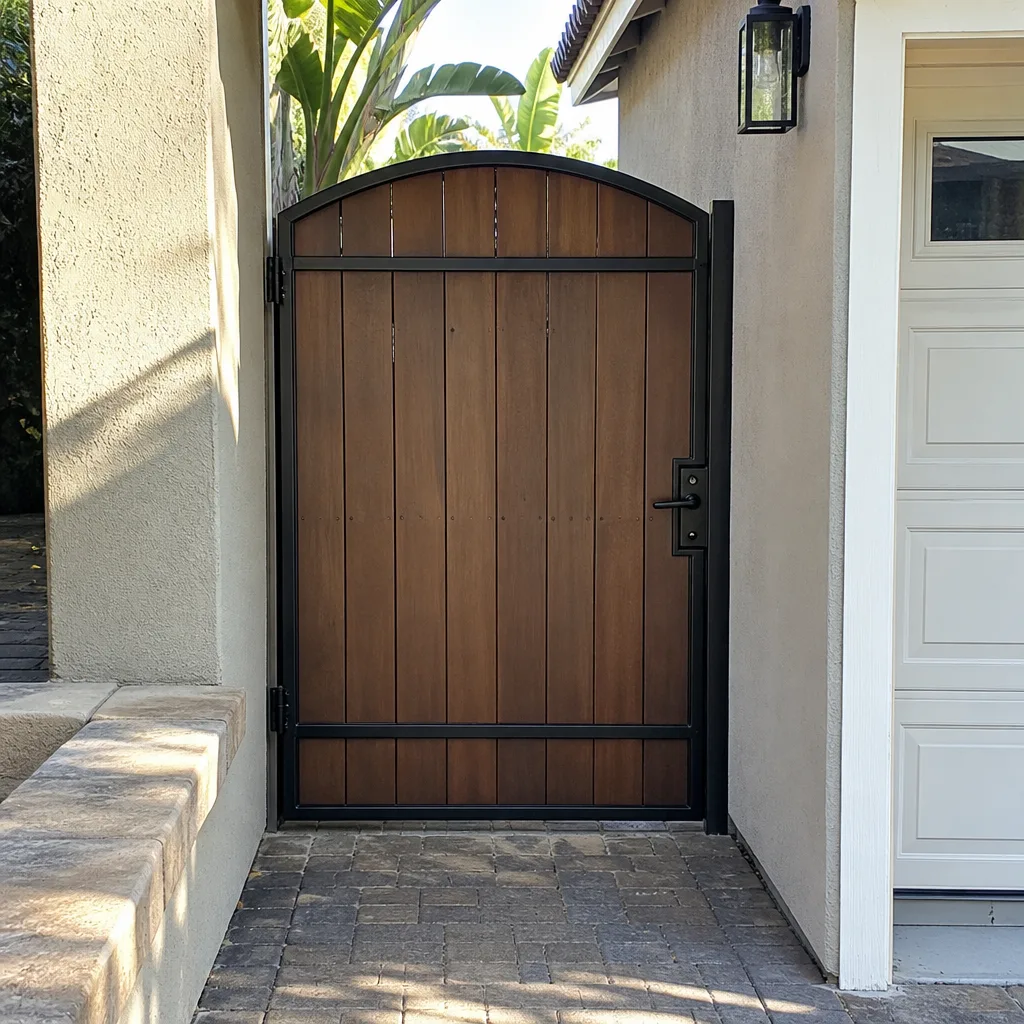
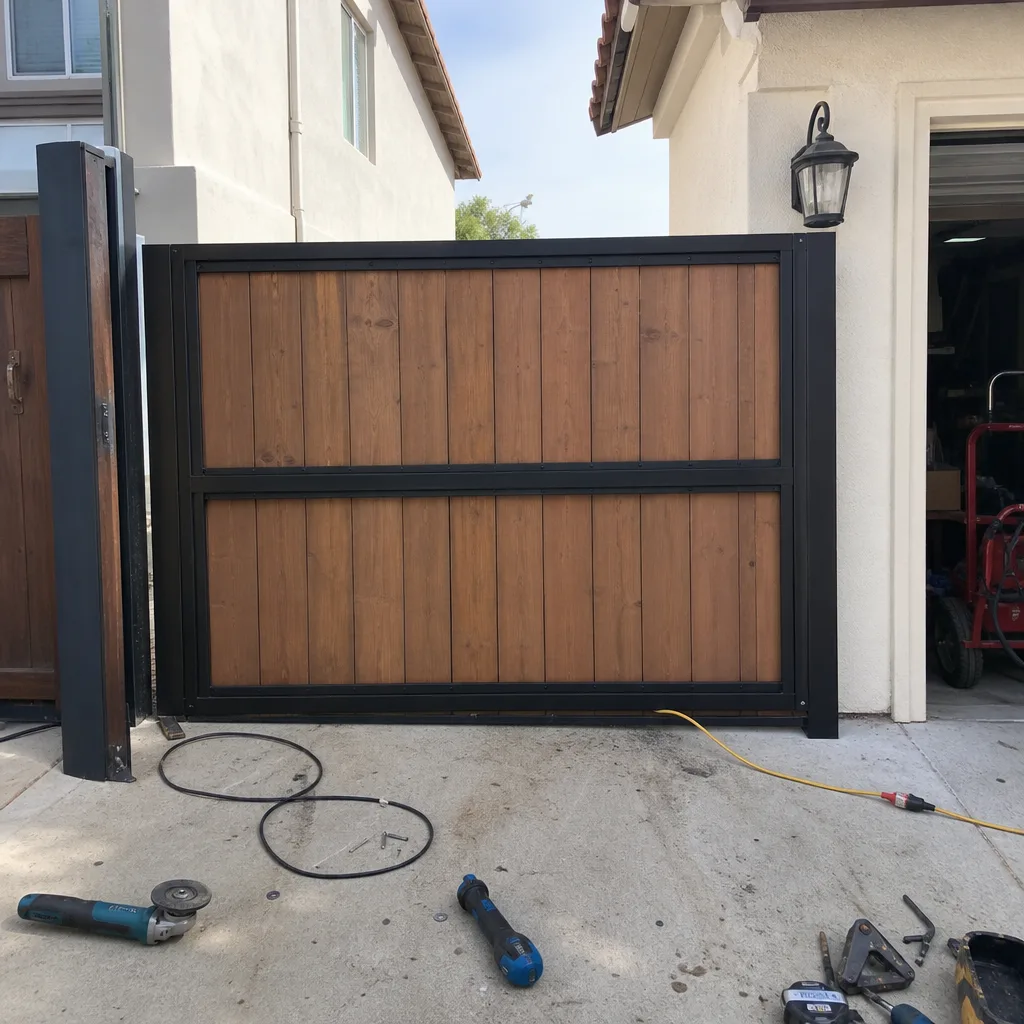
See the difference
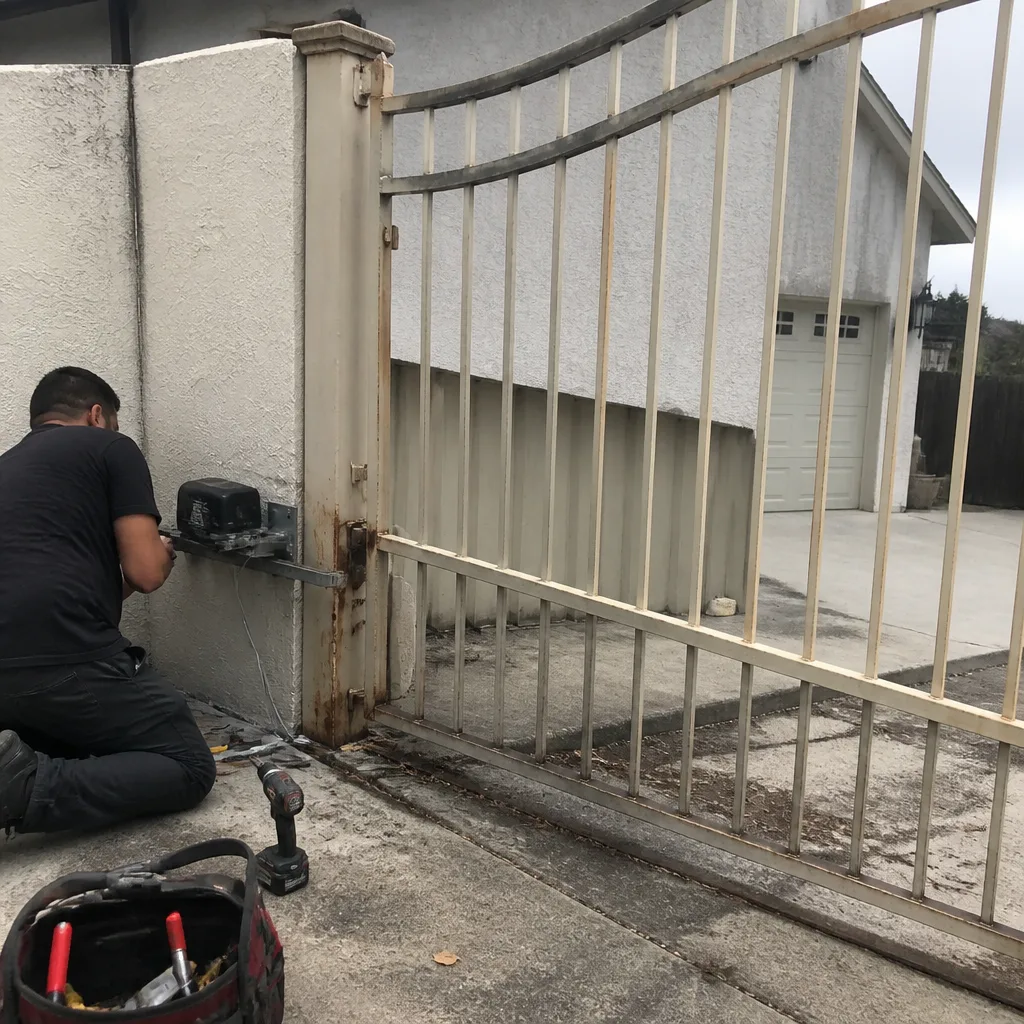 Before
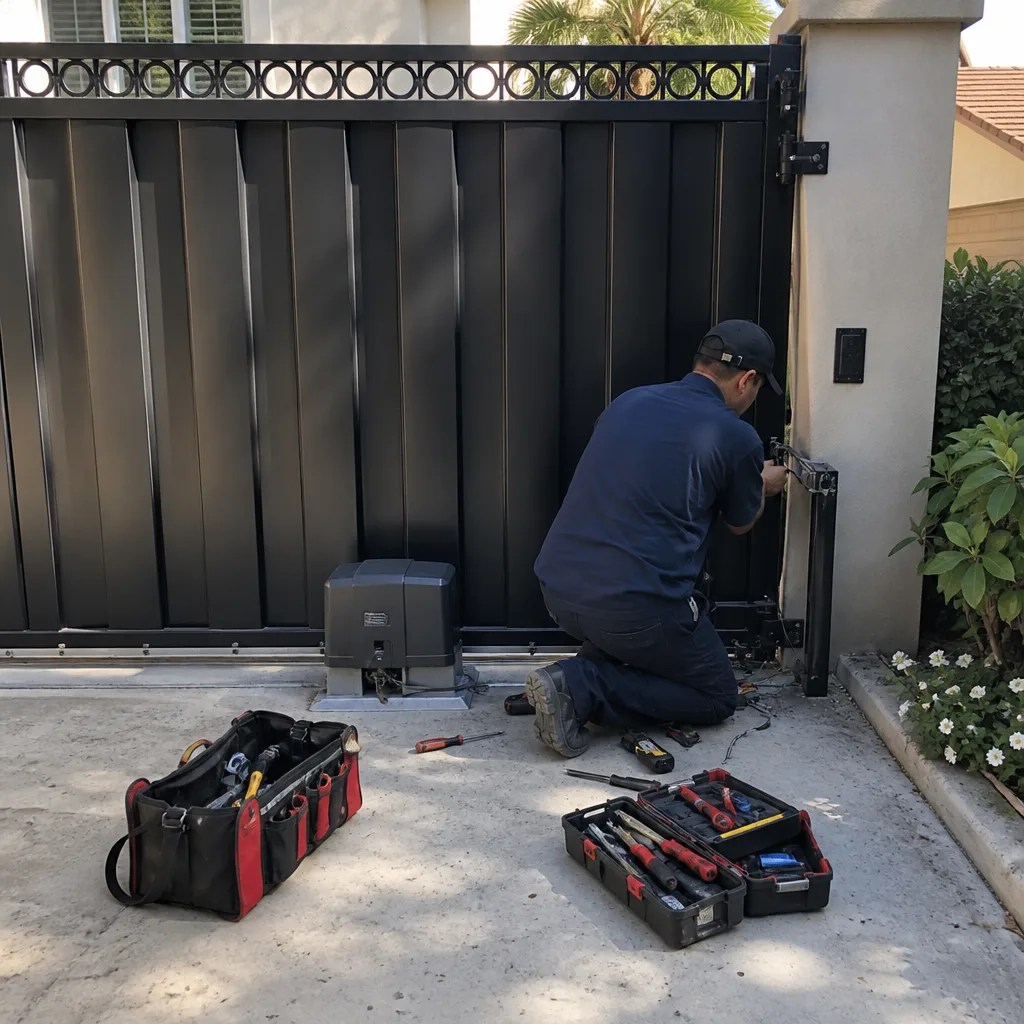 After
After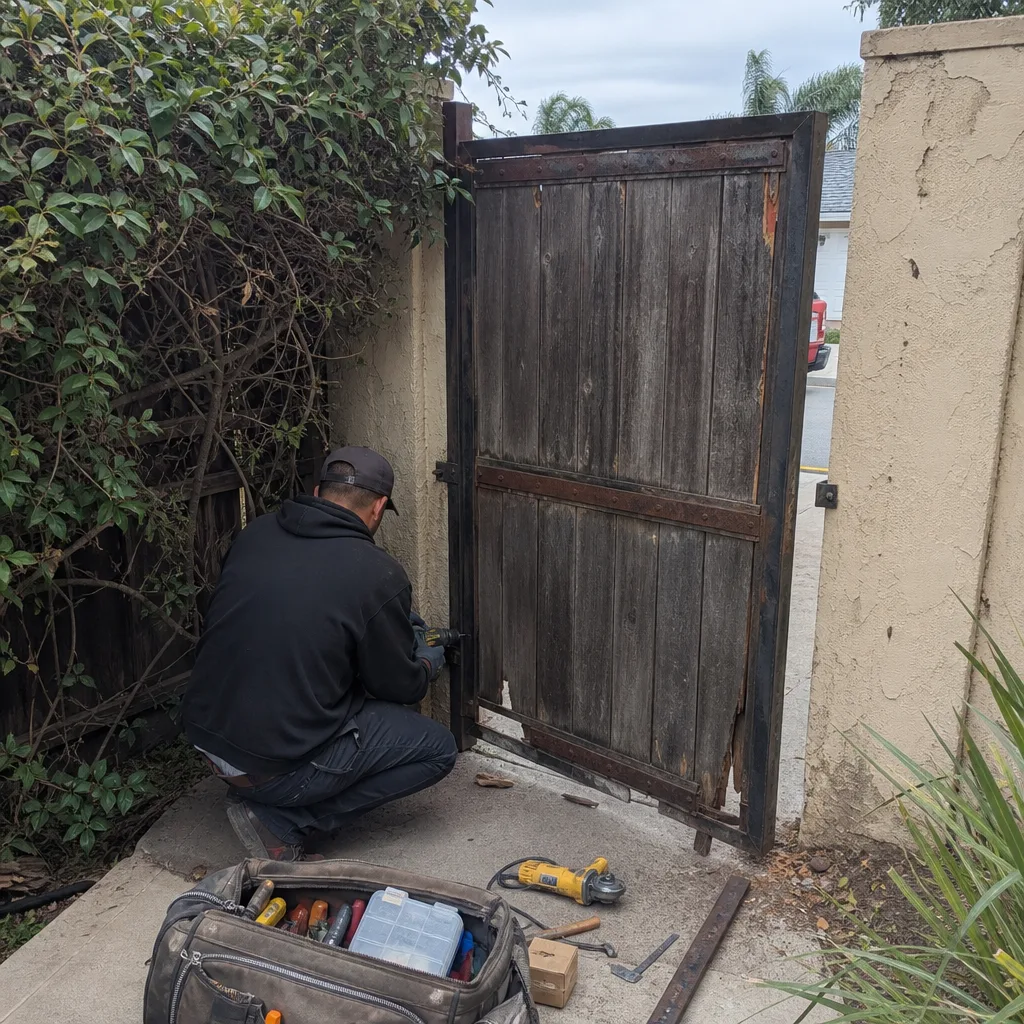 Before
 After
After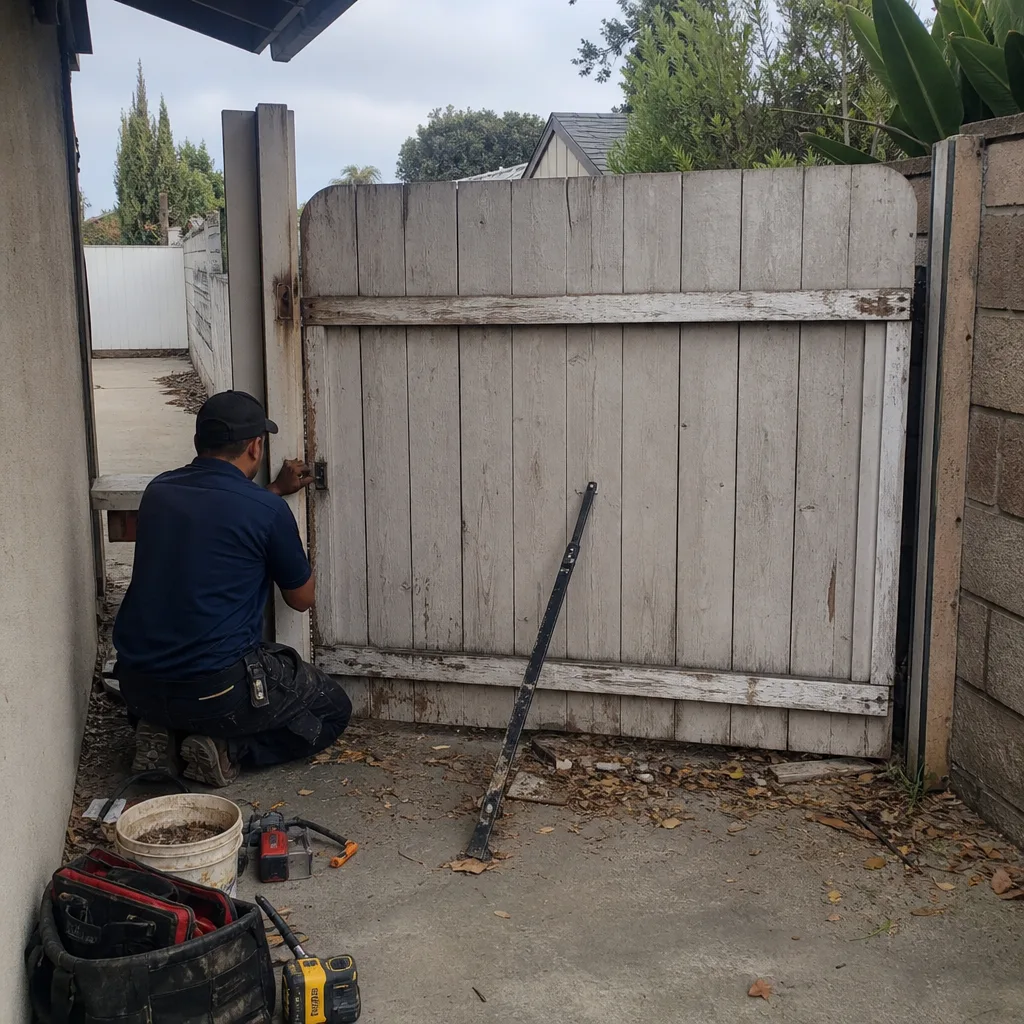 Before
 After
After