
Last updated October 16, 2026
 Wrought iron
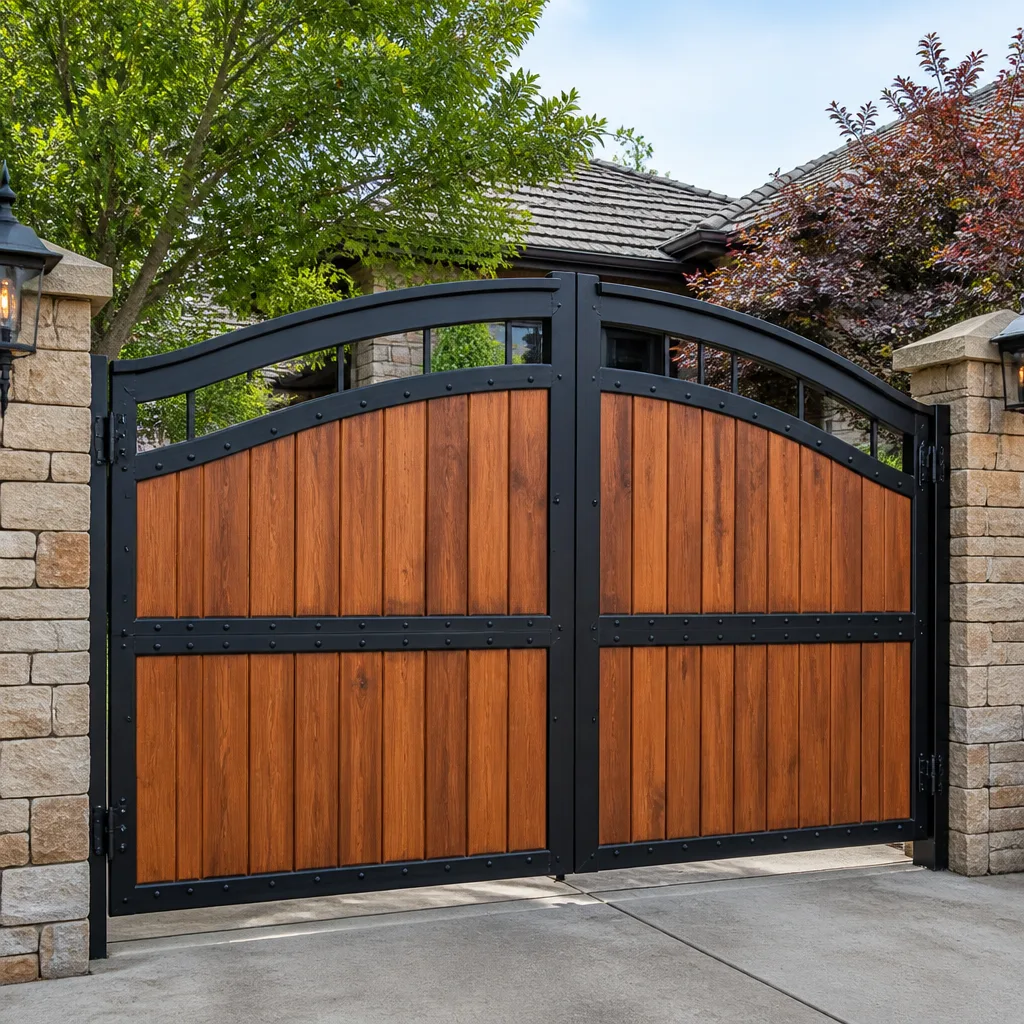 Wood & steel frame
 Farm & ranch
 Sliding driveway gates
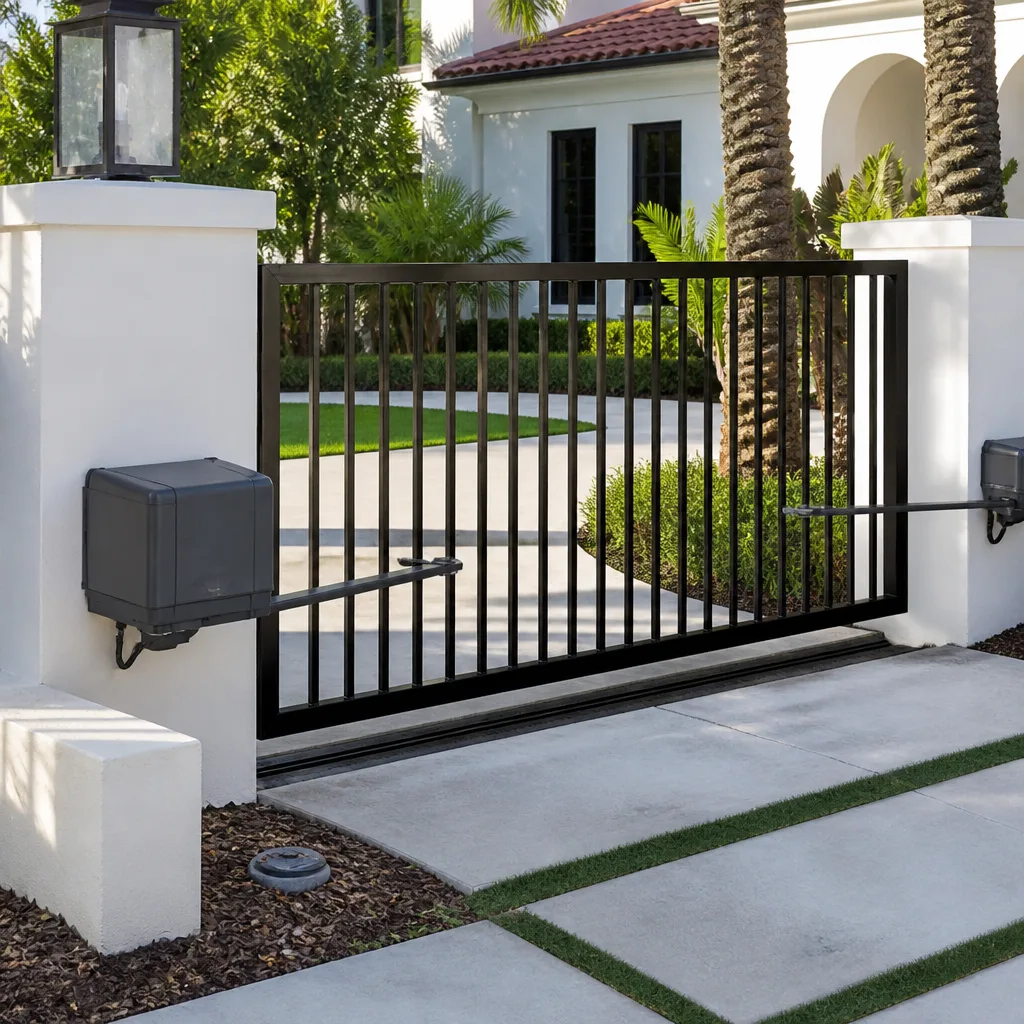 LiftMaster operators
Free on-site gate assessment - hinges, posts, and your LiftMaster or Nice gate operator checked before anything is quoted
The assessment is free and the quote is the invoice.
Get your free estimateSeasonal Gate Repair Care for San Diego: Year-Round Homeowner’s Guide
The Santa Ana winds that arrive each October carry particulate that contaminates gate opener circuit boards faster than any other single weather event in San Diego, and almost no homeowner prepares for it. That fine desert dust doesn’t just settle on patio furniture. It works its way into control boards, limit switches, and gear housings, where it grinds against moving parts and shorts sensitive electronics. The Complete Guide to Gate Repair in San Diego covers the four real seasons the region actually has: the marine layer cycle, the Santa Ana window, the rain window, and the UV ramp-up. Each one stresses different components of your gate system, and treating gate care as a single annual task instead of four targeted responses is why so many San Diego homeowners get caught with a dead gate at exactly the wrong moment.
Styles & brands we work with
Quick Answer
Seasonal gate care in San Diego means adjusting your maintenance routine four times a year to match the city’s actual weather patterns, not a generic calendar. From May through September, focus on corrosion prevention from marine layer moisture. During October and November, clean dust and debris from circuit boards and tracks after Santa Ana winds. In the winter rain window, inspect drainage, hinges, and battery backups. And in spring, realign photocells and reseal wood gates as the sun angle shifts and UV intensifies. A 15-minute walk-through each season catches roughly 80% of failures before they become emergency calls.
Table of Contents
- May – September: Marine Layer Corrosion Control
- October – November: Santa Ana Dust and Debris Defense
- December – February: Rain Window Rust Prevention
- March – April: UV Ramp-Up and Photocell Realignment
- The 15-Minute Seasonal Walk-Through Routine
- How Gate Type Changes Your Seasonal Checklist
- Common Mistakes to Avoid
- When to Call a Professional
- Frequently Asked Questions
- The Bottom Line
May – September: Marine Layer Corrosion Control
From late spring through early fall, San Diego’s coastal neighborhoods wake up under a gray blanket. That marine layer isn’t just fog. It’s salt-laden moisture that settles on every exposed metal surface, and it’s the single biggest driver of premature gate hardware failure west of Interstate 5. In Ocean Beach, Point Loma, La Jolla, and Coronado, we regularly see gate hinges and opener chassis showing rust within two to three years of installation, while the same hardware inland in Mission Valley or Rancho Bernardo stays clean for a decade. The difference is the marine layer’s salt content, which accelerates oxidation even when the metal never gets rained on.
Corrosion on a gate system is rarely cosmetic. When rust forms on a swing gate hinge, it increases friction at the pivot point. That friction forces the opener motor to work harder, which draws more current, which generates heat, which burns out the motor’s capacitor or trips the thermal overload. What starts as surface rust on a hinge becomes a $400 opener repair within a season or two. The same principle applies to slide gate rollers and track wheels. Salt-moisture penetration into bearing surfaces is the root cause.
What actually works against marine layer corrosion in San Diego:
- A marine-grade lubricant applied quarterly. Standard WD-40 displaces moisture but evaporates within days and leaves almost no protective film. Use a lithium-based or marine-specific grease on hinge pins and roller bearings. Apply it to clean metal, and wipe away excess so it doesn’t trap dirt.
- Inspect zinc plating and powder coating for chips or scratches. A scratch through the finish exposes bare steel, and in salt air that scratch becomes a rust spot within weeks. Touch-up paint or a cold-galvanizing spray stops it before it spreads.
- Check stainless steel for tea staining. Even 304 stainless develops a brown surface stain in San Diego’s coastal zones. It’s not structural rust, but it signals the environment is aggressive enough to affect other components. Clean it with a mild acid wash and rinse thoroughly.
- Verify weep holes on the gate frame are clear. Hollow steel gates collect condensation from marine layer cycles. Weep holes at the bottom let that water drain instead of pooling inside and rusting the gate from the inside out.
If your gate is within two miles of the coast, pencil in these checks every 90 days during marine layer season. Homes east of the 805 can stretch it to twice per season. The salt concentration drops off quickly as you move inland, but it doesn’t hit zero until you’re past El Cajon or Poway.
October – November: Santa Ana Dust and Debris Defense
Santa Ana events are San Diego’s most destructive weather for gate electronics, and the mechanism is more subtle than most homeowners realize. The winds themselves don’t damage gates. The dust they carry does. Santa Ana winds originate in the high desert and pick up fine particulate as they accelerate through the mountain passes. That dust is abrasive, slightly alkaline, and electrically conductive when humid. When it infiltrates a gate opener’s control board, it creates two problems at once: it grinds against relay contacts and micro-switches mechanically, and it forms a conductive film across circuit traces that can cause phantom triggering, intermittent failures, or a complete board short.
We see more circuit board replacements in November than any other month, and in our experience, a significant share of those failures trace directly to Santa Ana dust accumulation. The fix is preventive, and it’s simple enough for most homeowners to do themselves.
- After any significant Santa Ana event, blow out the control box. Use compressed air at low pressure, or a clean dry paintbrush if you don’t have a compressor. Focus on the control board, the transformer, and the terminal strip where wires connect. Hold the can or nozzle at least six inches back to avoid forcing dust deeper into connectors.
- Inspect the control box gasket. The rubber seal around the lid is what keeps dust out between wind events. If it’s cracked, flattened, or missing, replace it. A new gasket costs less than $10 and prevents the $200 – $400 circuit board repair that follows dust infiltration.
- Clear the track on slide gates. Santa Ana winds push leaves, palm fronds, and accumulated debris into slide gate tracks. A jammed track forces the gate motor to stall, which trips the overload or strips the drive gear. Clear the track by hand, then run the gate through a full open-close cycle to confirm smooth travel.
- Check all mounting bolts and fasteners. Sustained wind loads vibrate everything on a gate: hinge bolts, opener mounting brackets, post caps, and limit switch mounts. A loose opener bracket lets the drive mechanism shift under load, which accelerates gear wear. Torque every accessible bolt to snug plus a quarter turn.
- Verify the gate’s physical alignment after wind. Sustained gusts can shift a gate leaf on its hinges, especially on older installations with worn hinge bearings. If the gate now scrapes the ground, hits the strike post off-center, or doesn’t fully seat in the closed position, the hinge geometry has moved and it’s time for a professional adjustment.
Brands like LiftMaster and DoorKing build their control boards with conformal coating to resist moisture, but even coated boards can’t repel fine desert dust forever. The best defense is keeping that dust out of the enclosure in the first place.
December – February: Rain Window Rust Prevention
San Diego’s rainy season is short and intermittent, but it’s the window when rust initiates on exposed steel, and once rust starts, it doesn’t stop when the rain does. The cycle is: rain wets the metal, the marine layer keeps humidity high between storms, and any scratch or chip in the finish becomes an active corrosion cell. By the time March arrives, that cell has established itself and will continue oxidizing through the dry summer. The damage done in three rainy weeks plays out over the next nine months.
For swing gates, the highest-priority rust inspection points are the hinge pins and the bottom rail. Hinge pins carry the gate’s full weight, and rust on a hinge pin increases the opening force required until the opener either bogs down or the hinge seizes completely. The bottom rail is the first surface to rust because it’s closest to ground splash and it’s the hardest spot to paint or seal during installation. On slide gates, the priority is the track and the roller brackets, both of which sit in the path of runoff.
The drainage check is equally important, and it’s the most commonly skipped step in San Diego gate maintenance:
- Walk the area around the gate after a real rain. Look for standing water near the gate posts, the track, or the opener enclosure. A puddle that forms against a gate post is saturating the concrete footing and wicking moisture up into the post base.
- Clear drainage channels and scuppers. Many San Diego properties route runoff through surface channels or scuppers in retaining walls. If debris blocks them, water backs up against gate hardware. Clear leaves, sediment, and gravel after every storm.
- Check the bottom seal on the opener enclosure. The enclosure should be mounted high enough that standing water can’t reach it, and the conduit entry points should be sealed with duct seal or silicone. Water that enters through an unsealed conduit elbow will pool inside the box and corrode terminal strips.
- Test the battery backup system during or after a storm. Cold, damp conditions reduce battery performance, and a power outage during a storm is exactly when you need the gate to work. Disconnect power and cycle the gate on battery to confirm it opens and closes at full speed. If the gate moves slowly or hesitates on battery, the cells are aging out.
For Elite and Mighty Mule openers specifically, we recommend checking the battery terminals for corrosion during the rain window. Both brands use DC motors in many models, and corroded terminals increase resistance at the exact moment the motor draws maximum current. A wire brush and a dab of dielectric grease on the terminals takes two minutes and prevents a failure on the next power outage.
March – April: UV Ramp-Up and Photocell Realignment
As San Diego transitions from winter to spring, the sun’s angle shifts measurably between March and May, and that shift is enough to throw off photocell alignment on gate systems. Photocells, the small safety sensors on either side of the gate opening that detect obstructions, are aligned at installation based on the sun’s position at that time. When the sun angle changes, direct sunlight can hit the receiving lens and saturate it, causing the gate to refuse to close or reverse mid-cycle. We get a cluster of these calls every April, and most of them resolve with a simple realignment.
UV degradation is the slower-moving problem. The same sunlight that realigns your photocells is also breaking down paint, powder coating, and wood finishes on the gate itself. Wood gates in San Diego face a specific challenge: the combination of intense UV from March through September and periodic rain from December through February creates an expansion-contraction cycle that cracks finishes and lets moisture into the wood at the crack sites. Those cracks then widen with each cycle.
The spring checklist for UV ramp-up:
- Test the photocells deliberately. Close the gate and wave an object through the beam. The gate should stop and reverse immediately. If it doesn’t respond, or if it only responds intermittently, the lenses are dirty or misaligned. Clean both lenses with a dry cloth first, then re-test.
- Adjust photocell aim if the sun angle is the issue. On most systems, the receiver has a small indicator LED. Align the transmitter and receiver until the LED shows a solid signal, then tighten the mounting screws. If the gate still misbehaves only at certain times of day, the problem is sun saturation and the fix may be a small shade hood over the receiver lens.
- Inspect wood gates for finish cracking and peeling. Run your hand along the top rail and the stiles. Any place the finish has lifted is a moisture entry point. Sand the affected area lightly and apply a UV-rated exterior finish. For gates that get direct afternoon sun, re-evaluate the finish condition annually.
- Check plastic and rubber components for UV embrittlement. Cable jackets, wire insulation, rubber seals, and nylon rollers all degrade under sustained UV. If a cable jacket is cracking or a rubber seal feels stiff and crumbly, replace it before it fails completely.
- Lubricate the gate hardware after the winter wet season. Rain washes lubricant out of hinge pins and rollers, and the dry spring air then accelerates wear on unlubricated metal surfaces. Apply fresh lubricant to hinge pins, roller bearings, and the drive chain or belt.
The March – April window is also the right time to schedule any deferred maintenance before summer, when gate use typically increases with kids home from school and more outdoor activity. A gate that gets used twice as often in summer will expose any neglected maintenance within weeks.
The 15-Minute Seasonal Walk-Through Routine
You don’t need to be a gate technician to catch most problems before they become emergencies. A focused 15-minute walk-through each season, using a consistent checklist, catches roughly 80% of the failures we see on service calls. The key is doing it on schedule, every season, rather than waiting for the gate to misbehave. Here’s the routine we recommend to San Diego homeowners, with more guides & resources available on our blog:
- Open and close the gate manually (2 minutes). Disconnect the opener using the manual release, then move the gate by hand through its full travel. It should move smoothly with even resistance. Any grinding, catching, or sudden resistance indicates a bearing, roller, or hinge problem that’s loading up the opener.
- Listen to the opener cycle (2 minutes). Reconnect the opener and run the gate. A healthy opener produces a consistent hum. Changes in pitch, clicking sounds, or grinding indicate gear wear, belt slippage, or capacitor degradation. Note any change from the last cycle.
- Inspect the safety devices (2 minutes). Test the photocells by interrupting the beam during closing. Test any edge sensors by applying pressure to the leading edge. If either fails to reverse the gate, stop using automatic operation and call for service; a gate that doesn’t reverse on obstruction is dangerous.
- Look at every visible wire and connection (3 minutes). Scan the conduit, the flexible conduit at the gate hinge, and the connections inside the opener enclosure. Look for cracking insulation, water staining, loose terminal screws, or corrosion. Wires at the hinge flex point fatigue and fail over time, and they’re the most common wiring failure point on swing gates.
- Clear the track or swing path (3 minutes). Remove debris, trim back vegetation, and check ground clearance. Plants grow into gate paths constantly in San Diego’s climate, and a gate that has to push through vegetation adds load to the opener.
- Check all visible fasteners (3 minutes). Go over hinge bolts, opener mount bolts, track bolts, and gate post caps with a wrench. Anything loose gets tightened. If a bolt was loose and you tighten it, mark it to check again next season; repeated loosening means the threaded hole is wallowed out and needs a repair insert or a new bracket.
Do this in March, June, September, and December. The dates matter less than the consistency. A gate that gets a quarterly walk-through gives us years of warning before components fail; a gate that gets ignored fails suddenly, typically at the worst possible moment, like when you’re leaving for work or when guests are arriving.
How Gate Type Changes Your Seasonal Checklist
Not all gates respond to San Diego’s seasons the same way. Swing gates, slide gates, and barrier arms each have different failure profiles, and your seasonal routine should weight toward the specific vulnerabilities of your gate type. Here’s what we see across San Diego neighborhoods, from coastal Clairemont to inland Santee.
Swing Gates: Hinge and Hinge Bearing Wear
Swing gates carry their full weight on two or three hinge points, and in San Diego’s coastal zones, those hinges face the combined assault of salt moisture and gravity. The hinge at the bottom carries the most load and fails first. During the marine layer season, check hinge pins for rust and play. Grab the gate at the latch end and lift; movement at the hinge means the bearing is worn. The December rain window is when worn hinges announce themselves with squeaking, as rust on the pins grinds against the bearing surfaces. Brands like Mighty Mule and Elite make swing gate openers that are sensitive to hinge condition; a binding hinge will trip the opener’s obstruction detection and leave the gate half-open at random times, which reads as an opener problem when the real issue is mechanical.
Slide Gates: Track and Roller Maintenance
Slide gates move on a track and are vulnerable to debris accumulation and track misalignment. Santa Ana season is the big one here: leaves, gravel, and dust accumulate in the track, and the gate rollers grind through it. A slide gate that shudders or jerks while moving is telling you the track is contaminated or a roller bearing is failing. During the rain window, check that water isn’t pooling in the track and that the track drains are clear. A track that holds water rusts the roller wheels from the inside. For DoorKing slide gate operators, which are common on San Diego hillside properties, track condition directly affects the clutch and limit switch calibration; a dirty track makes the operator work harder and shifts the limit settings over time.
Barrier Arms and Vertical Pivot Gates: Less Seasonal Sensitivity
Barrier arms and vertical pivot gates have fewer exposed moving parts and are less affected by marine layer corrosion and Santa Ana dust than rolling or swinging leaf gates. Their primary seasonal concern is UV degradation on the arm itself and on any plastic housing components. The spring UV ramp-up is the time to inspect the arm for fading, cracking, or warping, and to check that the balance spring still returns the arm to vertical quickly. These systems are also less forgiving of power supply problems, so the rain window battery check matters more for them.
If you’re not sure what type of gate you have or what its specific maintenance needs are, you can read more about the systems we work on at our Gate Repair in San Diego overview page, or dig into opener-specific guidance at Gate Opener Repair in San Diego. For electrically driven systems of any kind, the Electric Gate Repair in San Diego page covers the electrical side of the equation in depth.
Common Mistakes to Avoid
- Using WD-40 as a gate lubricant. It’s a moisture displacer, not a lubricant, and it evaporates within days. Hinges and rollers need a lithium or marine-grade grease that stays in place. Using WD-40 on gate hardware is worse than using nothing because it gives a false sense of protection while washing away any remaining lubricant.
- Ignoring your gate after it passes a visual inspection. Most gate failures are mechanical or electrical, not visual. A gate that looks fine can have a failing capacitor, a worn gear, or a loose wire that only shows up under load. Operate the gate during every seasonal check, not just look at it.
- Waiting until the gate stops working to call. By the time a gate fails completely, the repair is almost always more expensive than it would have been at the first sign of trouble. A noisy gate, a slow gate, or a gate that reverses unexpectedly are all early warnings. The seasonal walk-through is designed to catch these before the failure, not after.
- Painting over rust without treating the metal first. Paint traps moisture against the rust and accelerates the oxidation underneath. Surface rust must be wire-brushed or sanded to bare metal, treated with a rust converter or cold-galvanizing primer, and then painted. Skipping the preparation step means you’ll be repainting within a year.
- Forgetting the battery backup between tests. The battery in your gate opener’s backup system degrades whether you use it or not. Testing it only during a power outage means the test happens at the worst possible time. Test it every season during the rain window, and replace it every 3 to 5 years depending on the model.
- Trimming vegetation only when it blocks the gate. Plants don’t just block the gate; they trap moisture against the structure, drop debris into the track, and their roots can shift gate posts over years. Trim back all vegetation within 12 inches of the gate and track every season, even if the gate currently clears it.
- Assuming a newer gate doesn’t need maintenance. New gates and new openers fail just like old ones if environmental conditions are aggressive, and in coastal San Diego, the environment is aggressive. A two-year-old opener near the beach faces the same corrosion load as a ten-year-old opener inland. Age is not a substitute for inspection.
When to Call a Professional
Some gate maintenance is safely DIY: cleaning tracks, tightening bolts, clearing debris, and visual inspections are all reasonable for a homeowner. Other situations need a trained technician, not because the task is complicated, but because the consequence of getting it wrong is a gate that fails dangerously. Call a professional when the gate reverses unpredictably or fails to reverse on obstruction, when the opener makes grinding or squealing noises during operation, when you smell burning electronics from the control box, when the gate has shifted visibly on its hinges or rides unevenly in its track, or when the opener trips the breaker repeatedly. These are all signs of a component failure in progress, not a maintenance item. Calder Gate Repair San Diego offers free estimates in San Diego, call (619) 541-7844, and our background-checked, uniformed technicians arrive with a live, trackable arrival time rather than a vague four-hour window. Every job carries the 365-Day Done Right Promise: a written price before any work starts, a written guarantee on every repair, and a free second visit if the repair fails within 365 days.
Frequently Asked Questions
A seasonal gate inspection and basic maintenance visit in San Diego typically runs $125 to $250, depending on the gate type and the work included. Lubrication, cleaning, tightening, and adjustment typically run $95 to $175. If replacement parts are needed, those are quoted separately and you’ll get a written price before anything is installed. Call (619) 541-7844 for an exact quote, estimates are free.
Yes, for repair and emergency situations we dispatch same-day across San Diego, and a live person answers the phone 24/7 to book the visit. Our technicians arrive with a live, trackable arrival time so you know exactly when we’ll be there. Call (619) 541-7844 and we’ll get you on the schedule right away.
A full seasonal inspection covers hinge and roller condition, track cleanliness and alignment, opener gear and belt wear, safety device function, wire and connection integrity, battery backup performance, and structural bolt torque. You get a written summary of what we checked and what we found, plus a written price for any recommended repairs before we do them. That’s the standard we operate by on every visit.
Yes, we handle the complete electrical side of gate systems in San Diego, including power runs, conduit, safety edges, photocells, and the control board. We’re factory-familiar with LiftMaster, DoorKing, Elite, and Mighty Mule systems, among others. Every electrical job gets a written price before work starts, and every repair carries the 365-Day Done Right Promise.
Coastal gates within two miles of the ocean should be inspected and lubricated every three months during the marine layer season because salt-moisture exposure accelerates corrosion. Inland gates can typically go six months between maintenance visits. The seasonal walk-through we describe above is the minimum for any San Diego gate, regardless of location. For more detail, see our Calder Gate Repair San Diego home page for our service area and approach.
Yes, every repair we do, including work performed during seasonal maintenance visits, carries the 365-Day Done Right Promise. If the repair fails within 365 days, we return at no charge to make it right. The written guarantee is included on every job, and the free second visit is automatic; nothing to sign up for, nothing optional.
The Bottom Line
San Diego gates fail on a seasonal schedule, and smart homeowners stay ahead of that schedule. The marine layer corrodes hardware from May through September. Santa Ana winds fill electronics with conductive dust in October and November. Rain initiates rust in December through February that pays off through the rest of the year. And spring sun shifts photocell alignment and cracks finishes as UV ramps up. A 15-minute walk-through every quarter catches most failures before they become emergencies, and the rest of the time, a professional inspection keeps the gate running through every season. You can handle the basics yourself; when you need a pro, Calder Gate Repair San Diego offers free estimates, written pricing before any work starts, and the 365-Day Done Right Promise on every repair. Call (619) 541-7844 or visit our Electric Gate Repair in San Diego page to learn more.
Written by Nico Alvarez, Owner at Calder Gate Repair San Diego, serving San Diego since 2009.
See the difference
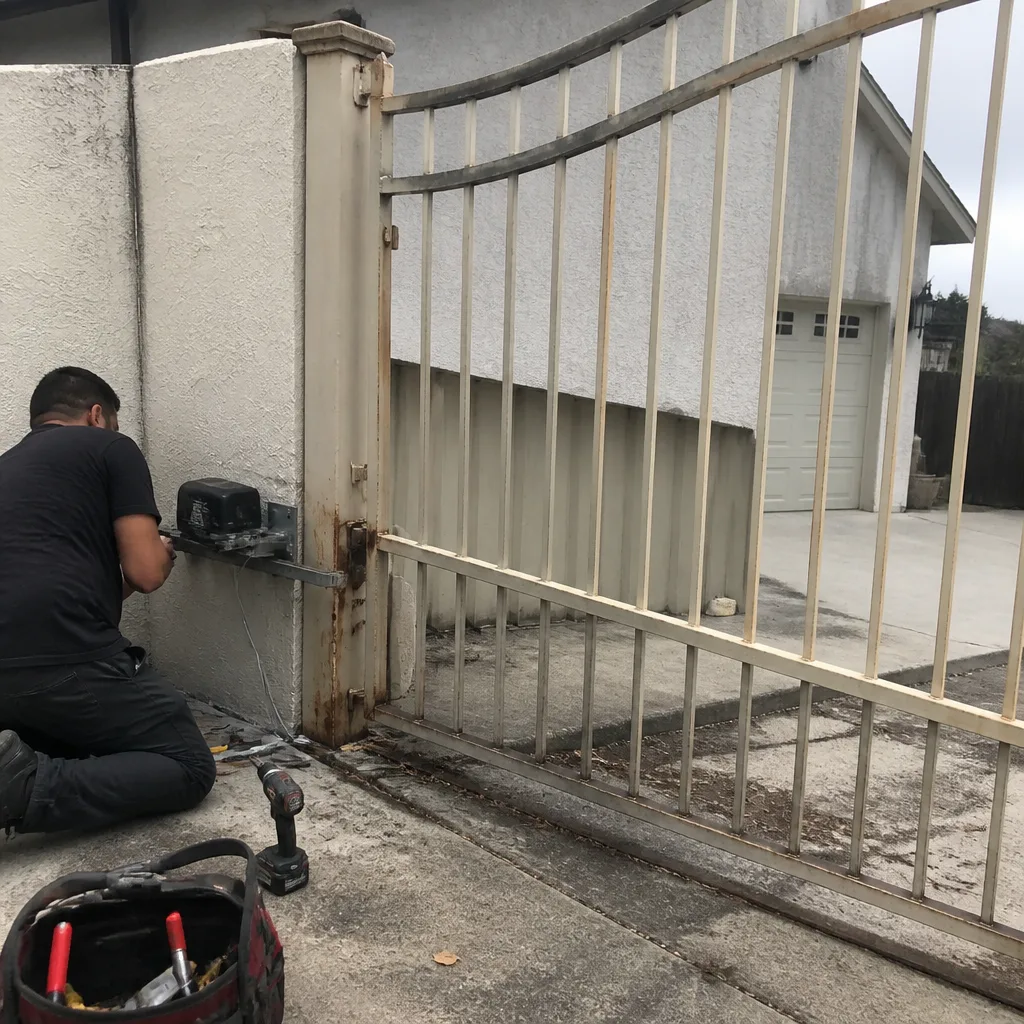 Before
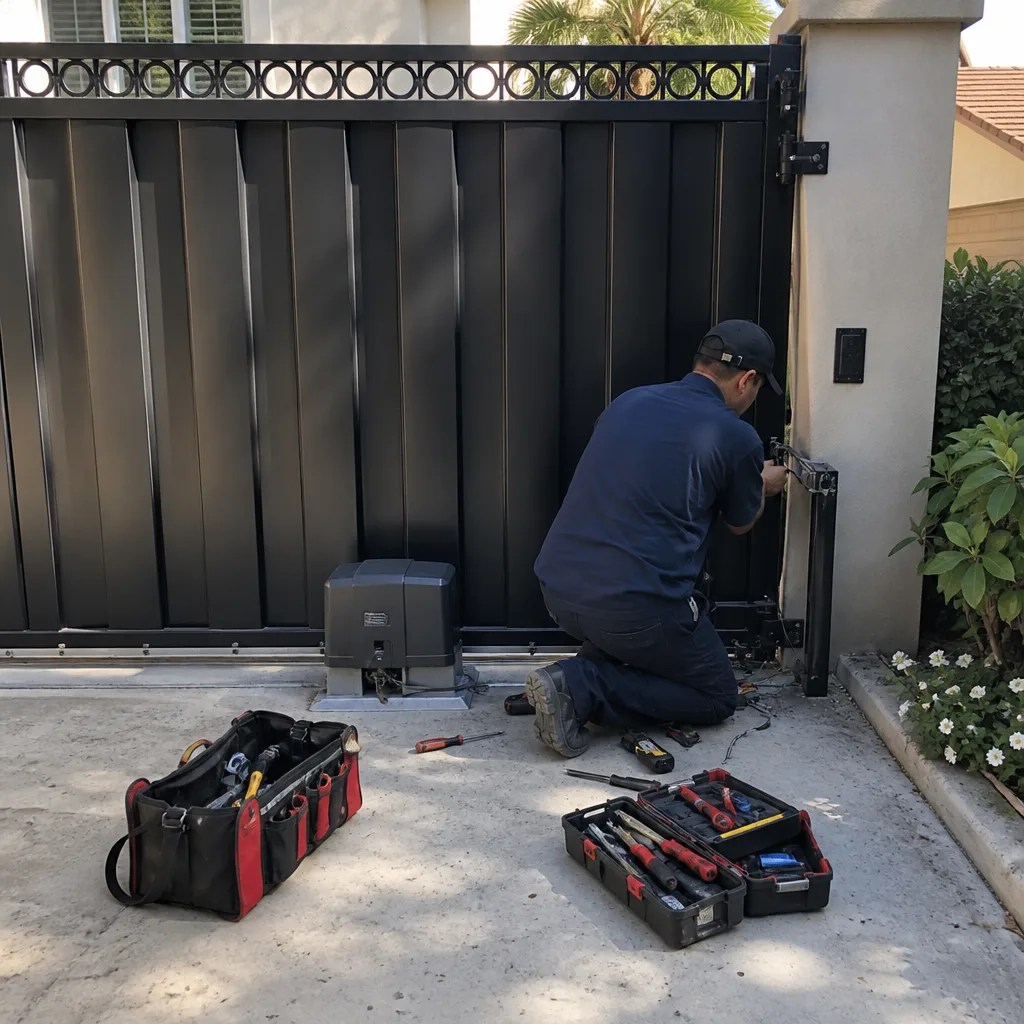 After
After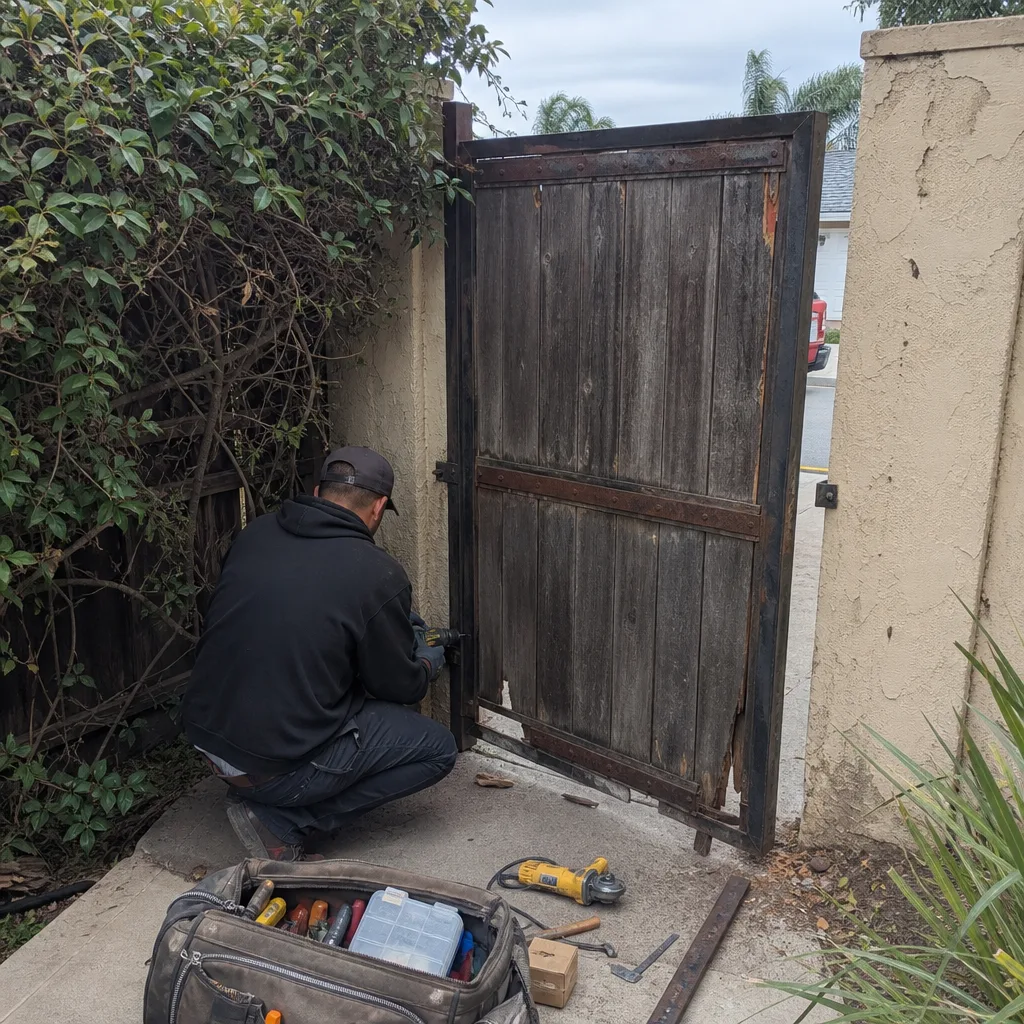 Before
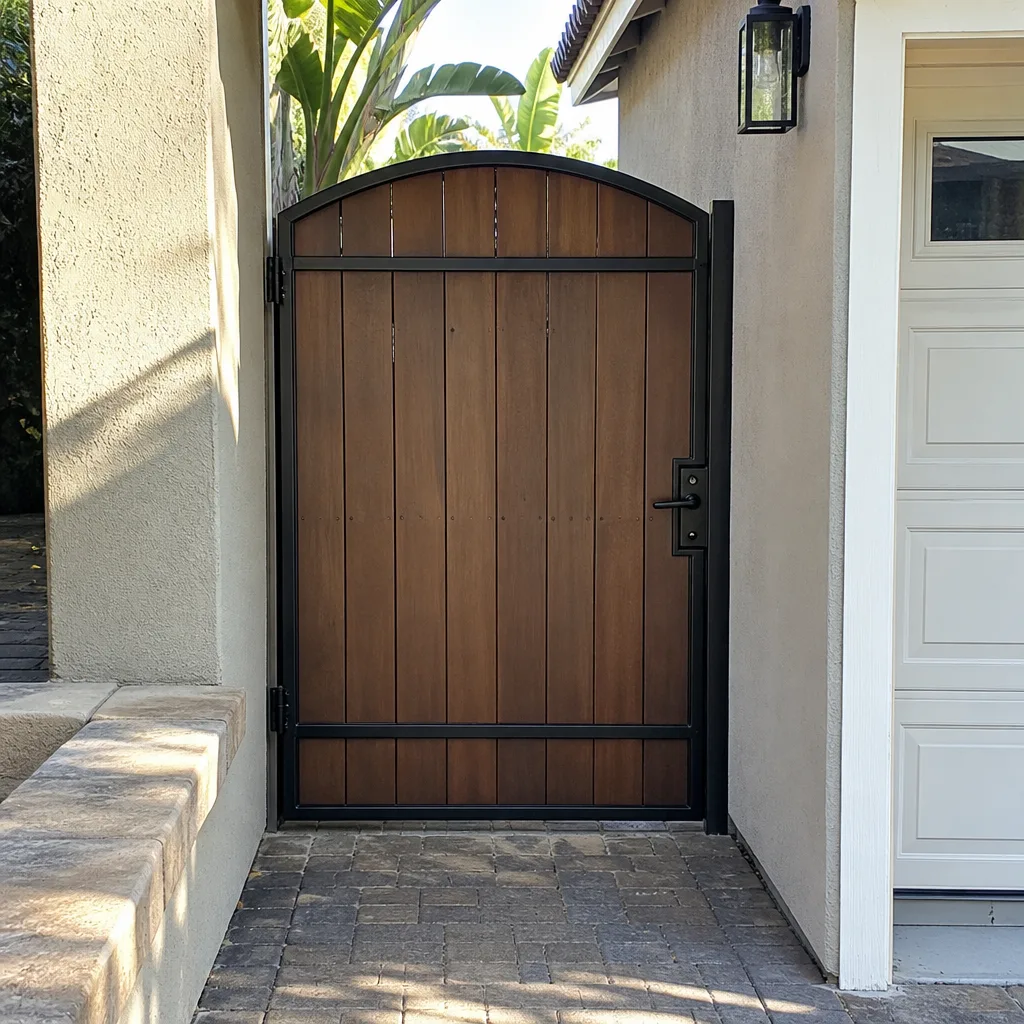 After
After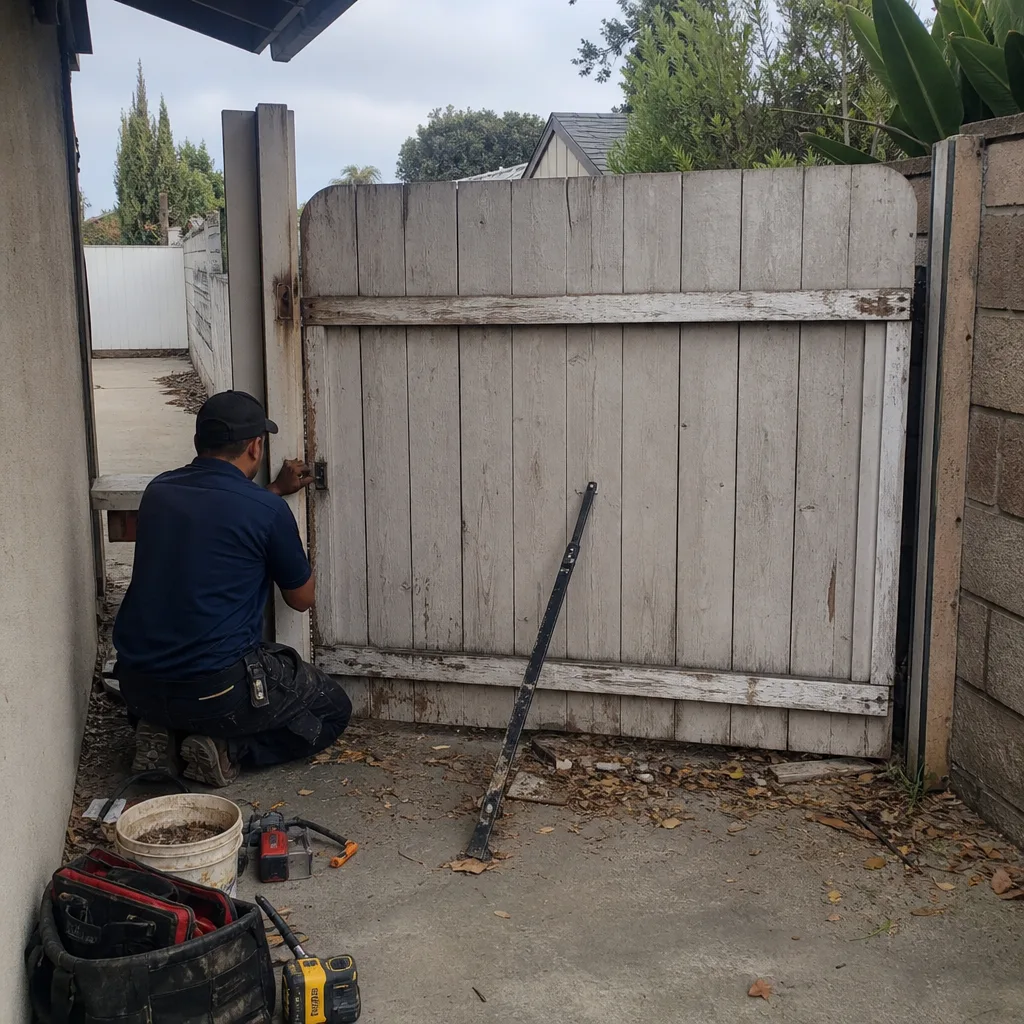 Before
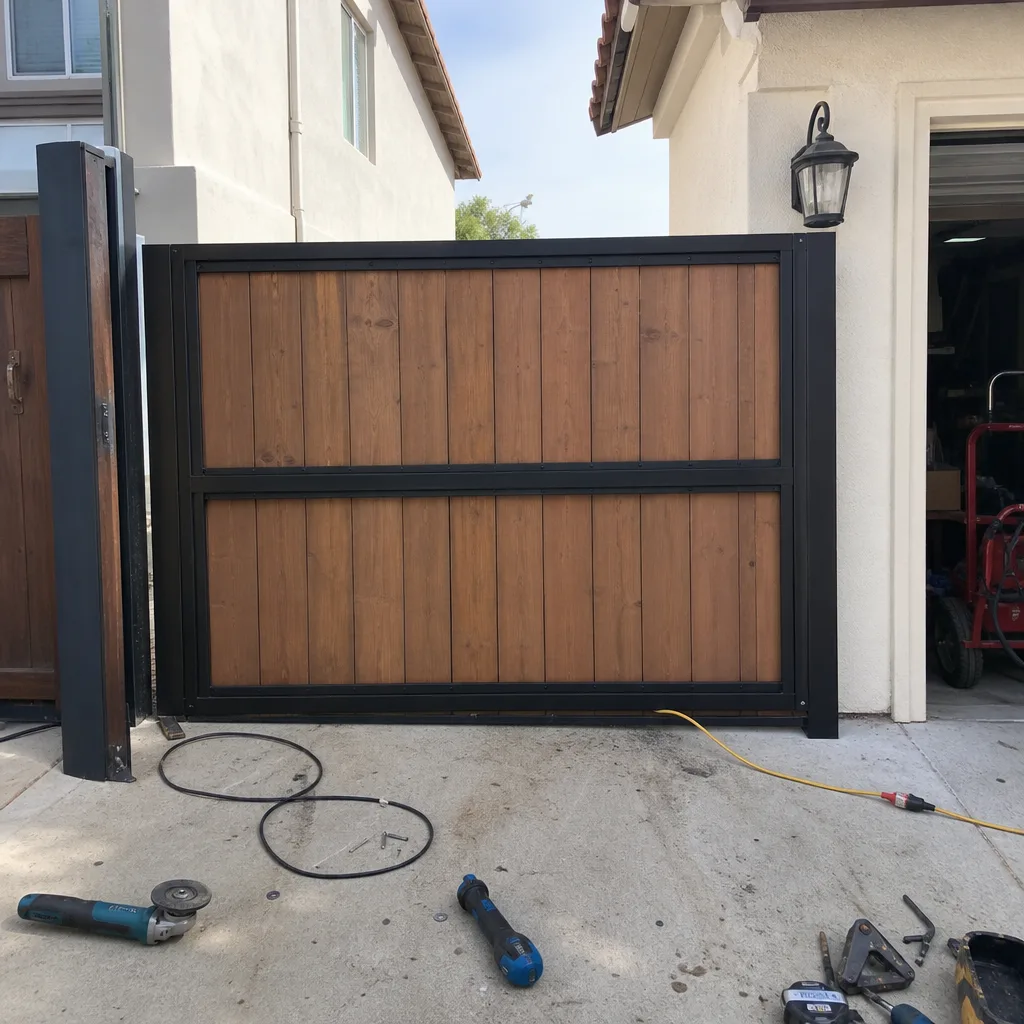 After
After