
Last updated October 16, 2026
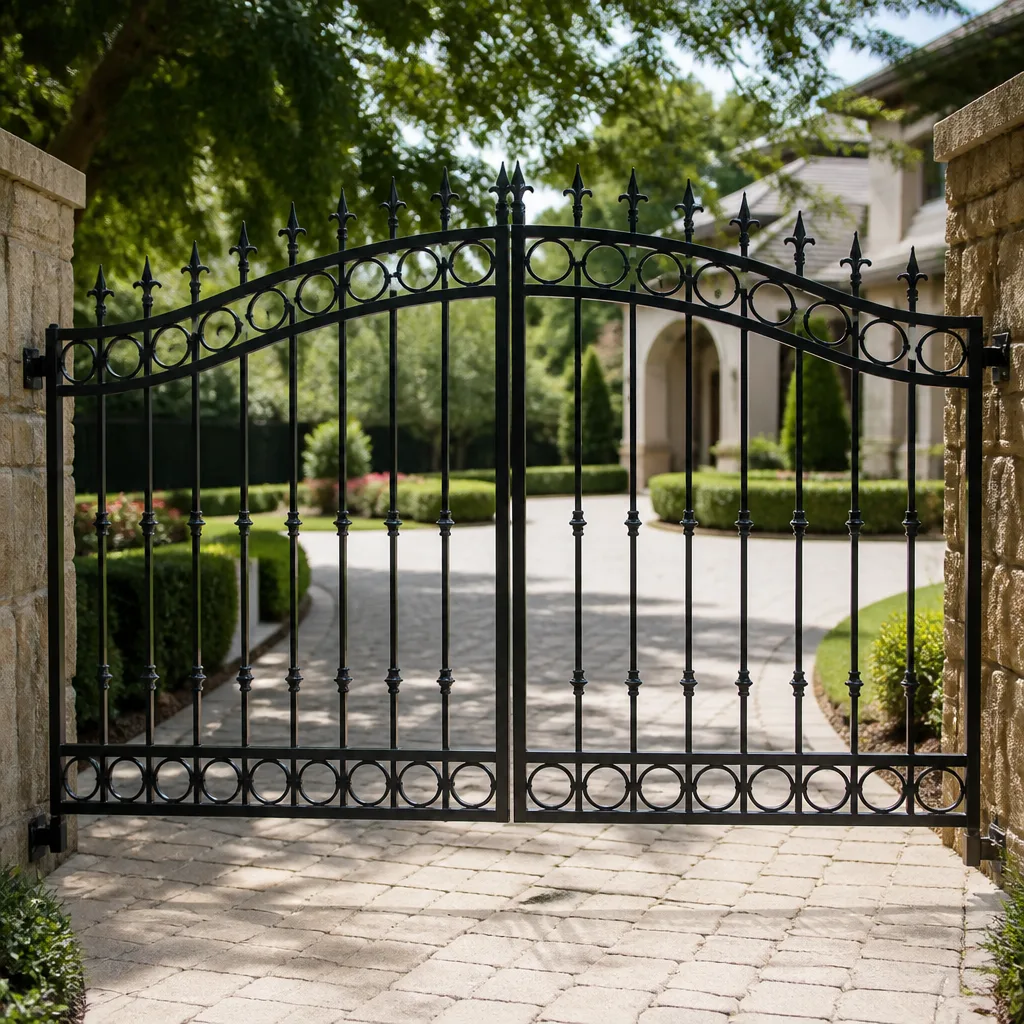 Wrought iron
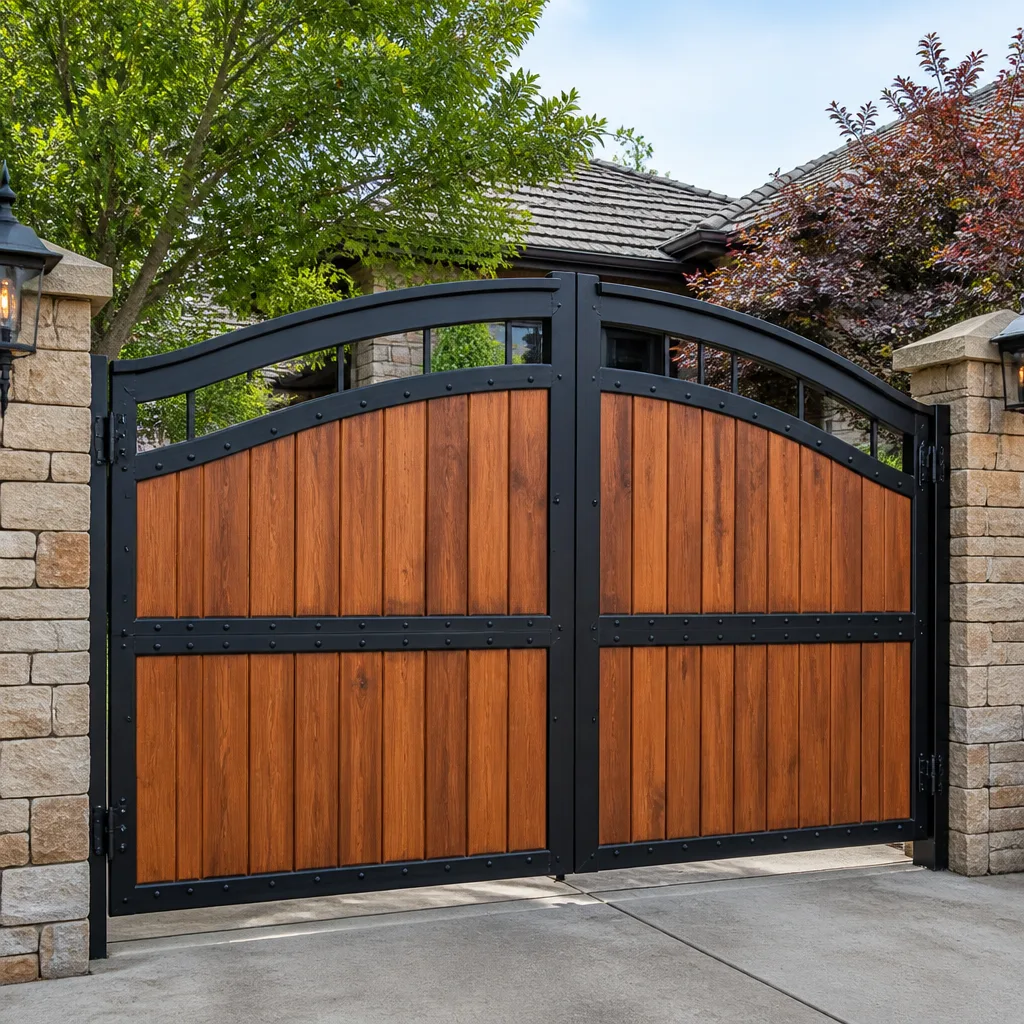 Wood & steel frame
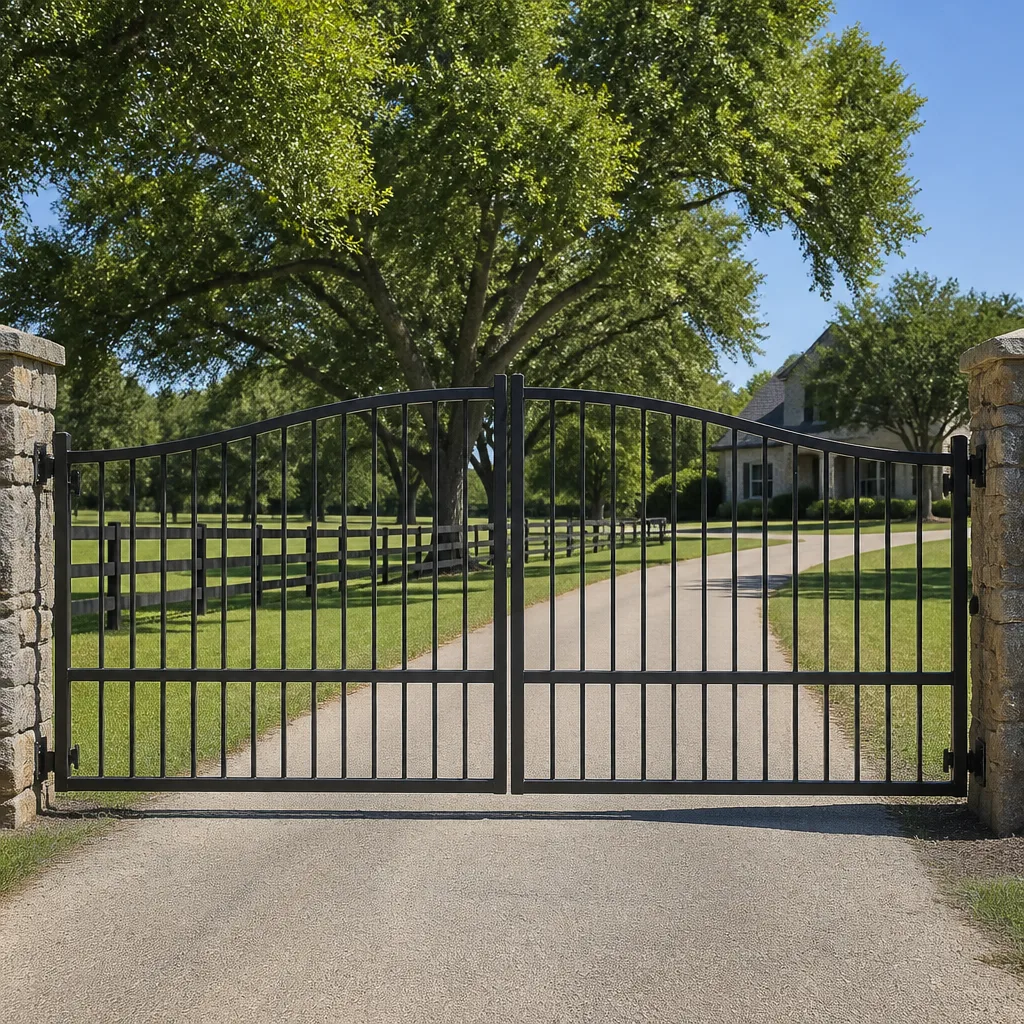 Farm & ranch
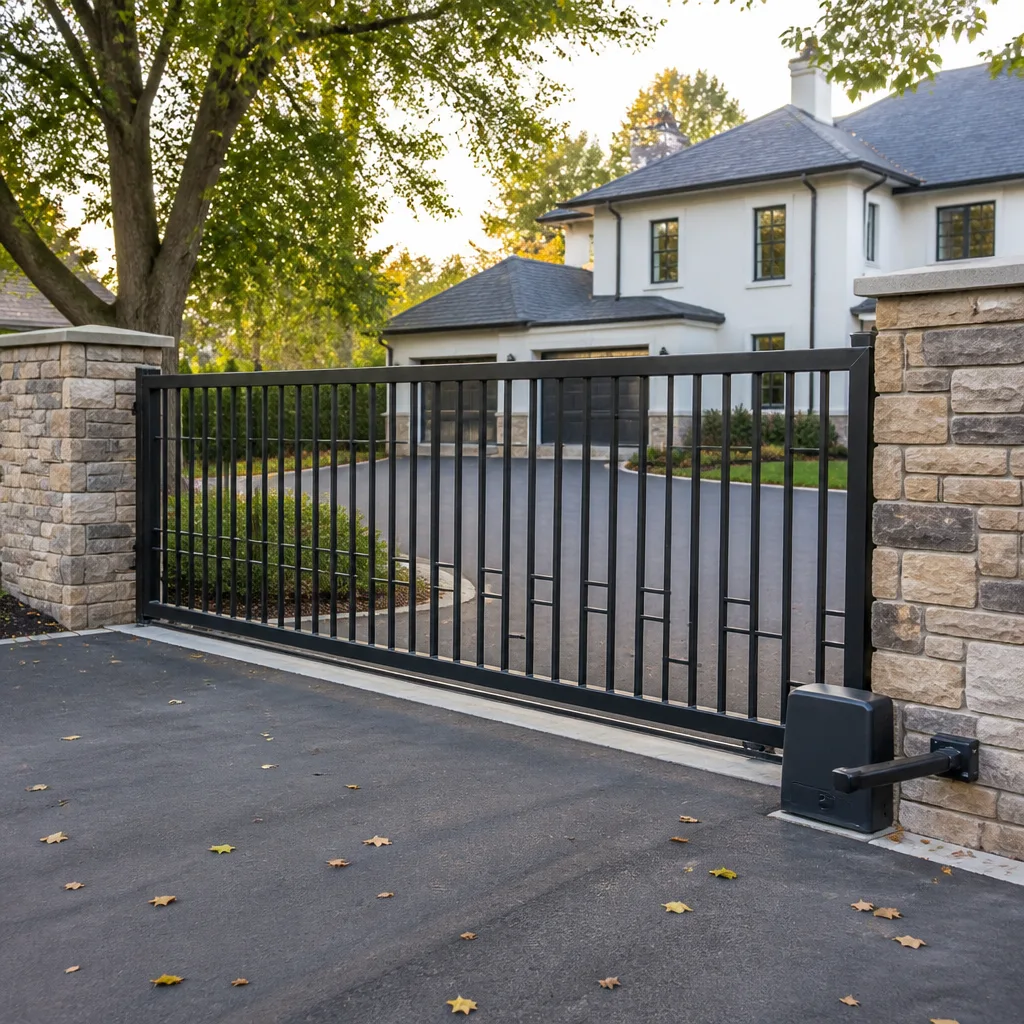 Sliding driveway gates
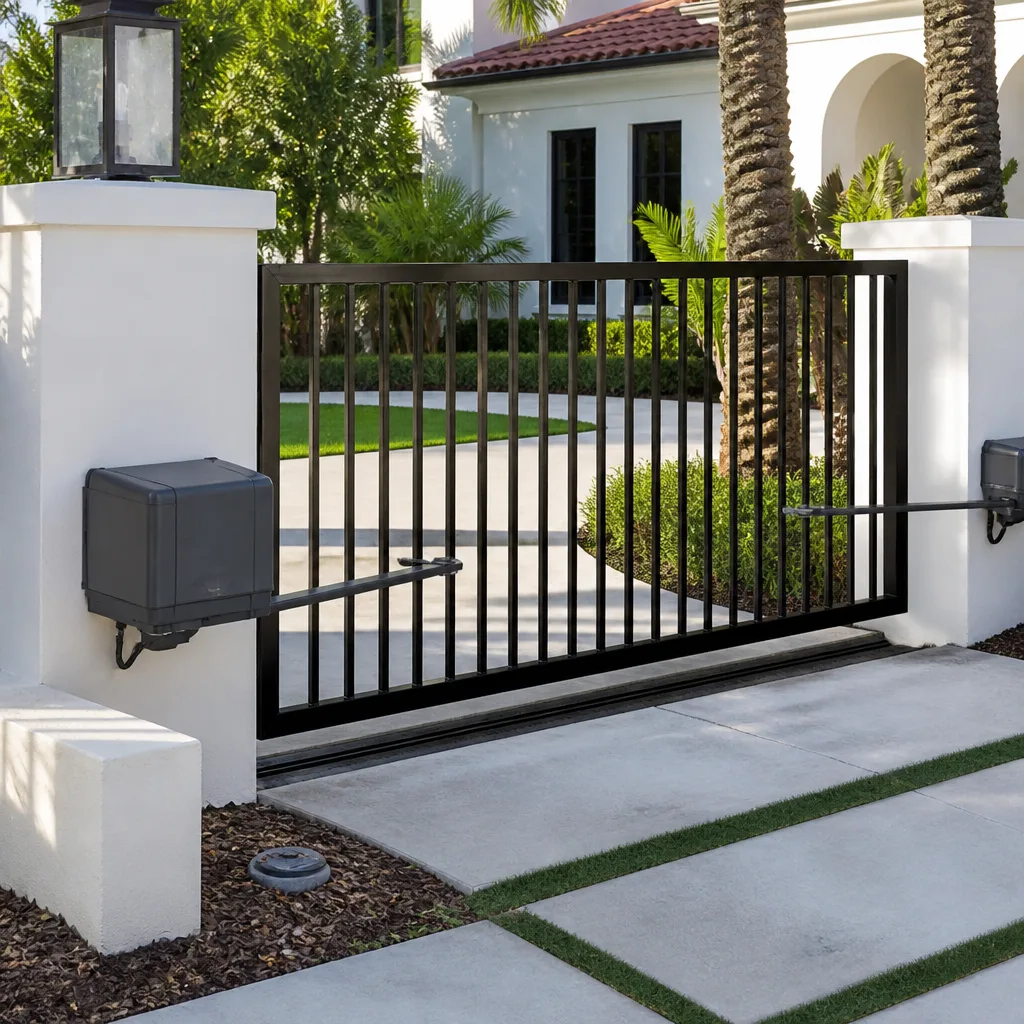 LiftMaster operators
Free on-site gate assessment - hinges, posts, and your LiftMaster or Nice gate operator checked before anything is quoted
The assessment is free and the quote is the invoice.
Get your free estimateGate Repair Permits, Codes & Inspections in CA: What You Need to Know
Skipping a permit on a gate opener swap-out cost one San Diego homeowner $4,200 at escrow. The buyer’s inspector flagged the unpermitted electrical work, the seller had to fund remediation before close, and a two-week escrow stretched into a six-week standoff. Most people assume repairing an existing gate never triggers permits. That assumption is wrong often enough to matter. This guide walks through the actual California code sections, the San Diego DSD inspection process, HOA overlays, and the UL 325 safety requirements that determine whether your gate project needs a permit. By the end, you’ll know exactly what’s required before you touch a bolt.
Styles & brands we work with
Quick Answer
In California, repairing a gate by replacing parts “in kind” (same size, same function, same location) generally does not require a permit, but installing a new gate opener, adding or extending electrical wiring, or altering the gate’s structural footprint often does. The specific rule lives in California Building Code Section 105.2, and the city of San Diego enforces it through the Development Services Department. When in doubt, the safe move is a quick call to DSD or a licensed contractor before work begins.
Table of Contents
- The Legal Line: Repair In Kind vs. Alteration Under CBC 105
- When a New Opener Installation Triggers an Electrical Permit
- HOA Overlay: When CC&Rs Create Approval Requirements Independent of City Permits
- UL 325 Safety Code for Automated Gates: What Applies in San Diego
- How to Check Permit Status on an Existing Gate Before Buying a Home
- The San Diego DSD Inspection Process Step by Step
- Common Mistakes to Avoid
- When to Call a Professional
- Frequently Asked Questions
- The Bottom Line
The Legal Line: Repair In Kind vs. Alteration Under CBC 105
California Building Code Section 105.2 lists the work that is exempt from permit requirements. The key phrase for gates is “repair in kind.” A repair in kind means replacing a broken component with a new one that is the same size, same material, same function, and same location as the original. If your LiftMaster swing arm snapped and you’re bolting on a new LiftMaster swing arm in the same mounting holes, that’s a repair in kind. No permit.
The line gets blurry when the replacement changes something. A stronger opener than the original one? That’s an alteration. Moving the opener from one side of the gate to the other? Alteration. Widening the gate opening or replacing a single-swing gate with a double-swing? That’s structural work, and it needs a permit in nearly every jurisdiction in California, San Diego included.
Here’s the practical framework we use on service calls across San Diego neighborhoods:
- Repair in kind: No permit. Same part, same location, same function. Examples: replacing a worn gate hinge, swapping a failed capacitor on a control board, replacing a broken wheel on a sliding gate track.
- Opener replacement with same type: Grey area. San Diego DSD has historically not required a permit when the opener is a direct swap with no new wiring. However, if the swap involves extending a circuit or adding a new outlet, it crosses into electrical permit territory.
- New opener installation where none existed: Permit required. This is new electrical work, not a repair.
- Structural changes: Permit required. Widening, relocating, changing gate material from wood to steel (same footprint is fine; different weight and anchoring is not), adding a pedestrian gate where one didn’t exist.
The $4,200 escrow story happened because the homeowner replaced a manual gate with an automated one, ran new conduit across the driveway, and never pulled an electrical permit. The work was functional. It was also unpermitted, which is exactly the language that spooks title companies and buyers’ inspectors. Our electric gate repair in San Diego work frequently starts with a permit status check for this reason.
When a New Opener Installation Triggers an Electrical Permit
Any time new electrical wiring is installed in San Diego, an electrical permit is required under the California Electrical Code, which San Diego has adopted with local amendments. A gate opener needs power. If that power doesn’t already exist at the gate location, someone has to run it. That’s new branch circuit work, and DSD wants to inspect it.
Here’s what a San Diego DSD inspector will look for on a gate opener electrical inspection:
- Dedicated circuit or proper sharing: Gate openers should be on a dedicated circuit or a circuit that meets load requirements. Inspectors check the panel schedule and wire gauge.
- Conduit and burial depth: For underground runs, PVC conduit must be buried at the proper depth (typically 18 inches for residential branch circuits, deeper under driveways). Inspectors look for schedule 40 PVC, not EMT buried in dirt.
- GFCI protection: Outdoor receptacles feeding gate openers require GFCI protection. This is a common fail point.
- Weatherproofing: All connections must be in weatherproof boxes with proper covers. Siliconed wire nuts don’t count.
- Disconnect means: The opener needs a service disconnect that’s accessible. Inspectors look for a clearly labeled switch or breaker lockout.
One thing we’ve learned from years of gate opener repair in San Diego: the inspector who signs off on the electrical is not the same inspector who cares about the physical gate installation. That’s a separate set of requirements under the building code, including footings for gate posts, swing clearance, and safety devices. Many homeowners assume one inspection covers everything. It doesn’t.
If you’re replacing a failed opener with a new one from the same brand family, the electrical permit question depends on one thing: are you touching the wiring? A direct swap where the new FAAC opener connects to the same junction box with the same conductors is usually repair in kind. Adding a new outlet for a plug-in Viking opener? That’s new work. It needs a permit.
HOA Overlay: When CC&Rs Create Approval Requirements Independent of City Permits
San Diego has hundreds of HOAs, and many of them write gate rules into their CC&Rs that have nothing to do with city permits. In master-planned communities like Rancho Bernardo, Otay Ranch, and 4S Ranch, you’ll often find an architectural review requirement for any gate that’s visible from the street, even if the gate itself doesn’t need a city permit.
Here’s the part that catches people off guard: HOA approval and city permit are two separate processes. You can have both, one, or neither. A city permit doesn’t satisfy an HOA requirement, and HOA approval doesn’t satisfy the city. Skipping either one can create problems.
What HOA gate requirements typically cover:
- Design and finish: Gate material, color, and style must match community standards. A beautiful wrought-iron gate in a community that mandates wood-stained gates will get flagged.
- Height and setback: Many San Diego HOAs cap front gate height (often 6 feet for swing gates, sometimes less for pedestrian gates) and require specific setbacks from sidewalks.
- Opener type and noise: Some HOAs restrict opener types due to noise. Underground or worm-drive openers are sometimes required over chain-driven models.
- Timing rules: A few communities regulate when gates can be automated, particularly in neighborhoods with shared walls or courtyard configurations.
The Rancho Bernardo example is instructive. Several communities there have CC&Rs that predate modern automated gates, so the architectural committee reviews any new opener installation as an “exterior modification.” The review is typically a few weeks and requires drawings. Our gate repair service in San Diego has helped homeowners navigate these reviews dozens of times, and the most common delay is a missing elevation drawing, not an objection to the gate itself.
UL 325 Safety Code for Automated Gates: What Applies in San Diego
UL 325 is a national safety standard for automated gates, and California references it in the building code. It applies to every automated gate installed in San Diego, whether commercial or residential. The standard exists because automated gates have killed and injured people, mostly children and delivery drivers, when safety devices failed or were never installed.
The core requirements under UL 325:
- Entrapment protection: Every automated gate must have two independent entrapment protection methods: typically a reversing mechanism (the gate reverses when it hits an obstruction) plus a photoelectric sensor or contact edge. One method is not enough.
- Warning signage: Automated gates must display warning signs that meet specific size and content requirements, visible from both sides of the gate.
- Pedestrian separation: Where a vehicular gate is automated, a separate pedestrian gate or a clearly marked pedestrian path is required where pedestrians are expected.
- Force limits: The gate’s closing force must not exceed specific thresholds, measured in pounds, to prevent crushing injuries.
Now, the San Diego-specific exemption: gates that serve a single-family residence and are not accessible to the public are subject to a somewhat lighter compliance burden than commercial gates. But “lighter” doesn’t mean “none.” The entrapment protection requirements still apply. The force limits still apply. The signs are still recommended and, in some DSD interpretations, required.
What we see in the field, particularly on older BFT and Linear installations in neighborhoods like Clairemont and North Park, is that the photoelectric sensors have been disconnected or bypassed because they were false-triggering. That’s a UL 325 violation. If the gate closes on someone and the sensors are bypassed, the liability is on the homeowner. A properly maintained gate opener with working safety devices is not optional equipment.
One practical note on UL 325 compliance for repairs: if you’re repairing an existing gate and the safety devices are non-functional, the repair should include restoring those devices. A contractor who leaves them disconnected is handing you a liability problem. That’s the kind of thing a real gate opener repair in San Diego flags on the spot.
How to Check Permit Status on an Existing Gate Before Buying a Home
If you’re buying a home in San Diego with an automated gate, checking permit status before close is one of the smartest due-diligence moves you can make. The process is simpler than most people think, and it takes about 30 minutes.
Here’s the step-by-step process using the San Diego DSD lookup tools:
- Pull the property’s permit history: Go to the San Diego Development Services Department website and use the “OpenDSD” portal. Enter the address. You’ll see a list of all permits pulled for the property, including electrical permits. (Note: the portal interface changes occasionally; if you can’t find the search, call DSD at the number listed on their site.)
- Look for an electrical permit matching the gate installation date: If the seller says the gate was automated in 2018, there should be an electrical permit from around that time. If there isn’t, the work was likely unpermitted.
- Check the final inspection status: A permit that was pulled but never finalized is almost as bad as no permit. The final inspection must be signed off for the permit to be closed.
- Compare the permit scope to the actual gate: A permit for a 15-amp circuit doesn’t cover a 240-volt commercial-grade opener. Scope matters.
- If the gate has no permit, get a quote for remediation: Remediation typically means: pull a new permit for the existing work, have it inspected, and fix whatever the inspector flags. In San Diego, this often costs $1,500 to $4,500 depending on what’s wrong. The $4,200 example at the top of this guide is squarely in that range.
We recommend this check for any San Diego home with an automated gate, not just luxury properties. We’ve seen unpermitted gates on everything from a $700k starter home in Mira Mesa to a $3M estate in La Jolla. The gate itself doesn’t know what the house costs.
The San Diego DSD Inspection Process Step by Step
If your gate project does require a permit, here’s how the San Diego DSD process works, from application to final sign-off. This is written for the homeowner who’s never pulled a permit before.
- Determine permit type: For most gate work, you’ll need an electrical permit (for the opener) and possibly a building permit (for structural changes). DSD staff can help you determine which applies. Bring photos of the existing gate and a description of the planned work.
- Submit application and plans: Simple electrical permits can often be applied for online through OpenDSD. Structural permits require drawings, which may need to be prepared by a California-licensed engineer if the gate is large or unusual.
- Pay fees: A typical electrical permit for a gate opener in San Diego runs $150 to $400, depending on the scope. Structural permits are more. Plan check fees are separate.
- Complete the work: Once the permit is issued, the work can proceed. The permit must be posted on-site during construction.
- Schedule inspections: For electrical work, DSD inspectors typically do a rough inspection (wiring before it’s concealed) and a final inspection. For gate structural work, the inspector will check footings before concrete is poured, then do a final after installation.
- Address corrections: If the inspector flags issues, you fix them and call for a re-inspection. Most corrections on gate projects involve GFCI placement, conduit depth, or missing UL 325 signage.
- Final sign-off: Once the final inspection passes, the permit is closed. Keep the signed permit card with your records. You’ll want it when you sell.
Timeline reality check: a simple electrical permit for a gate opener in San Diego is typically a 2-to-4-week process from application to final inspection, depending on DSD workload and how quickly the work gets done. Structural permits with plan check can take 6 to 10 weeks. If you’re planning a gate project around a specific timeline, start the permit process early.
Common Mistakes to Avoid
- Assuming “repair” always means “no permit.” The legal definition of repair in kind is specific. Changing the opener type, adding wiring, or altering the gate’s structure is not a repair in kind, even if you’re fixing something that’s broken.
- Treating the HOA and the city as the same approval. They’re not. An HOA sign-off doesn’t satisfy DSD, and a DSD permit doesn’t satisfy the HOA. San Diego communities like Del Cerro and Scripps Ranch are particularly strict on architectural review.
- Bypassing UL 325 safety devices because they’re annoying. Disconnected photoelectric sensors and bypassed reversing mechanisms are the most common UL 325 violations we see on San Diego gates. They’re also the ones that cause injuries and lawsuits.
- Skipping the pre-purchase permit check. A $4,200 surprise at escrow is avoidable with 30 minutes on the DSD portal. If the gate is automated and there’s no electrical permit, budget for remediation before you make an offer.
- Hiring a handyman for electrical work. In California, any electrical work that requires a permit must be performed by a licensed electrical contractor or a homeowner who occupies the property and passes an owner-builder inspection. A handyman who pulls permits under someone else’s license is a red flag.
- Ignoring burial depth for underground conduit. Shallow conduit gets flagged by DSD inspectors and eventually gets cut by landscapers. Do it right the first time.
- Not keeping the final sign-off paperwork. The buyer’s inspector will ask for it. The title company may ask for it. A closed permit is an asset, not paperwork junk.
When to Call a Professional
If your gate project involves any new electrical wiring, a structural change, or a safety device concern, this is not a weekend DIY project. The practical scenarios where we’d tell a San Diego homeowner to bring in a licensed contractor: the gate has no existing power and you want it automated; the gate posts are leaning or the hinges are pulling out; the opener is a brand you don’t recognize and the wiring looks improvised; or you’ve bought a home with an unpermitted automated gate and need to remediate before you can sell. Calder Gate Repair’s San Diego home base covers all of these scenarios. We provide free estimates on permit-ready work, and we can walk you through the DSD process from application to final inspection. For anything gate-related in San Diego, our gate repair team will write a price before any work starts. Call (619) 541-7844.
Frequently Asked Questions
It depends on the repair. A repair in kind, meaning same part, same location, same function, does not require a permit. Any work that changes the gate’s electrical system, structural footprint, or safety configuration is an alteration and likely requires a permit under California Building Code Section 105.2. Call (619) 541-7844 if you need help determining which category your project falls into.
A typical electrical permit for a gate opener in San Diego costs $150 to $400, not including the work itself. Structural permits with plan check run higher, often $500 to $1,500 depending on scope. The remediation cost for an unpermitted gate, including permit, inspection, and corrections, typically lands in the $1,500 to $4,500 range. Call (619) 541-7844 for a free estimate on permit-ready gate work.
Use the OpenDSD portal on the San Diego Development Services Department website, enter the property address, and review the permit history. Look for an electrical permit matching the year the gate was automated, and confirm the final inspection was signed off. If no permit exists, plan for remediation before selling or refinancing.
In many San Diego communities, yes. HOAs in areas like Rancho Bernardo, Otay Ranch, and 4S Ranch often require architectural review for any visible gate change, even if the city doesn’t require a permit. HOA approval and city permits are separate processes, and you may need both. Check your CC&Rs before starting work.
UL 325 is the national safety standard for automated gates, and it applies to residential gates in San Diego. The key requirements are two independent entrapment protection methods (typically a reversing mechanism plus a photoelectric sensor), compliant force limits, and warning signage. Bypassed or disconnected safety devices are violations that create liability for the homeowner. Call (619) 541-7844 to have your gate’s safety devices inspected.
If the repair is a true repair in kind, replacing a failed part with the same part, yes. If the repair involves new wiring, a different opener type, or structural changes, the work requires a permit and, in the case of new electrical, a licensed electrical contractor. The risk of an unpermitted gate surfacing at resale is real, as the $4,200 escrow example in this guide shows. Call (619) 541-7844 for a free estimate.
The Bottom Line
California’s permit rules for gates are not a gray area. They’re a clear line: repair in kind is exempt, alterations are not. The confusion comes from contractors who don’t want to spend two weeks waiting for a permit, and homeowners who don’t know to ask. The consequences of skipping a permit surface at resale, at inspection, and sometimes in liability claims if a safety device failure injures someone. In San Diego specifically, the DSD enforcement is real, the HOA overlays are common, and the UL 325 safety requirements are not suggestions. Checking permit status before buying, and pulling the right permits before altering, costs a few hundred dollars and a few weeks. That’s cheap insurance against a $4,200 escrow surprise.
Written by Nico Alvarez, Owner at Calder Gate Repair San Diego, serving San Diego since 2009.
See the difference
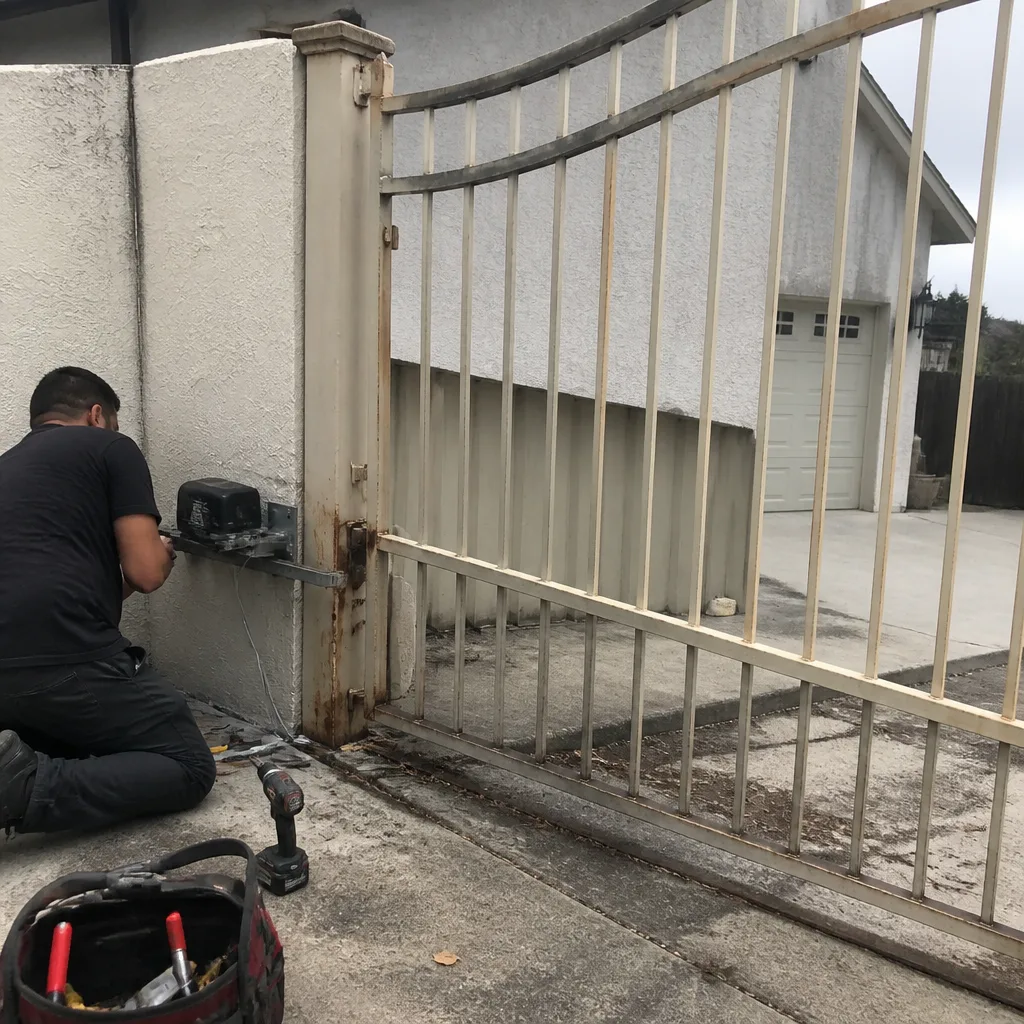 Before
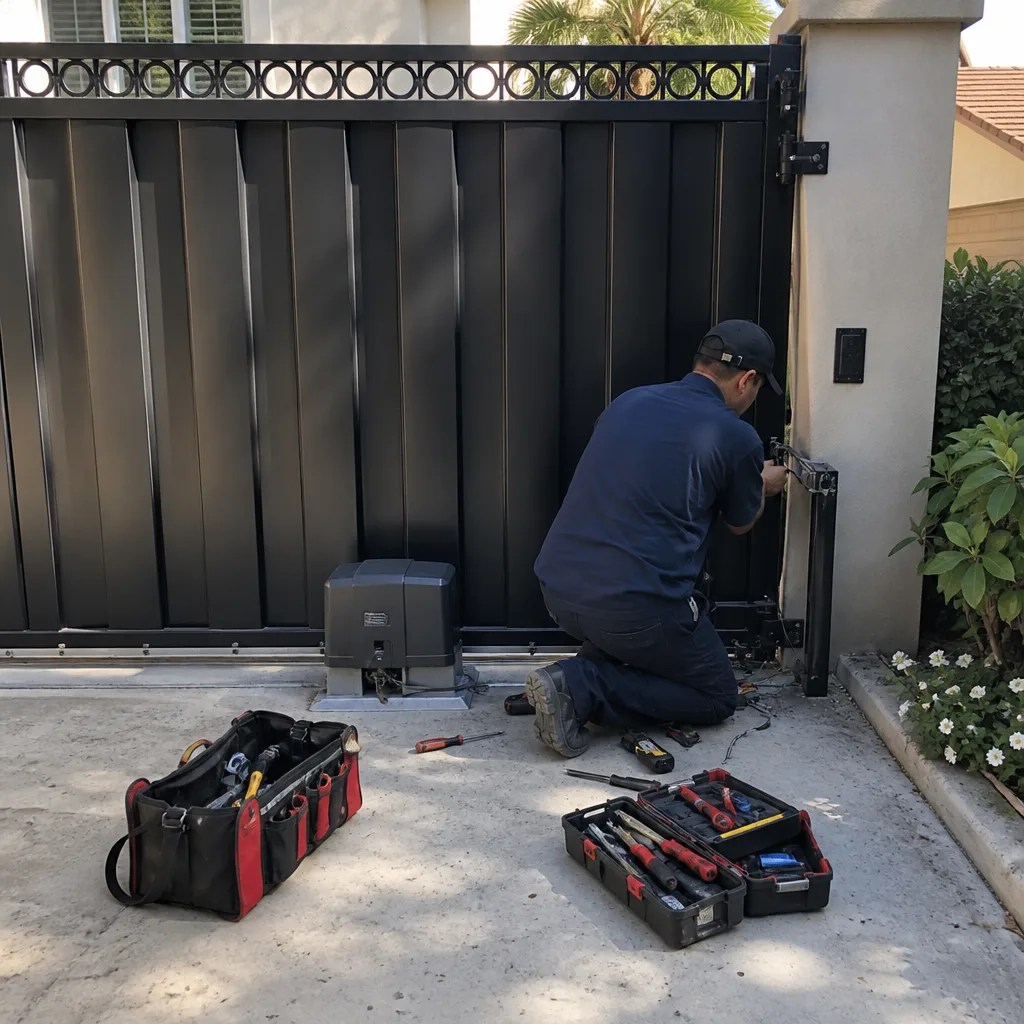 After
After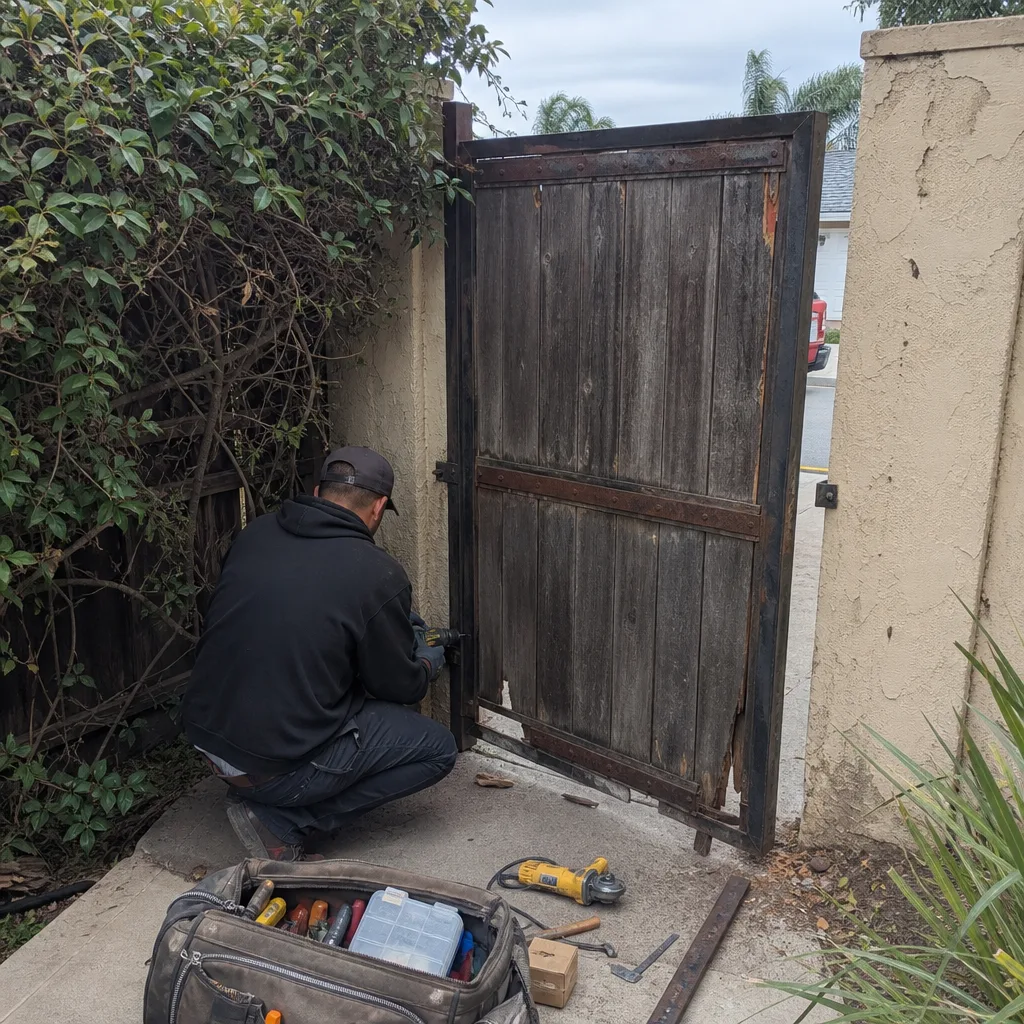 Before
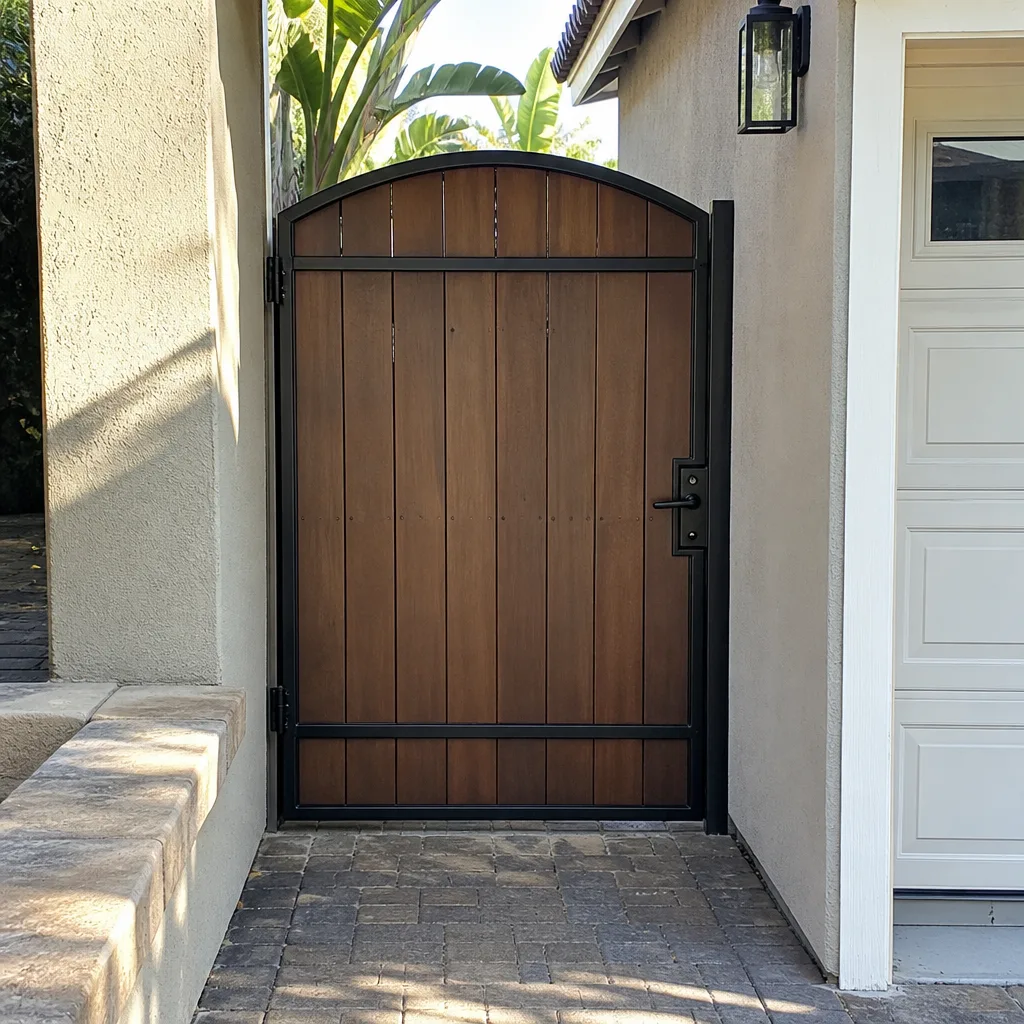 After
After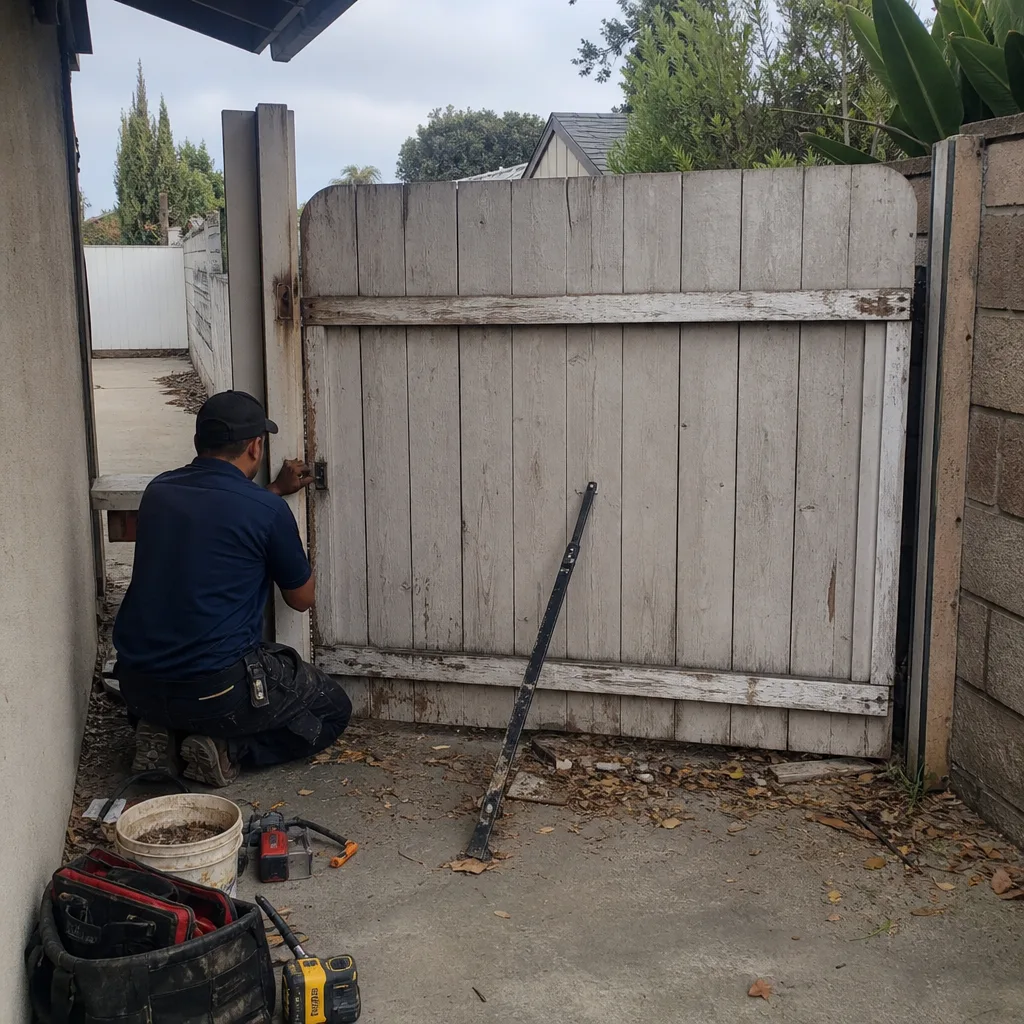 Before
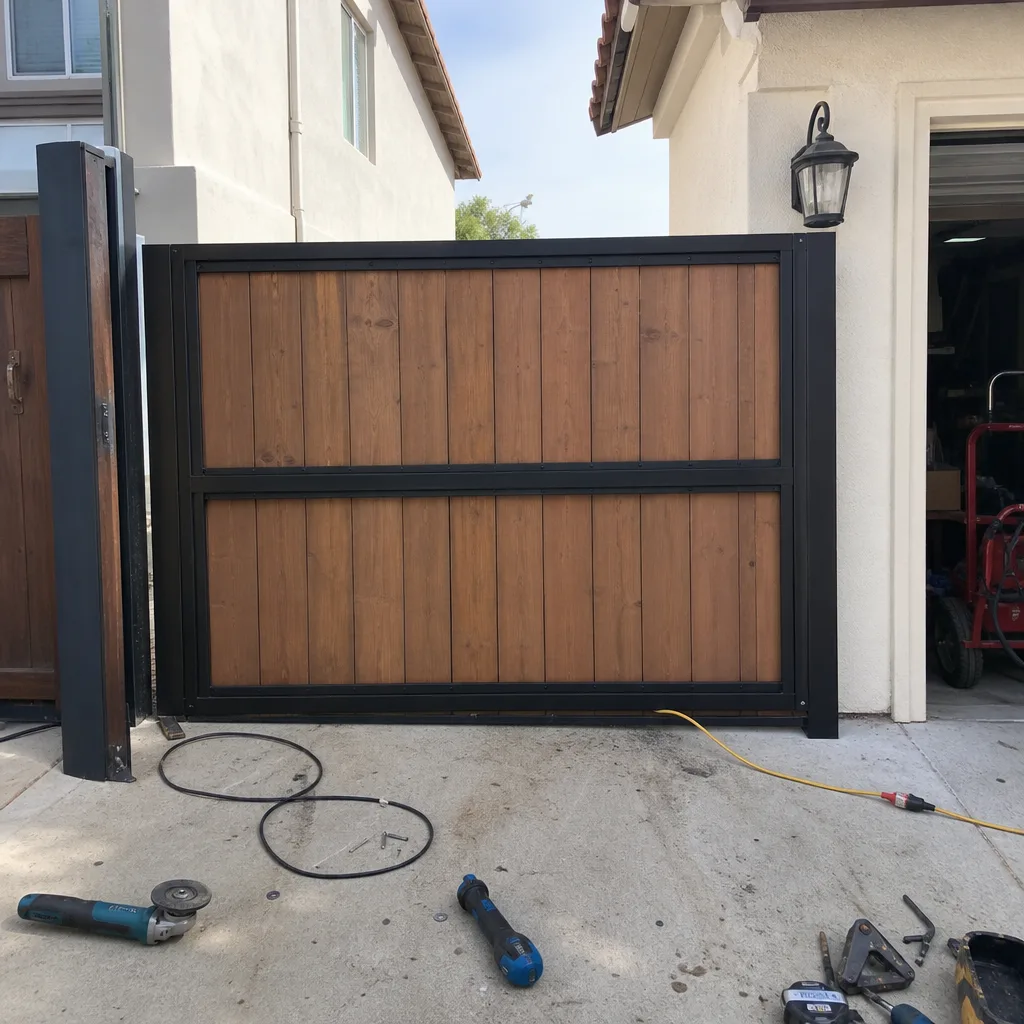 After
After