
Last updated October 16, 2026
 Wrought iron
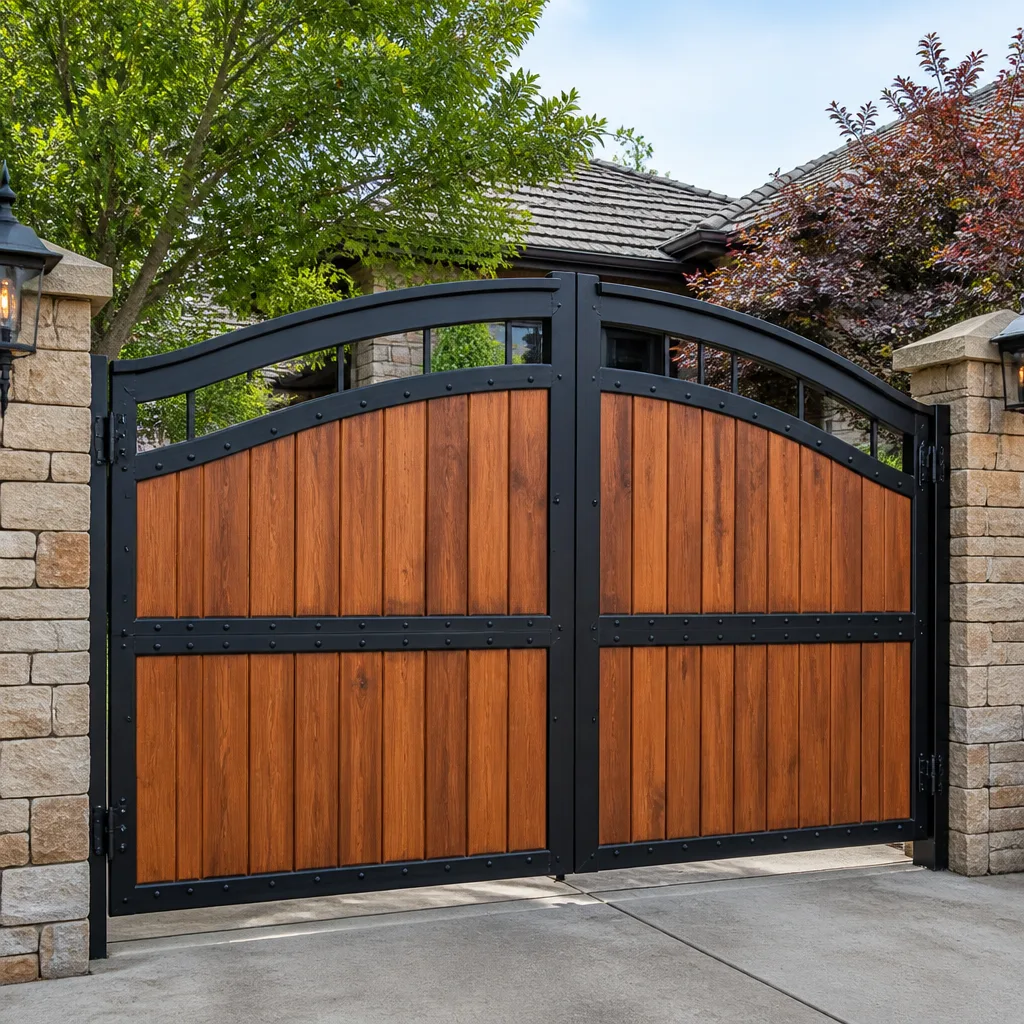 Wood & steel frame
 Farm & ranch
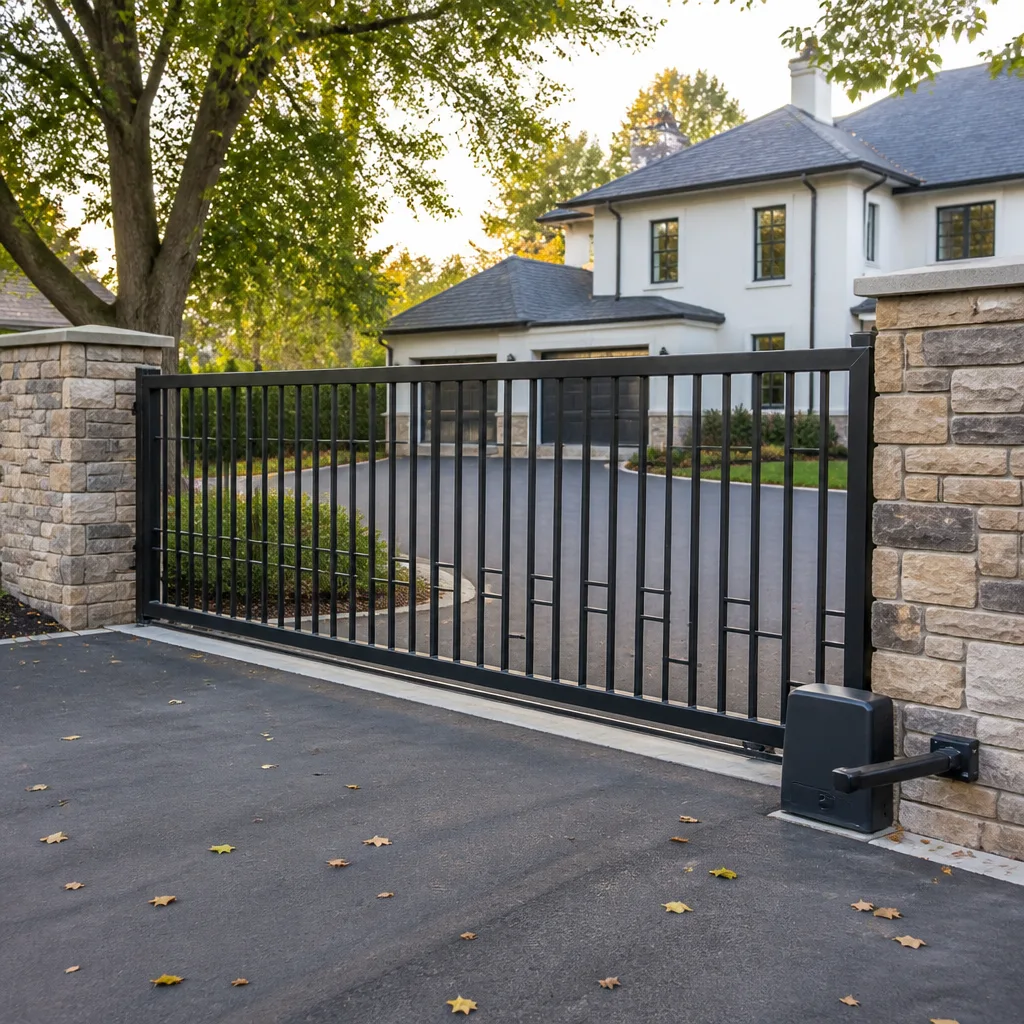 Sliding driveway gates
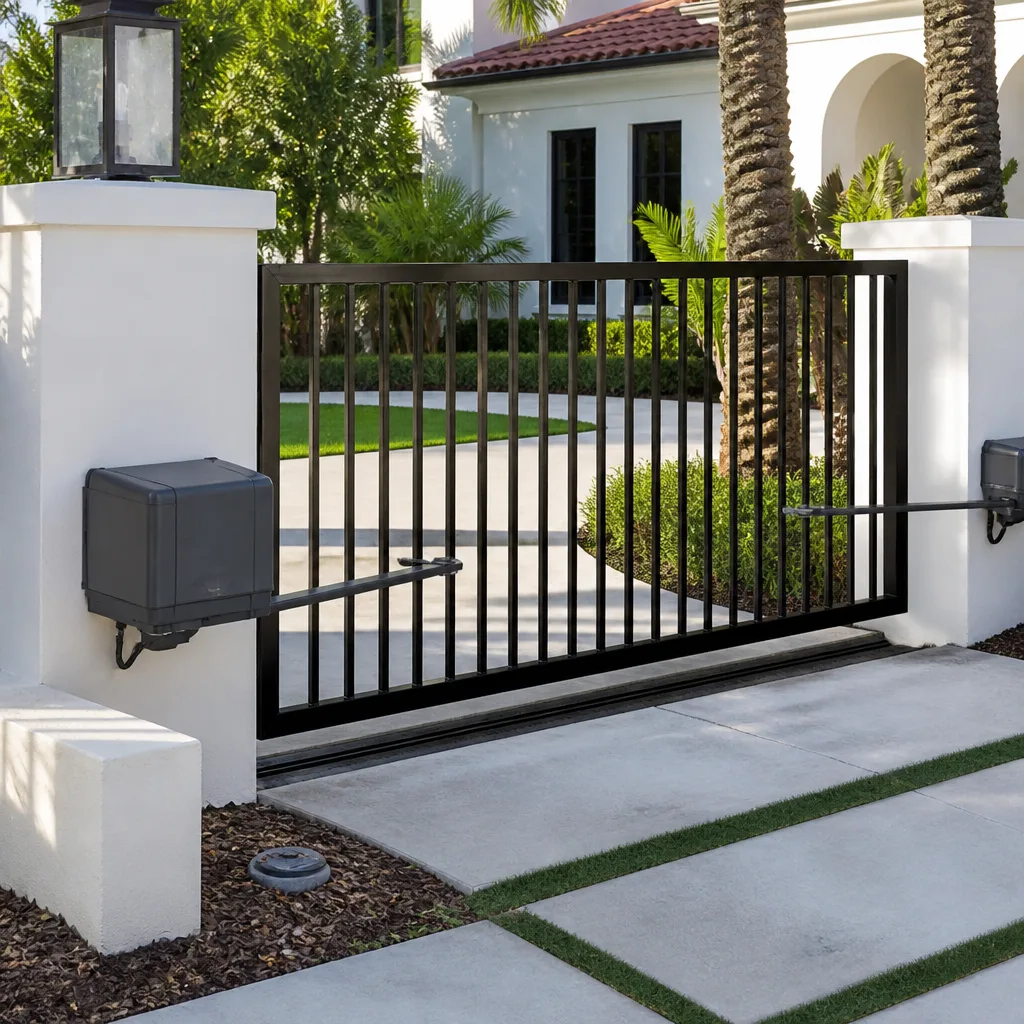 LiftMaster operators
Free on-site gate assessment - hinges, posts, and your LiftMaster or Nice gate operator checked before anything is quoted
The assessment is free and the quote is the invoice.
Get your free estimateThe Complete Guide to Gate Repair in San Diego
The average San Diego homeowner calls for gate repair 2.3 times before the root cause is actually fixed. That number isn’t a guess; it’s the pattern we see when a technician patches the symptom, replaces a fuse, adjusts a hinge, and drives off without asking why it failed in the first place. A gate is not a single machine. It’s a system of interdependent parts, opener, hardware, structure, and power source, all working against San Diego’s specific coastal conditions. This guide maps every component of a residential gate system so you can diagnose smarter, spend less, and stop calling for the same fix twice. If you’re searching for Gate Repair in San Diego, you’re in the right place.
Quick Answer
Gate repair in San Diego typically costs $180 to $650 for most mechanical and electrical fixes, with opener replacement running $750 to $2,400 depending on brand and horsepower. The repair usually takes one to three hours once the technician arrives, and a written quote should be provided before any work begins. For same-week service and a price that won’t change at the door, call our Gate Repair services at Calder Gate Repair, (619) 541-7844.
Styles & brands we work with
Table of Contents
- The Five-Layer Gate System Model
- How San Diego’s Coastal Climate Causes Gate Failures
- Brand-by-Brand Opener Failure Patterns
- What a Legitimate Repair Estimate Must Include
- Repair or Replace: The 3-Year Decision Tree
- What You Can Safely Do Yourself (And What You Can’t)
- Common Mistakes to Avoid
- When to Call a Professional
The Five-Layer Gate System Model
Most people think of a gate as two things: the metal barrier and the motor. That’s why most repairs fail. In our experience at Calder Gate Repair San Diego, every residential swing and slide gate breaks down into five distinct layers. Fixing layer three without inspecting layer one guarantees a callback, and that’s not a warning, it’s a prediction.
- Structure (the gate itself): Hinges, posts, weld points, and the physical frame. If the gate sags, every other layer works harder to compensate.
- Hardware (the moving parts): Wheels, rollers, track, chains, and arms. These parts wear from friction and exposure and are the first to go in coastal air.
- Power (the supply and motor): The transformer, wiring, and the opener motor itself. Salt corrosion on electrical contacts is a San Diego specialty.
- Logic board (the brain): The circuit board that interprets signals from remotes, keypads, and sensors. It fails from moisture ingress, power surges, or worn capacitors.
- Safety sensors (the eyes and ears): Photoelectric eyes, loop detectors, edge sensors, and limit switches, which tell the gate when to stop and when to reverse.
Here’s the practical takeaway: a gate that opens halfway and stops could be a bad limit switch on layer five, but it could also be a sagging frame on layer one causing the motor to overheat and trip a thermal cutoff. A technician who only replaces the limit switch will be back in three months. The one who checks hinge play, post alignment, and track level alongside the electrical test is the one who fixes it permanently. That’s the difference between a parts-swapper and a diagnostician, and it’s the reason Calder structures every repair assessment as a five-layer inspection, whether the customer realizes it or not.
How San Diego’s Coastal Climate Causes Gate Failures
San Diego’s reputation for perfect weather hides a truth every gate owner learns eventually: our climate is unusually hard on gate hardware. We’re not Phoenix, where the dry heat bakes plastic parts. We’re not Seattle, where rust is a slower, steadier enemy. San Diego’s specific failure pattern comes from three forces working together.
Coastal salt air. If you live west of the 5, in Point Loma, Ocean Beach, La Jolla, or Coronado, your gate is bathed in airborne salt particles daily. Salt doesn’t just sit on the surface; it works into chain links, corrodes wire connectors, and creates a conductive film on circuit boards that causes shorts and erratic behavior. We regularly open control boxes in Ocean Beach that look like they’ve been splashed with seawater, corrosion blooms on every terminal. Inland neighborhoods like Scripps Ranch or Rancho Bernardo rarely see this level of damage, which is why a parts quote from an inland shop often underestimates what a coastal gate actually needs.
Canyon wind and debris. The easterly Santa Ana winds and the westerly ocean breezes funnel through San Diego’s canyon systems with surprising force. Homes in Mission Valley, Tierrasanta, and Carmel Valley sit directly in these wind corridors. The mechanical load on a swing gate against a 30-knot gust is enormous. It bends hinges, flexes posts, and forces the opener motor to work far beyond its rated duty cycle. Over time, this manifests as hinge play, sagging gate leaves, and stripped opener gears. It’s not a defect; it’s physics plus geography.
UV and temperature swing. San Diego’s daytime-to-nighttime temperature shifts, especially in East County zones like El Cajon and Santee, cause expansion and contraction cycles that loosen mounting bolts, crack plastic housings, and degrade wire insulation. Combined with relentless UV on any plastic component on the gate itself, keypads, intercom boxes, and photocell covers, you get brittle plastics that crack and let moisture in, even on days when San Diego gets almost no rain. Our electric gate repair service in San Diego routinely replaces keypad faces and photocell lenses that have simply turned to chalk from UV exposure.
The pattern differs by ZIP code. Coastal homes see corrosion-dominant failures. Inland homes see heat and UV failures. Canyon-adjacent homes see mechanical strain failures. A reputable San Diego gate technician knows which failure profile matches your address before they even park the truck. That’s the kind of local expertise you’re paying for when you hire a San Diego company rather than a generic handyman.
Brand-by-Brand Opener Failure Patterns
Not all gate openers age the same way. Calder Gate Repair is factory-familiar with nine major opener brands, LiftMaster, FAAC, BFT, Linear, Viking, Ghost Controls, DoorKing, Elite, and Mighty Mule, and each one has a recognizable failure signature. Knowing yours helps you understand what the technician is looking for.
FAAC. Italian engineering with a reputation for smooth hydraulic and electro-mechanical operation. FAAC openers are common in San Diego’s higher-end coastal properties because they handle heavy ornamental gates well. Their weak point in our climate is the control board, which is more sensitive to salt-air corrosion than American-made boards. When a FAAC opener starts cycling erratically or ignoring remote commands, the issue is often board-level corrosion rather than a bad motor.
BFT. Another Italian brand, BFT units are dependable workhorses, but their mechanical limit switches wear out on high-cycle gates. If your BFT gate slams at the end of its travel instead of stopping softly, that’s a classic worn limit switch scenario. BFT replacement parts are available but not always stocked by generalist shops, which means longer waits if you call someone who doesn’t specialize.
Linear. A workhorse brand popular for slide gates in commercial and larger residential applications. Linear openers are built for durability, but they’re sensitive to voltage fluctuations. In San Diego, where canyon wind brownouts and transformer surges happen more often than people realize, Linear logic boards fail at a higher rate than mechanical components. If your Linear opener simply won’t respond after a storm, a board replacement is a likely fix.
Viking. Viking makes some of the most robust slide gate operators on the market, and their gear-driven units hold up well in our climate. The common failure is capacitor degradation. When a Viking opener hums but doesn’t move, or starts slowly, a failing start capacitor is usually the culprit. It’s a relatively inexpensive fix that a less experienced tech might misdiagnose as a dead motor, which costs four times as much. For a deep dive on opener issues specifically, see Gate Opener Repair in San Diego.
LiftMaster and DoorKing have their own patterns, LiftMaster gear wear on swing arms and DoorKing loop detector failures being the most common, but the point is this: brand familiarity is not a marketing phrase. It’s the difference between finding the problem in twenty minutes and replacing parts one by one until something works. You don’t want to pay for that learning curve.
What a Legitimate Repair Estimate Must Include
Most homeowners have never seen a properly itemized gate repair estimate, so they can’t tell the difference between a real quote and a vague placeholder. For context, see our Gate Repair Cost Breakdown: The San Diego Homeowner’s Reference for 2026. Here’s what a legitimate estimate from a San Diego gate repair company should contain, and what to do if it doesn’t.
- Line-itemized parts. Every part should be listed by name, brand, and quantity, not lumped under “parts and materials.” If it says “miscellaneous parts $200,” ask for the specifics. You have a right to know what you’re buying.
- Labor hours, not a flat day rate. A real estimate breaks labor into hours or fractions of hours. “Labor: $350” without any hour quantity tells you nothing. “Labor: 2.5 hours at $140/hr” tells you exactly what you’re paying for.
- A written guarantee with a named duration. Any legitimate repair is covered by a stated warranty, typically 90 days to a year. Calder Gate Repair writes the 365-Day Done Right Promise on every job: if the repair fails within 365 days, we return at no charge and make it right. If an estimate doesn’t mention a guarantee at all, that’s a signal to keep looking.
- Diagnosis and travel transparency. Most San Diego gate companies charge a service call fee, which is sometimes waived if you proceed with the repair on the same visit. The estimate should state this clearly, including whether the fee is credited toward the repair total.
- A note on what isn’t covered. The best estimates also tell you what’s excluded, like haul-away fees, permit costs if the gate is on a sidewalk-adjacent property, or code-mandated upgrades to safety sensors. Surprises are how trust dies.
Half of the estimates we review from other companies are two lines: “Fix gate: $500.” That’s not an estimate. It’s a starting bid. When Calder Gate Repair San Diego visits a home in San Diego, the customer gets a written price before any work starts, parts and labor broken out, guarantee terms stated, and the final invoice matches the agreed number. Anything less is a risk you don’t have to take.
Repair or Replace: The 3-Year Decision Tree
Every broken gate eventually forces the same question: patch it or start over? The honest answer depends on one number: whether the repair buys you at least three more years of reliable service for less than half the cost of a full replacement. Here’s the decision framework we use.
Repair is the right call when:
- The gate structure (posts, frame, welds) is fundamentally sound and only one or two components, like a gear, sensor, or capacitor, have failed.
- The opener is less than ten years old and parts are still readily available for the brand.
- The repair cost lands under 40% of replacement cost, which for most residential gates means under $1,200.
- The failure is clearly linked to a single event, like a wind gust damaging a hinge or a power surge killing a capacitor.
Replacement is the honest recommendation when:
- The gate itself sags more than an inch out of level and the frame has visible cracks or rust-through at the welds.
- The opener is past fifteen years and the brand has been discontinued, making parts increasingly scarce and expensive.
- Safety systems are outdated, and upgrading sensors, edges, and controls costs nearly as much as a modern opener with everything built in.
- You’ve had three or more repairs in the last two years on different components. That’s a system telling you it’s done.
Replacement doesn’t have to mean a rip-and-replace of the whole driveway. Often, a new opener on an existing sound gate, plus updated safety sensors, gives you another decade at a fraction of full replacement. We’ll tell you if the gate itself is worth saving, and we’ll put that assessment in writing. The goal is to stop the repair cycle, not to sell you something bigger than you need.
What You Can Safely Do Yourself (And What You Can’t)
Some gate maintenance is genuinely DIY-appropriate. Some is genuinely dangerous. Knowing the line is the difference between saving $150 and spending an afternoon in urgent care or worse.
Safe to do yourself: Lubricating hinges and chains with white lithium grease, tightening visible bolts on hinge plates and operator mounts, cleaning photocell lenses with a soft dry cloth, clearing debris from slide gate tracks, and checking that the keypad buttons click cleanly. These are maintenance tasks, not repairs, but they extend the life of the moving parts and catch small issues before they become breakages.
Not safe to do yourself: Anything involving gate springs, counterweights, or tensioned chains. A swing gate opener arm is under compression force even when the gate is stationary. A slide gate chain under tension can snap and whip. Electrical work on the opener, from swapping a logic board to troubleshooting a dead motor, carries both shock risk and the risk of damaging an expensive component through an incorrect voltage reading. Nor should you attempt to adjust the travel limits, torque settings, or force sensitivity on any opener; these are calibrated safety features, and setting them wrong creates a gate that can crush a child or a pet before the auto-reverse kicks in.
San Diego’s salt air also makes electrical troubleshooting more complicated than it looks on a YouTube video. What reads as a dead component on a meter can actually be a corroded terminal creating intermittent contact, a condition that takes experience to spot. If you value your fingers and your gate opener, let a trained technician handle anything beyond basic lubrication and visual inspection.
Common Mistakes to Avoid
- Replacing parts without finding the root cause. Swapping a blown fuse is easy; finding out why the fuse blew is the actual repair. A fuse doesn’t blow because it’s old, it blows because something downstream shorted.
- Buying a universal remote instead of diagnosing the receiver. In San Diego’s salt-air environment, many “remote stopped working” calls are actually receiver board corrosion. A new remote does nothing for a dead receiver.
- Ignoring gate sag until the opener burns out. A sagging gate forces the opener to work harder, generates heat, and eventually destroys motor windings or strips gears. That $250 hinge fix deferred becomes a $900 opener replacement.
- Lubricating with WD-40. WD-40 is a solvent, not a lubricant. It actually strips the good grease out of bearings and chains, then evaporates, leaving the part drier than before. Use white lithium grease or a specifically formulated gate lubricant.
- Hiring a general handyman for electrical gate work. Gate openers are specialized equipment with proprietary boards, high-torque motors, and safety sensors calibrated to prevent entrapment. A handyman who can hang a door is not necessarily qualified to troubleshoot a logic board.
- Accepting a verbal quote. If the price isn’t written down before work starts, the number can change by the time the invoice arrives. Always insist on a written price covering parts, labor, and guarantee terms before signing off on any work.
- Unknown to you: disabling safety features to make the gate work. Some technicians bypass a faulty photocell or loop detector to get the gate moving again, leaving an entrapment hazard in place. A gate that moves without functioning safety sensors is not repaired, it’s dangerous.
When to Call a Professional
Call a gate repair professional the moment your gate starts making sounds it didn’t make before, grinding, clicking, or a motor hum that goes nowhere. Delay at that stage usually turns a $200 mechanical fix into a $900 motor replacement. Call immediately if the gate reverses suddenly mid-travel, which signals a sensor failure or an obstruction detection issue, or if the gate moves more slowly than it did last week. And call before you attempt any electrical work yourself; the voltage inside a gate opener can be lethal, and the components are too expensive to experiment on. Calder Gate Repair San Diego offers free estimates for gate repairs across San Diego, and a live person answers the phone 24/7 at (619) 541-7844. We’ll give you a written price, a named warranty, and an honest assessment of whether the repair makes sense at all.
See the difference
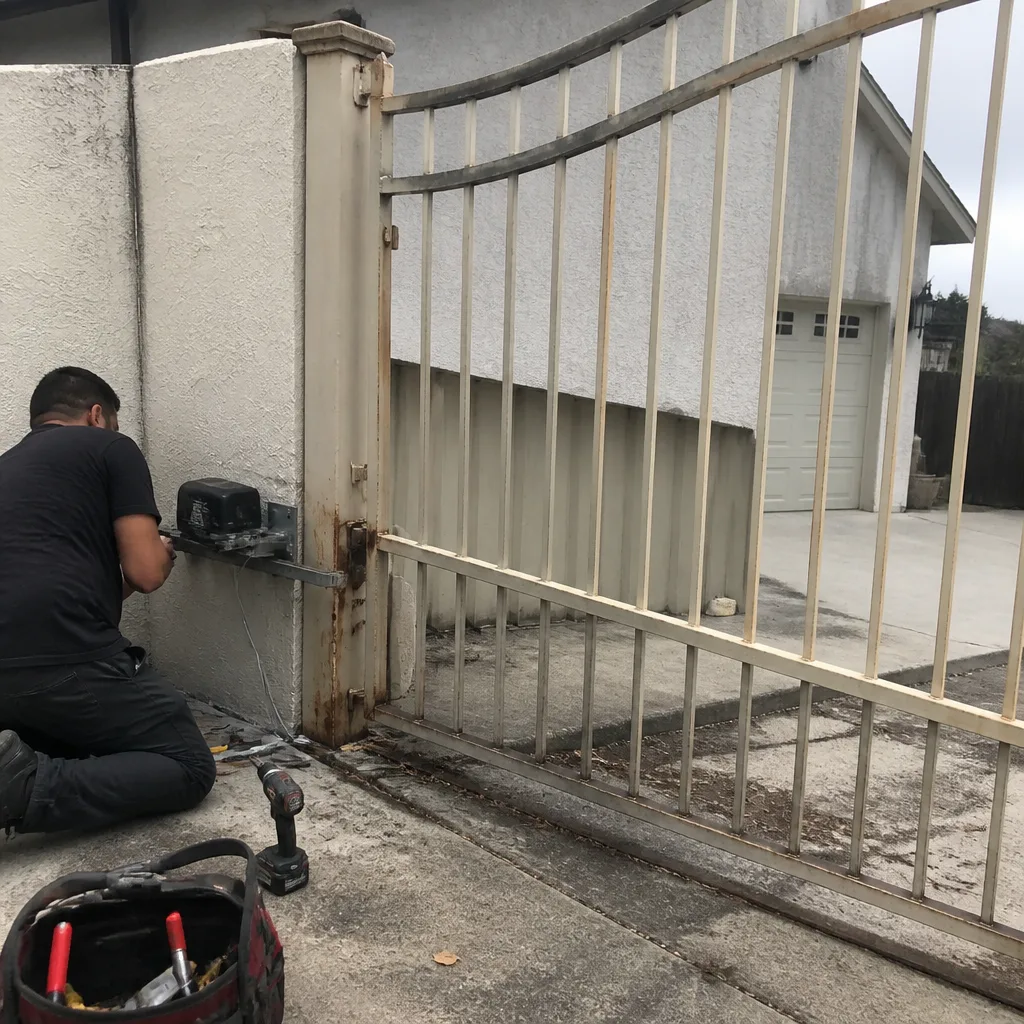 Before
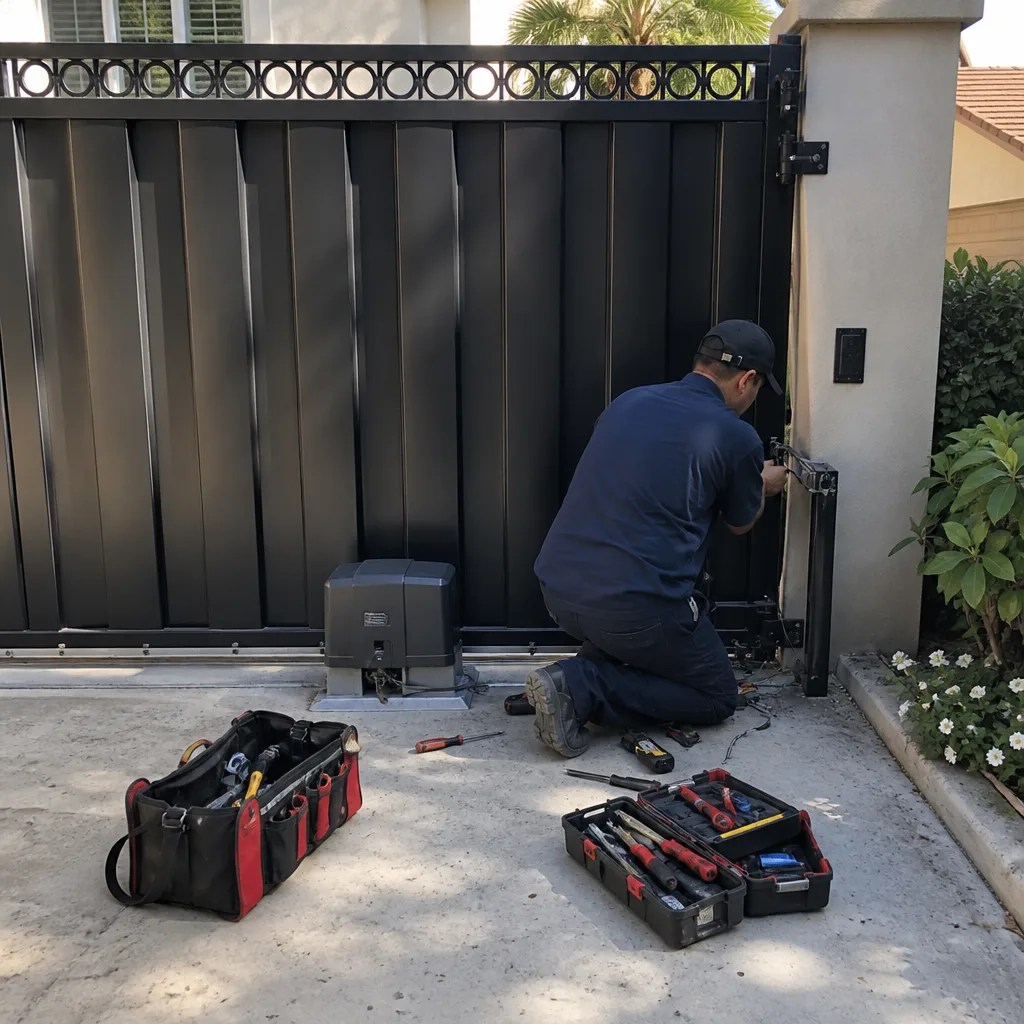 After
After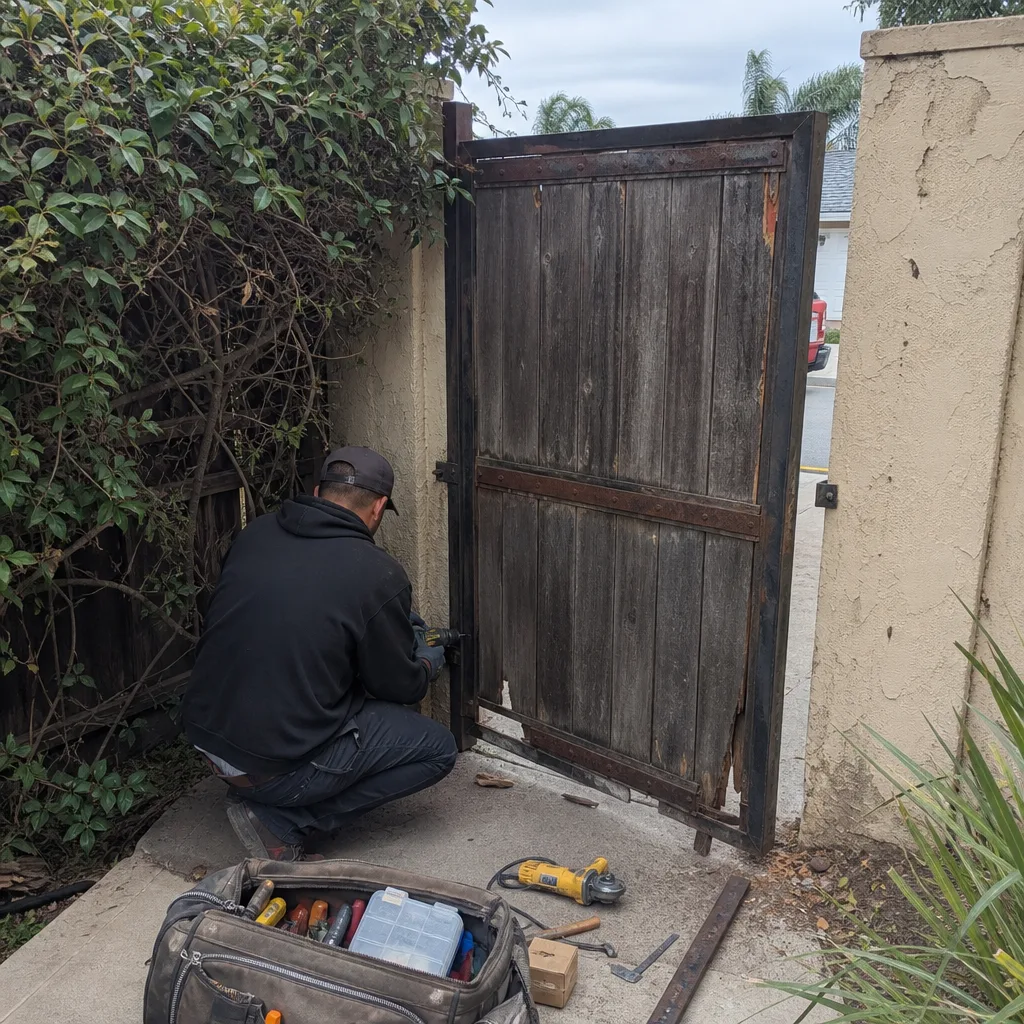 Before
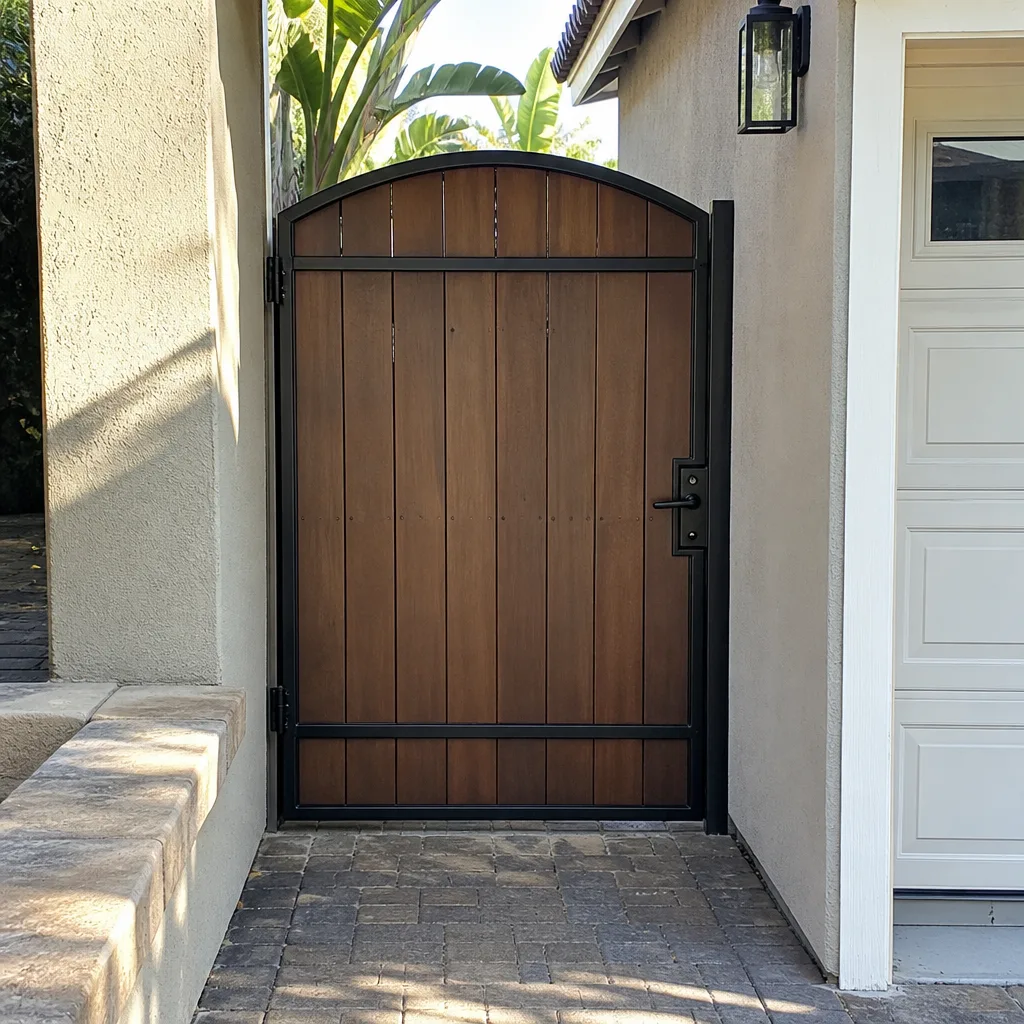 After
After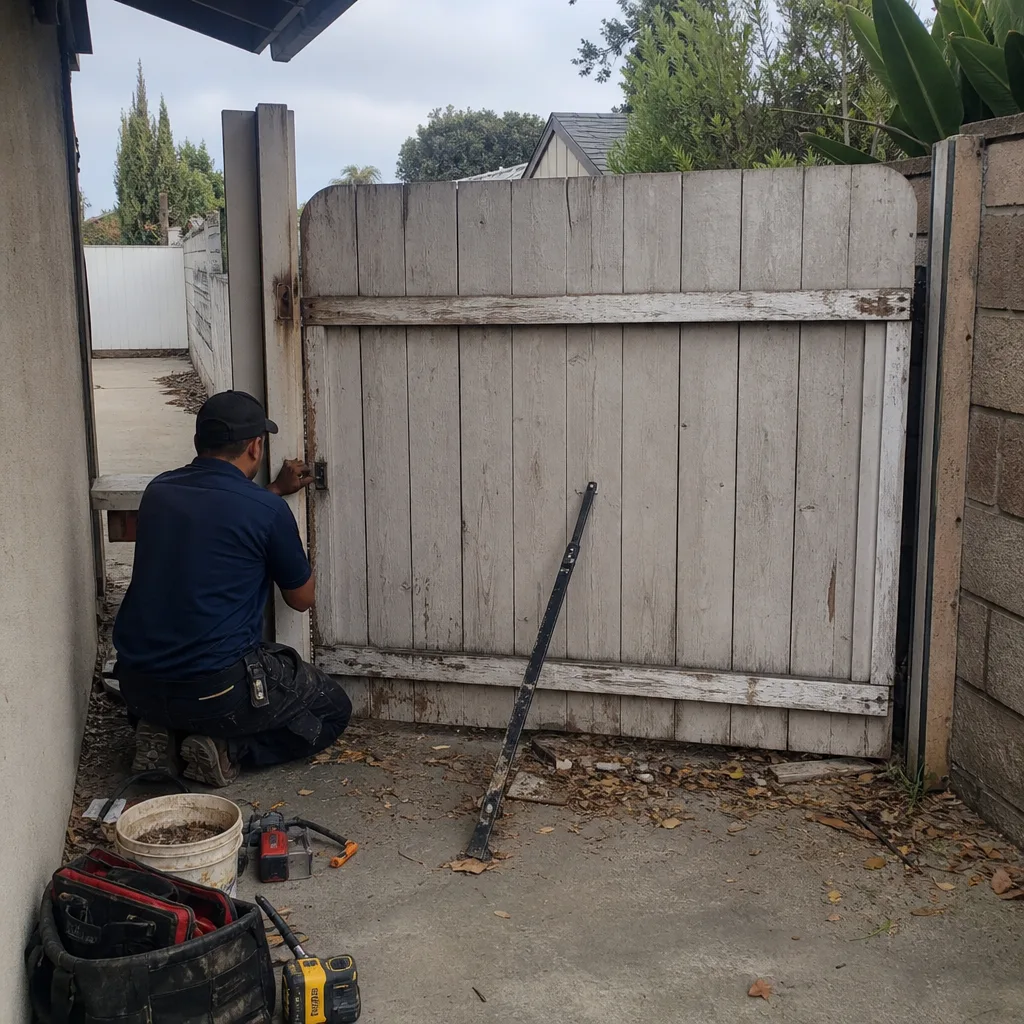 Before
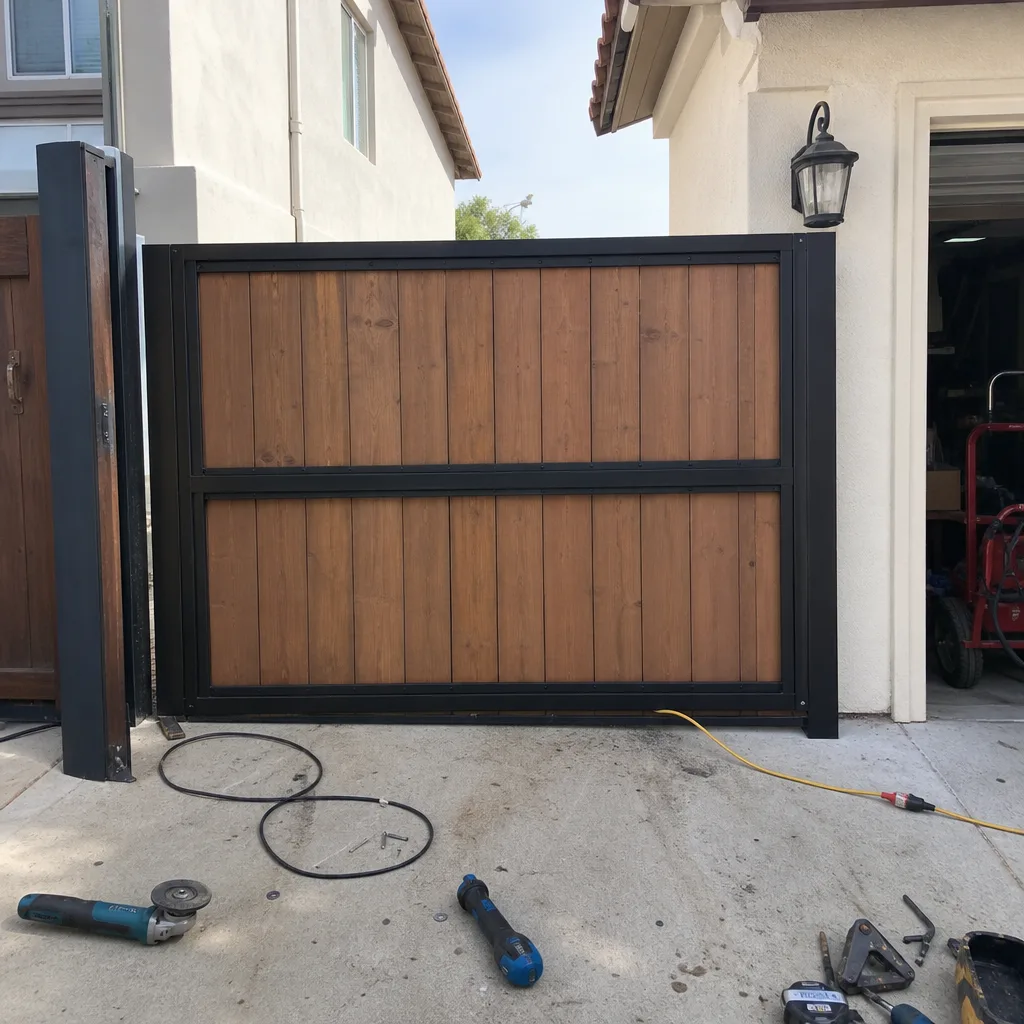 After
AfterFrequently Asked Questions
Most gate repairs in San Diego run between $180 and $650 before parts, depending on the complexity of the issue and the brand of the opener. Mechanical fixes like hinges and chains are on the lower end; logic board replacements and motor work run higher. Call (619) 541-7844 for a free estimate, every Calder job includes a written price before any work begins.
In most cases, yes. Calder Gate Repair San Diego keeps common parts for the major brands, LiftMaster, FAAC, BFT, Linear, Viking, and the others, stocked on our trucks, so a single-visit repair is common. For unusual brand-specific parts, we order them and schedule your repair as soon as they arrive.
First, check the opener’s power source, in San Diego coastal neighborhoods, a tripped GFCI from morning dew or salt-mist is a common culprit. If power is fine, the issue is likely the receiver board or remote transmitter. A professional can test both in minutes with a signal meter, and that diagnosis is included in our service call.
Coastal San Diego gate openers typically last 8 to 12 years due to salt-air corrosion; inland openers often last 12 to 15 years with regular maintenance. The single biggest factor in longevity is whether the gate itself stays properly aligned and lubricated, reducing strain on the motor and gears.
Calder Gate Repair San Diego handles both residential and light-commercial gates, including apartment complexes, small HOAs, and office properties. Slide gates, swing gates, barrier arms, and vehicle loops are all within scope. For larger commercial or industrial systems, we’ll assess the site and recommend the right solution.
Usually not, unless the failure is a simple external component like a photocell or keypad. A 15-year-old opener has aging capacitors, a worn motor, and an outdated safety system; throwing money at it usually just delays an inevitable replacement. We’ll give you an honest recommendation, and if replacement is the right call, we’ll tell you why in plain terms.
The Bottom Line
San Diego homeowners call for gate repair 2.3 times on average before addressing the actual root cause, and it doesn’t have to be that way. A gate is a five-layer system, structure, hardware, power, logic board, and safety sensors, and the failure in one layer is often caused by stress in another. San Diego’s salt air, canyon winds, and UV make that system work harder and fail faster here than almost anywhere, which is why brand-specific knowledge and local climate experience matter. The right repair extends your gate’s life by years; the wrong one resets the clock on the next breakdown. Explore more guides & resources on our blog. If you’re ready to fix it once and be done, call Calder Gate Repair at (619) 541-7844. A live person answers, the price is in writing, and the guarantee is named, 365 days, no fine print.
Written by Nico Alvarez, Owner at Calder Gate Repair San Diego, serving San Diego since 2009.