
Last updated October 16, 2026
 Wrought iron
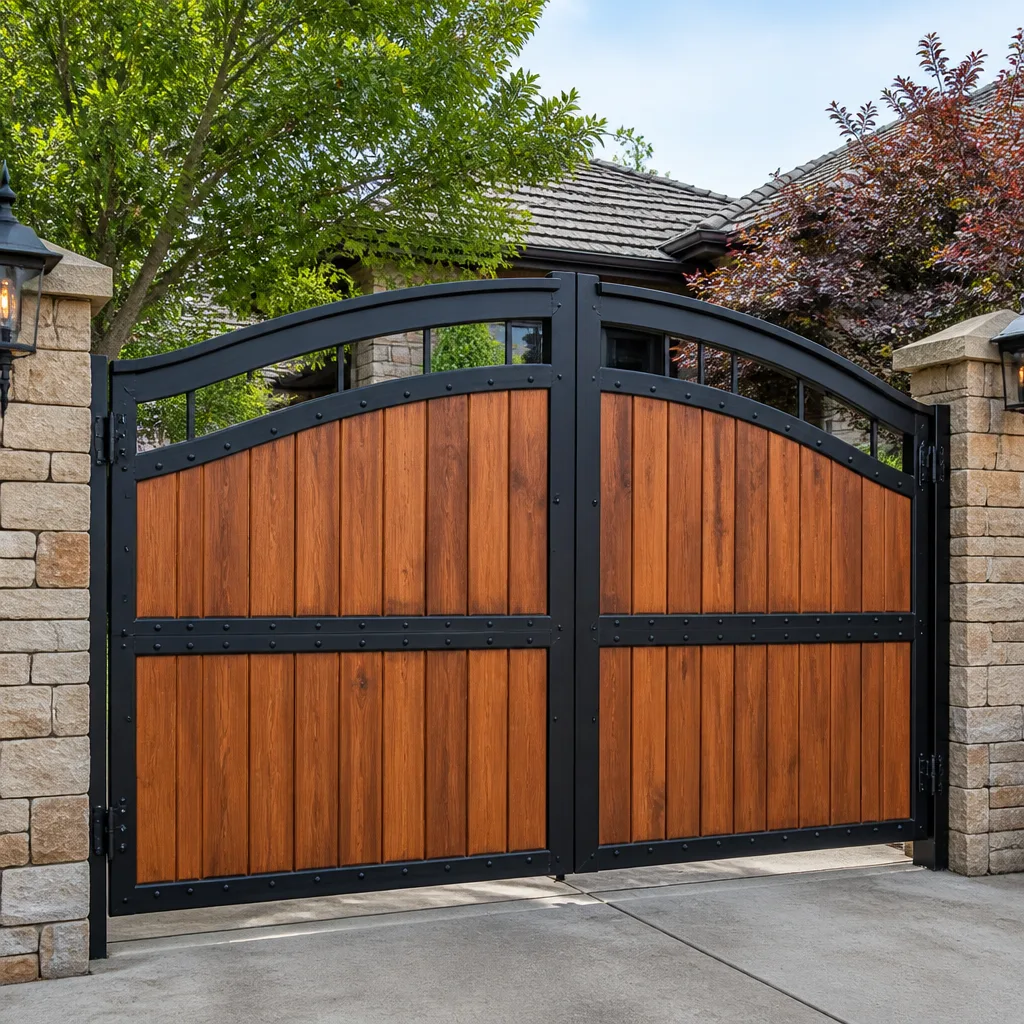 Wood & steel frame
 Farm & ranch
 Sliding driveway gates
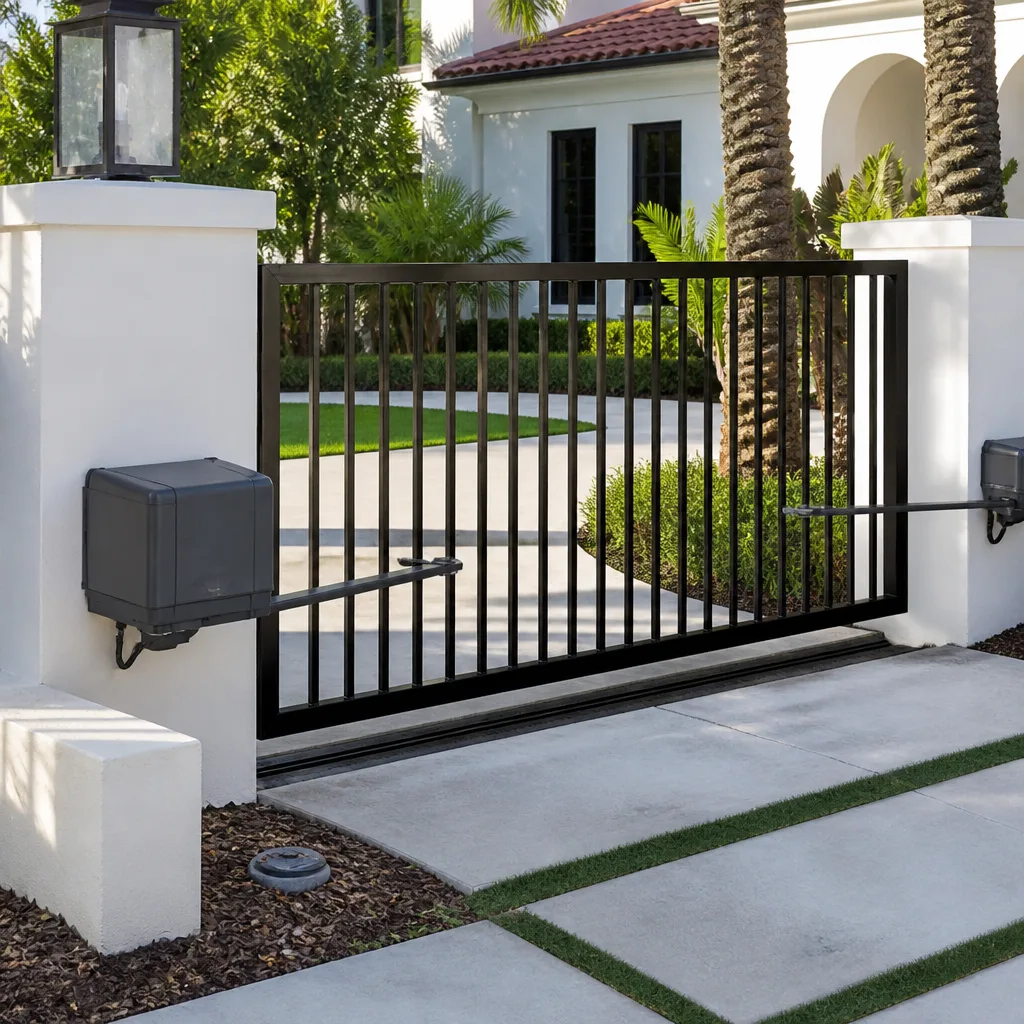 LiftMaster operators
Free on-site gate assessment - hinges, posts, and your LiftMaster or Nice gate operator checked before anything is quoted
The assessment is free and the quote is the invoice.
Get your free estimateGate Repair Maintenance Checklist for San Diego Homeowners
The lubrication interval printed in your gate opener manual was written for a climate that gets winter. Follow it verbatim in San Diego and you’ll over-lubricate in July, under-inspect your hinges after every Santa Ana wind event, and wonder why a five-year-old gate in La Jolla looks rustier than a fifteen-year-old gate in El Cajon. This checklist is built for the conditions we actually live with: marine layer corrosion, 266-plus sunny days of UV exposure, and seismic micro-movement that slowly loosens fasteners no manual ever mentions. For more guides & resources on keeping your gate in top shape, explore our blog. You’ll get real intervals, neighborhood-specific inspection points, and a maintenance log that holds up for warranty claims and resale disclosure.
Quick Answer
A San Diego gate maintenance routine breaks into monthly visual checks, quarterly lubrication calibrated to your distance from the coast, and annual inspections timed with seismic season and post-Santa Ana wind events. Homeowners within three miles of the ocean should inspect for salt-air corrosion every 60 days, while inland homes can push that to 90 days. The single highest-value task is checking and tightening hinge, track, and opener-mount fasteners, because micro-movement from seismic activity and daily open-close cycles loosens them faster than any other climate factor in San Diego.
Styles & brands we work with
Table of Contents
- Monthly Gate Maintenance Checklist for San Diego
- Quarterly Maintenance: Marine Layer vs. Santa Ana Season
- Annual Inspection: The Seismic and Post-Storm Protocol
- Salt-Air Corrosion: What Your Zip Code Changes
- UV Degradation: The San Diego Solar Index Problem
- Fastener Torque: Why Seismic Micro-Movement Matters
- The San Diego Gate Maintenance Log (Printable Template)
Monthly Gate Maintenance Checklist for San Diego
Monthly checks are visual and tactile, not mechanical. You’re looking for things that have changed since last month. A gate that slides an inch slower, a hinge that squeaks in a new pitch, a thin line of rust starting under a bolt head. These are the early warnings that cost $150 to fix now and $900 to fix in eight months. In our experience across San Diego, roughly seven out of ten gate failures we’re called out for showed a visible warning sign at least six weeks before the full failure-exactly why we published Gate Repair Warning Signs: A San Diego Homeowner’s Reference Guide. The monthly pass takes about ten minutes.
The 10-Minute Monthly Walkaround
- Cycle the gate twice, watching the full travel path. Note any hesitation, stutter, or speed change. Gate openers have a rhythm; when that rhythm changes, something is wearing.
- Listen for new noises. A grind, a chirp, or a metallic tick that wasn’t there last month is the gate telling you a surface is losing lubrication or a fastener is loosening.
- Inspect the gate wheels or rollers. On sliding gates, look for flat spots or visible debris buildup. On swing gates, check that hinge pins haven’t risen out of their barrels.
- Check the gate posts. Stand back and sight down the line of the gate and both posts. A post leaning even one or two degrees puts uneven load on the hinges and the opener.
- Look at the keypad and safety edges. Sun damage shows up as hairline cracks in the plastic first. San Diego’s solar index is brutal on these components.
- Clear the track. Sliding gates in San Diego pick up eucalyptus bark, bougainvillea thorns, and construction dust. A pebble wedged in the track is the most common cause of a gate that stops halfway.
One San Diego-specific note: during marine layer season, roughly May through August, check for rust bloom around fastener heads on the lower half of the gate. The morning condensation gets wicked into the tiny gap between the bolt head and the metal, and that moisture sits there for hours every single day. It’s the quiet killer of coastal gates.
If your gate uses a Linear or DoorKing opener, the monthly check should include one extra step: verify the manual release still operates. These openers are common in San Diego HOAs and gated communities, and a seized manual release turns a simple power outage into a trapped vehicle.
Quarterly Maintenance: Marine Layer Season vs. Santa Ana Season
San Diego doesn’t have four seasons. It has two weather patterns that stress gates differently, and your quarterly maintenance should match the season you’re in, not the calendar on the wall. The marine layer season, roughly May through August on the coast and June through September slightly inland, is a corrosion pressure chamber. The Santa Ana season, typically September through January, is a drying, debris-slinging, static-electricity test. Your quarterly tasks should shift with these patterns.
Marine Layer Season Quarterly Tasks (May – August)
- Wipe down all exposed metal with a dry microfiber before lubricating. If you lubricate over accumulated salt film, you trap the salt against the metal. That’s worse than not lubricating at all.
- Apply a light machine oil, not a heavy grease, to hinge pins. Heavy grease holds moisture. On the coast, heavy grease is a rust accelerator.
- Inspect all electrical connections in the opener housing. Condensation inside the housing is common in La Jolla, Point Loma, and Ocean Beach zones. Look for green or white corrosion fuzz on terminals.
- Test the safety reversing edges. Push the gate edge with a cardboard box while the gate is closing. It should reverse immediately. Salt corrosion on the edge contacts makes them fail exactly when they’re needed most.
Santa Ana Season Quarterly Tasks (September – January)
- Clear the entire gate path of wind-blown debris. Palm fronds, eucalyptus branches, and accumulated dust from the dry inland air get blown into tracks and against hinges by Santa Ana gusts.
- Re-tighten all visible fasteners. Dry conditions plus sustained wind equals vibration. Vibration loosens bolts. This is the season we see hinge brackets pulling away from stucco posts across San Diego.
- Check the opener capacitor and power supply. Static and voltage dips during high wind events are hard on gate opener electronics.
- Re-lubricate the chain or belt drive lightly. Dry, dusty air evaporates lubricant faster. A dry drive chain on a Mighty Mule or Ghost Controls opener will stretch and fail significantly earlier than a properly lubed one.
Here’s the trade-language decode for one important term: capacitor is the small cylinder inside your opener that stores the burst of electricity needed to start the motor. When a capacitor weakens, the gate opener clicks but doesn’t move. Santa Ana season is prime capacitor failure time in San Diego because voltage fluctuation stresses these components.
Annual Inspection: The Seismic and Post-Storm Protocol
Schedule one deep annual inspection. The ideal timing for San Diego is typically February or March, after the Santa Ana season has ended but before the marine layer settles in for summer. This gives you a clean baseline going into the corrosion-heavy months. The annual inspection is where you catch the slow-failure items that monthly and quarterly checks can miss.
Annual Inspection Steps
- Check every fastener with a torque wrench. This is not a hand-tighten check. Use the manufacturer’s torque spec. If you don’t have the spec, use a calibrated snug-plus-a-quarter-turn on structural bolts. Seismic micro-movement throughout the year loosens fasteners even on gates that don’t see heavy use. We’ve found hinge bolts on San Diego gates that were a full turn loose after twelve months with no visible problem.
- Inspect the gate frame for hairline cracks at welded joints. Cracks form at stress risers: the bottom corner of a swing gate, the point where a sliding gate cantilevers past the track. Early weld failure is repairable. If the crack propagates, you’re replacing the gate leaf.
- Test the entire safety system. Reversing edges, photo eyes, loop detectors. These are the components that protect kids, pets, and vehicles. In San Diego, where driveways serve double duty as play space and parking, a functioning safety edge is non-negotiable. Test each component independently, not all at once.
- Check the opener gearbox oil or grease. Most residential gate openers have a sealed gearbox, but the ones that don’t, like many Viking and older FAAC models, need lubrication. A dry gearbox is the most common cause of a premature opener death we see in San Diego, and it’s completely preventable.
- Inspect the gate’s ground clearance. San Diego soil shifts with the wet-dry cycle. A gate that dragged or scraped at one point in the year may drag differently after winter rains. Adjust the gate height, not the ground, and re-level the posts if they’ve settled.
- Verify the post foundations. Look for cracking concrete around post bases, especially after heavy rain years. A cracked foundation lets the post wobble, which amplifies every other problem on the gate.
This is also the moment to check the opener’s firmware and battery backup, if equipped. Power outages in San Diego are rare but they happen. A dead battery backup on a Ghost Controls or LiftMaster opener means no gate access during an outage, and that’s a safety issue, not just an inconvenience.
Salt-Air Corrosion: What Your Zip Code Changes
Distance from the Pacific Ocean is the single biggest variable in a San Diego gate maintenance schedule. The marine layer delivers salt and moisture to everything within three miles of the coast, and the concentration drops fast as you move inland. A gate in La Jolla or Point Loma lives in a completely different corrosion environment than a gate in El Cajon or Rancho Bernardo. The maintenance intervals should reflect that reality. Generic checklists don’t. Ours does.
Corrosion Intervals by Coastal Proximity
- Within 1 mile of the ocean (La Jolla, Point Loma, Ocean Beach, Pacific Beach, Coronado, Del Mar, Carlsbad coast): Inspect for rust bloom on fasteners and exposed metal every 30 days. Wipe down and re-oil hinges every 60 days. Expect faster wear on powder-coated aluminum unless the coating is intact and thick.
- 1 – 3 miles from the ocean (Clairemont, University City, Mission Valley, parts of Encinitas, parts of Chula Vista): Inspect for rust every 60 days. Re-oil hinges every 90 days. Marine layer still reaches these zones regularly during May and June.
- 3 – 10 miles inland (El Cajon, Santee, La Mesa, Poway, parts of Escondido): Inspect for rust every 90 days. Re-oil hinges every 120 days. The marine layer is weak here. Sun damage becomes the dominant stressor.
- 10+ miles inland (Ramona, Alpine, parts of East County): Corrosion pressure drops sharply. Prioritize UV and heat checks over rust checks. Still inspect hinges annually.
The trade term you need to understand here is galvanic corrosion: the accelerated rusting that happens when two different metals touch in the presence of moisture and salt. In San Diego coastal zones, the most common galvanic pair is a stainless steel bolt in an aluminum gate frame. The aluminum sacrifices itself to protect the stainless bolt. We see aluminum gate frames with deep pitting around stainless fasteners in La Jolla that inland homeowners never experience. The fix is isolation: nylon washers or corrosion inhibitor paste between the bolt and the aluminum.
UV Degradation: The San Diego Solar Index Problem
San Diego averages 266 sunny days per year, and the UV index hits extreme levels from May through September. Your gate’s coating, your opener’s plastic housing, and your keypad’s buttons are all degrading under that sun, every day, even when you’re not thinking about it. UV damage is cumulative and doesn’t reverse.
What UV Degradation Looks Like on Different Gate Materials
- Powder-coated aluminum: The coating chalks, fades, and eventually exposes the aluminum underneath. Chalking is the white, dusty film that wipes off on your hand. Once chalking starts, the coating’s protective life is measurably shortened. In coastal zones, chalking plus salt air is a fast track to pitting.
- Wood gates: The sun bleaches the wood, dries out the natural oils, and causes cracking at the grain lines. A wood gate in full sun in San Diego needs re-sealing every 12 to 18 months, and that timeline shrinks to 9 months in east county heat.
- Vinyl gates: UV breaks down the plasticizers. The vinyl becomes brittle. Hairline cracks appear around screw holes and at the bottom corners. Once a vinyl gate is brittle, drilling into it, which you need for any hardware repair, causes cracking.
- Wrought iron: The sun itself doesn’t degrade wrought iron, but the expansion-contraction cycle from daily heating and cooling creates micro-cracks in the paint. Moisture gets in, rust starts underneath, and you don’t see it until it bubbles the paint.
The UV checkpoint most homeowners miss: your gate opener’s plastic housing. The casing on a Linear, Viking, or Ghost Controls opener sits in direct sun if it’s mounted on a post. UV makes that plastic brittle. A brittle housing cracks from a light impact, and once it’s cracked, moisture and insects get into the electronics. If the housing on your opener has faded from its original color or developed a chalky film, plan to replace it. It’s a minor parts repair compared to a full opener replacement.
Fastener Torque: Why Seismic Micro-Movement Matters
San Diego County experiences thousands of small seismic events every year, most of them below 3.0 magnitude, most of them never felt. But every one of them sends vibration through the ground, into your gate posts, and through every bolted connection. Add in the hundreds of open-close cycles a typical San Diego gate sees monthly, and you have a continuous loosening force that no other climate factor matches.
This is the most overlooked maintenance item in our industry. Not because it’s hard, but because it’s invisible. A bolt that’s 15% loose on month one doesn’t make a sound. On month six, the gate starts to sag slightly. On month twelve, the hinge has ovalized its mounting holes, and now you’re not re-tightening a bolt. You’re drilling new holes or replacing the hinge leaf.
Fastener Check Protocol for San Diego Gates
- Use the right tool. A socket wrench or torque wrench, not an adjustable crescent wrench. Crescent wrenches round off bolt heads and give a false sense of tightness.
- Check structural bolts first. These are the bolts that connect the gate to the post, the hinges to the gate, and the post to its foundation. On sliding gates, check the bolts that attach the drive rail to the gate.
- Check opener mount bolts second. Vibration from the opener motor loosens these faster than any other fastener on the system. On a Daily-use gate in San Diego, the opener mount bolts need re-torquing quarterly.
- Check track and guide fasteners third. On sliding gates, the track fasteners take the full weight of the gate plus the horizontal force of movement. Loose track bolts cause the gate to bind, which stresses the opener motor and shortens its life.
- Mark your bolts. Put a small paint dot on each structural bolt head after tightening, crossing from the bolt head onto the adjacent surface. If the dot lines up at the next check, nothing moved. If the two halves of the dot are misaligned, you know instantly that the bolt rotated.
The paint dot system is a trade trick we use on every gate we service in San Diego. It takes ten seconds per bolt and turns a subjective “does that feel loose?” into an objective visual check any homeowner can do.
The San Diego Gate Maintenance Log (Printable Template)
Documented maintenance history matters for two reasons: warranty claims and resale disclosure. If your gate opener fails under warranty, the manufacturer will ask for maintenance records. A written log with dated entries proves you maintained the equipment as required. If you sell your home, California residential disclosure statements now include specific questions about gate and opener condition. A clean maintenance log supports a clean disclosure and protects you from post-sale disputes.
Here’s the log format we recommend. Print it, keep it in the garage, and log every entry.
| Date | Task Completed | Findings | Follow-Up Needed |
|---|---|---|---|
| Example: 03/15/2026 | Monthly walkaround | Slight squeak on upper hinge | Lubricate hinge pin in 30 days |
| Example: 06/02/2026 | Marine layer corrosion check | Rust bloom on 2 lower hinge bolts, Point Loma property | Clean, treat, re-torque next weekend |
| Example: 10/14/2026 | Santa Ana post-wind inspection | Palm debris in track, no fastener movement | Cleared; no follow-up |
| Example: 02/10/2027 | Annual full inspection | Photo eye misaligned 3mm, opener capacitor reading low | Schedule replacement capacitor within 60 days |
For warranty purposes, log the date, the task, and the result even when the result is “no issues found.” The absence of a log entry reads the same as the absence of maintenance to a manufacturer’s claims adjuster. If you’re tracking a gate that’s still under a gate opener repair warranty from Calder Gate Repair San Diego, keep your service records in the same log. It creates one continuous history of the gate’s care.
Homeowners who use this log consistently report two things to us: they catch small problems before they become big ones, and they have peace of mind during warranty claims or home sales. The log is free, takes ninety seconds per entry, and pays for itself the first time a manufacturer accepts a claim because the paperwork is right.
Common Mistakes to Avoid
- Following the manufacturer’s generic lubrication interval. Manuals are written for national averages. San Diego’s marine layer demands more frequent hinge oiling on the coast, and inland sun demands more frequent drive chain lubrication. Use the intervals in this guide, not the one-size-fits-all schedule in the manual.
- Using heavy grease on coastal gate hinges. Grease traps salt and moisture against the metal. Light machine oil is the right product within three miles of the ocean. We’ve replaced hinges in La Jolla that seized solid from greased-over salt buildup.
- Skipping fastener checks because the gate “feels fine.” A loose bolt doesn’t always announce itself. By the time the gate sags or wobbles, the mounting hole is already ovalized. The paint dot method catches it six months earlier.
- Lubricating a dirty track or chain. Oil over dust and debris makes an abrasive paste that accelerates wear. Clean first, then lubricate. Always.
- Ignoring the manual release. The manual release is the emergency exit for your gate when the power fails or the opener dies. If it’s seized from corrosion or disuse, you’re stuck. Test it quarterly.
- Treating all San Diego neighborhoods the same. A maintenance schedule for Point Loma is different from one for El Cajon. The corrosion pressure and UV intensity are fundamentally different. Adjust your intervals by distance to the coast, not by whichever checklist was easiest to find.
- Waiting until the gate fails to call anyone. Gate failures are expensive. A $200 hinge replacement caught early stays $200. The same hinge after it ovalizes the mount and bends the post becomes a $900-plus repair. Early attention is the cheapest money you’ll ever spend on a gate.
See the difference
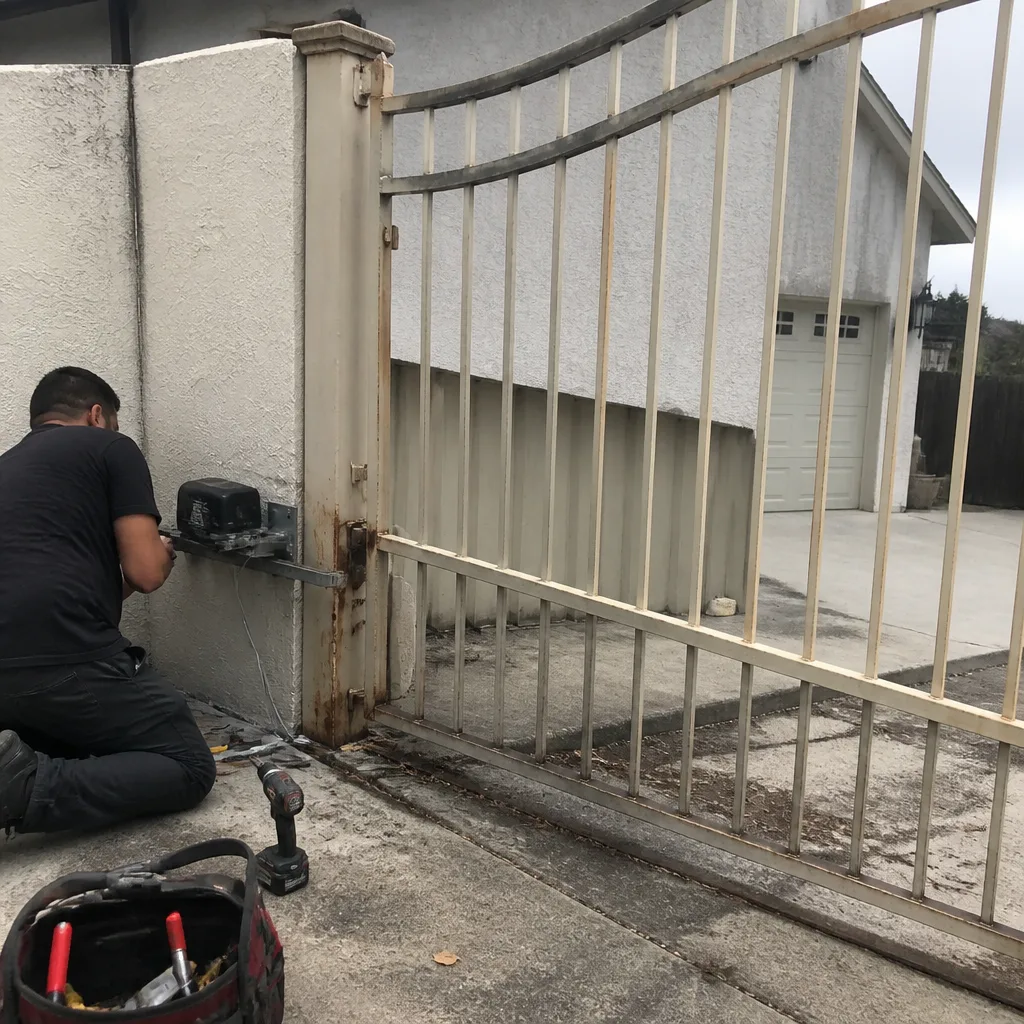 Before
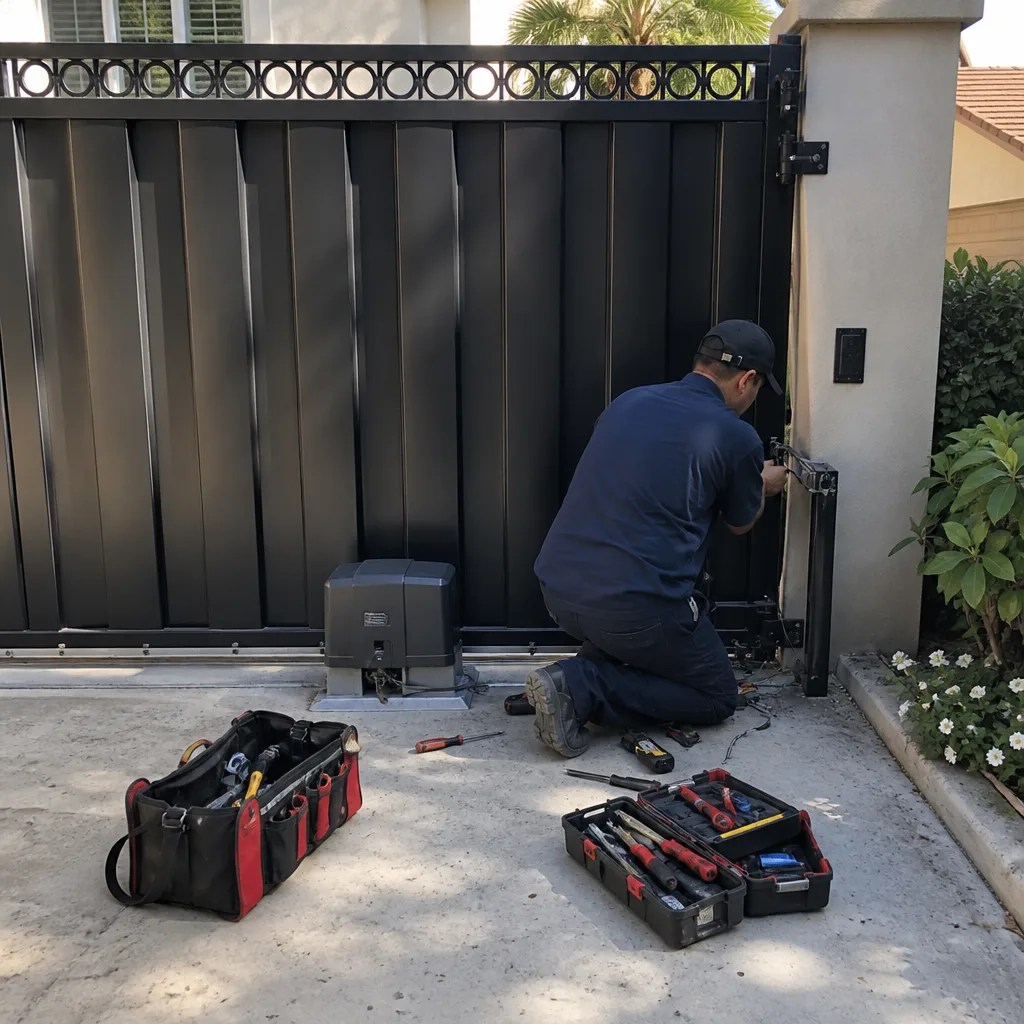 After
After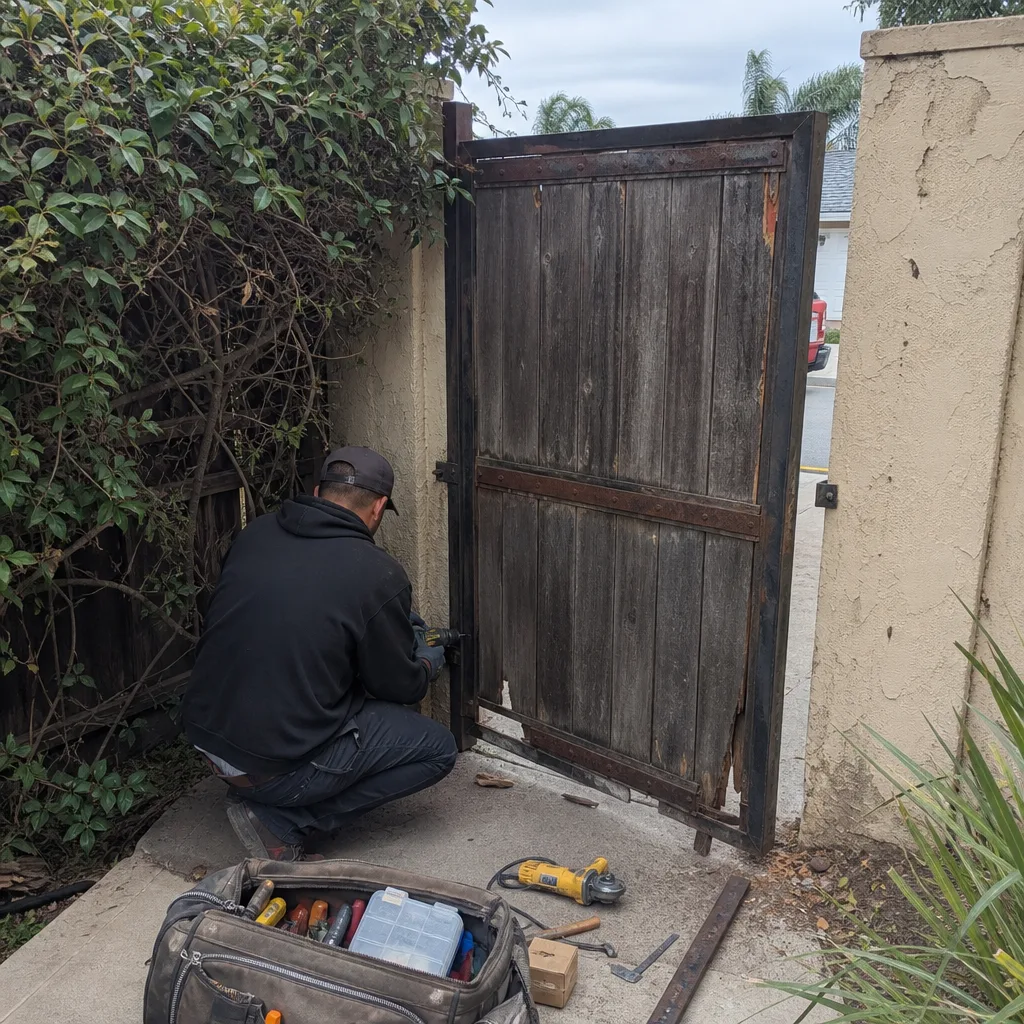 Before
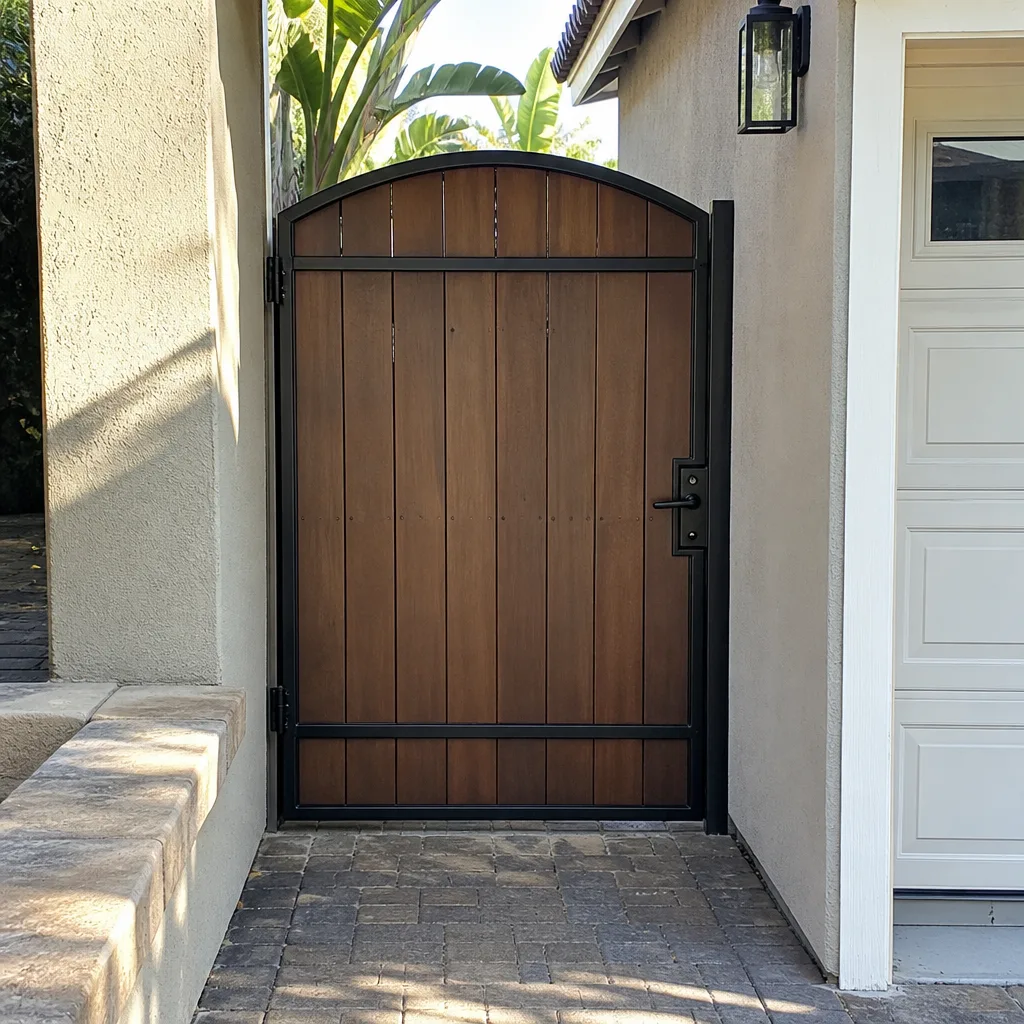 After
After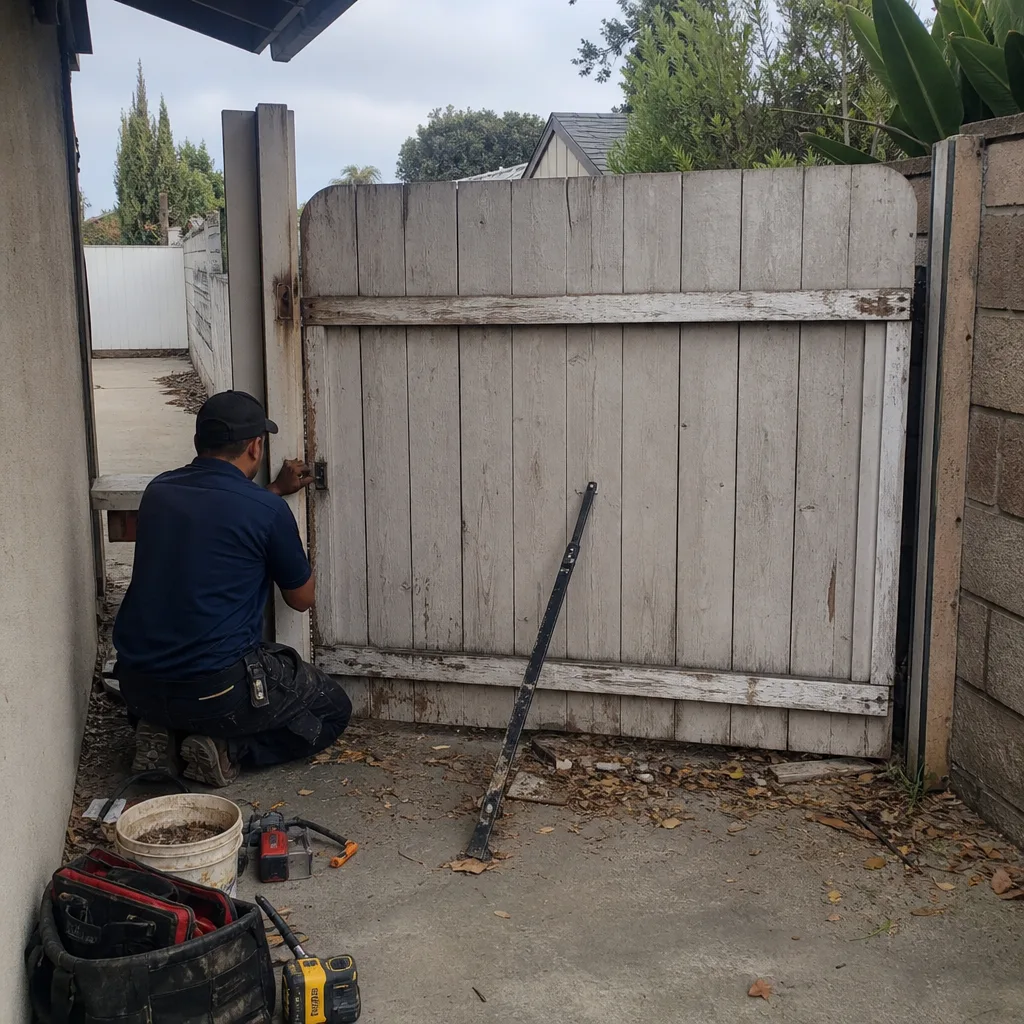 Before
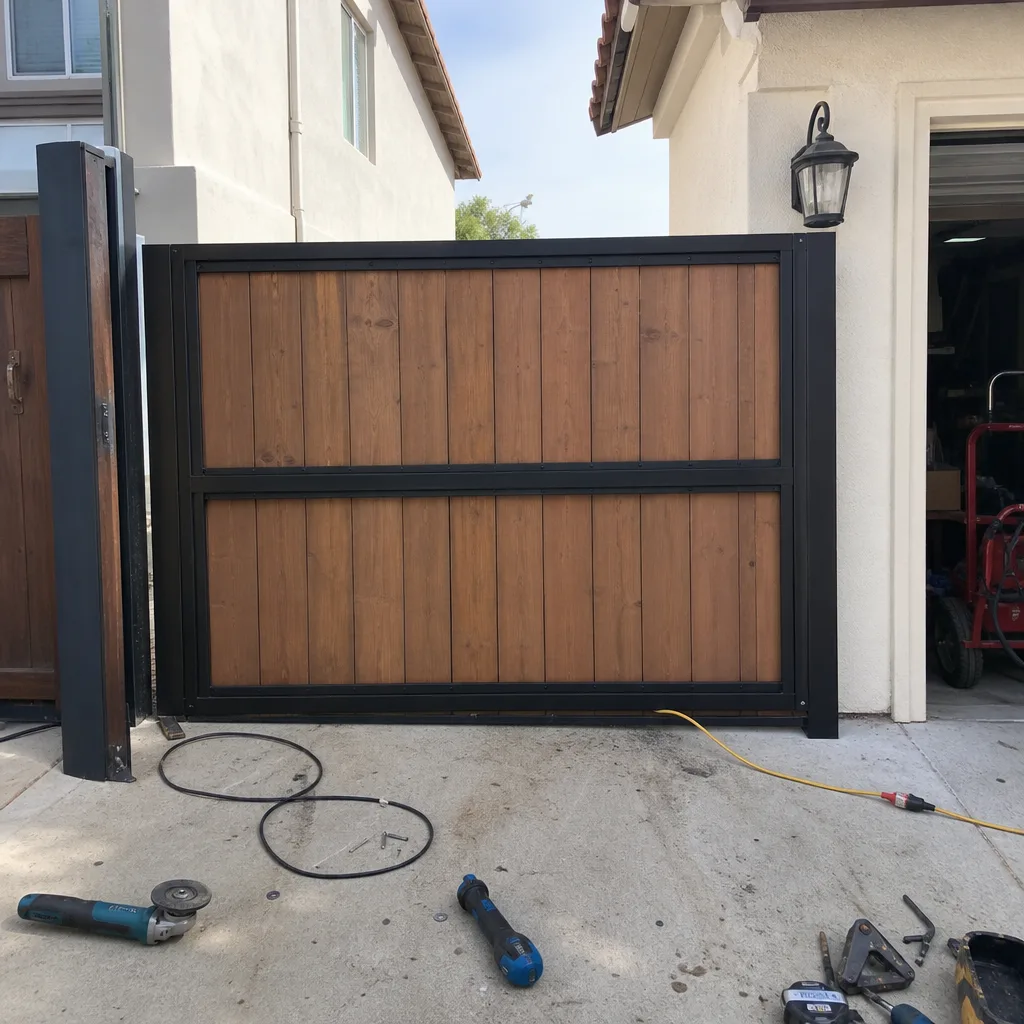 After
AfterWhen to Call a Professional
Some gate issues are safe for a homeowner to address with this checklist. Some are not. If your gate has a damaged or detached spring on a swing gate, stop. Gate springs are under tension and can cause serious injury if released incorrectly. If your sliding gate’s drive chain is showing broken links or the opener motor is making grinding noises, stop using the gate and call a professional. Same goes for any electrical issue inside the opener housing: capacitors store a shock hazard even when the power is off, and wiring repairs belong with someone who’s trained on the specific opener brand. Calder Gate Repair San Diego offers our Gate Repair services with free estimates in San Diego, and we’ll give you a written price before any work starts. If you’re unsure whether a problem is DIY or professional, call (619) 541-7844 and describe what you’re seeing. A live person answers, and we’ll tell you straight whether it’s safe to handle yourself.
Frequently Asked Questions
Lightly lubricate gate hinges every 60 to 90 days if you live within three miles of the coast, and every 120 days inland. The marine layer accelerates corrosion on exposed metal, so coastal homes need more frequent attention. Use a light machine oil, not heavy grease, especially near the ocean. Call (619) 541-7844 if you’re unsure which lubricant your gate needs.
Yes. The morning condensation combined with salt from the Pacific Ocean creates a corrosive film that sits on metal surfaces for hours every day during marine layer season, roughly May through August. Hinges, fasteners, and opener electrical connections within three miles of the coast show accelerated rust and pitting. Homes in Point Loma and La Jolla need corrosion checks twice as often as homes in El Cajon.
Loose fasteners from seismic micro-movement. Thousands of small earthquakes each year, most of them unfelt, slowly loosen the bolts on hinges, mounts, and tracks. The gate doesn’t show a symptom until the bolt has been loose long enough to damage the mounting hole. A monthly or quarterly bolt check with the paint dot method prevents this.
Basic DIY maintenance, using this checklist, costs under $50 a year in supplies: light machine oil, microfiber cloths, and a paint pen for fastener marking. Professional maintenance visits in San Diego typically range from $100 to $250, while major gate repairs, like hinge replacement after neglect, routinely run $500 to $1,200. Maintenance is the cheaper path by a wide margin. For a free estimate on any repair or maintenance service, call Calder Gate Repair at (619) 541-7844.
Yes, if the gate or opener is still under manufacturer warranty. Warranty claims often require proof that you maintained the equipment as specified. A written log with dates and tasks performed, even when the result is “no issues found,” satisfies that requirement. It also helps with California home resale disclosure, which now asks specifically about gate condition.
For repair calls, Calder Gate Repair San Diego schedules service quickly, and because we cover the entire San Diego metro area, we can often arrive the same or next day. We’ll give you a written price before any work starts, and every repair includes the 365-Day Done Right Promise. Call (619) 541-7844 and a live person will schedule your visit.
The Bottom Line
San Diego gates fail differently than gates anywhere else in the country. The marine layer attacks coastal metal, the sun degrades coatings and plastic housings every single month, and the ground itself is slowly loosening every bolt on your gate through constant seismic micro-movement. A maintenance checklist that ignores these three forces is incomplete. This one addresses all three, with intervals calibrated to your zip code’s distance from the ocean, a fastener protocol that catches seismic loosening before it damages metal, and a log system that protects your warranty and your resale disclosure. Ten minutes a month, thirty minutes a quarter, and one thorough annual inspection is all it takes. And when something needs a professional hand, we’re here: Calder Gate Repair San Diego, part of the Relay Home Co. family since 2009, with a live person answering every call at (619) 541-7844.
Looking for more specific help? See our guides on Gate Repair in San Diego, Electric Gate Repair in San Diego, and Gate Opener Repair in San Diego. For everything we do, start at the Calder Gate Repair San Diego home page.
Written by Nico Alvarez, Owner at Calder Gate Repair San Diego, serving San Diego since 2009.